One shot. Decisions that persist.
An authored courier, a generated cloth material, and five reversible revisions. Compare the same moment across branches.
The approved blue tint changes the material. The generated weave stays attached to the same UV coordinates as the courier moves.
What changes when the image model edits each frame?
The stock model sees the original pixels and a coat instruction. It gets no scene state. These 24 samples play at 4 fps: an image-editing diagnostic, not a temporal video-model benchmark.
| Recoloring method | Protected RGB error ↓ 0–255 scale | Protected pixels changed ↓ Any channel > 8 | Visible coat blue ↑ HSV diagnostic |
|---|
Evidence, with boundaries
Geometry and evaluated transforms were compared across all 144 frames of each branch. Direct editing and selective undo were independently rendered at frames 1, 73 and 144.
Inspect every check
What this does not establish
- No scene reconstruction from rendered footage.
- No learned language-to-action model; these edit commands were authored.
- No trained video model, human preference study or production quality claim.
- No training-source attribution, ownership percentage or royalty allocation.
- No cloth physics: the character uses rigid articulated parts.
Where the generation enters
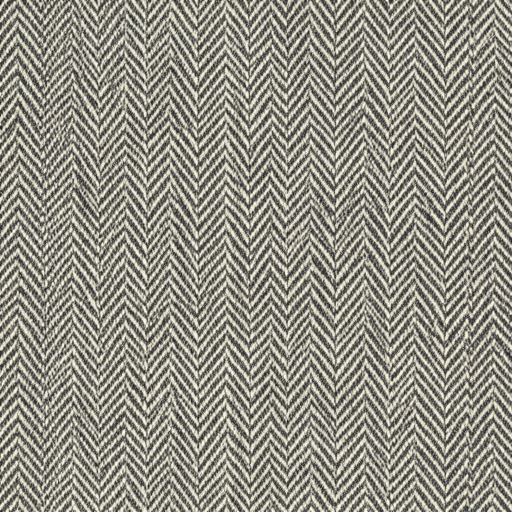
FLUX generated this cloth image once. Its luminance modulates the coat material; the approved color and roughness are explicitly set. Blender supplies geometry, animation, visibility and lighting.
This is ordinary UV material binding. It does not infer physically correct material maps or make the scene architecture novel.
Source files and reproducibility
The first material run was stopped by the memory guard. The successful run releases the text encoder after evaluating its embeddings. Memory and disk limits were retained. No production material was uploaded.