Sheet 4: hands and two heads
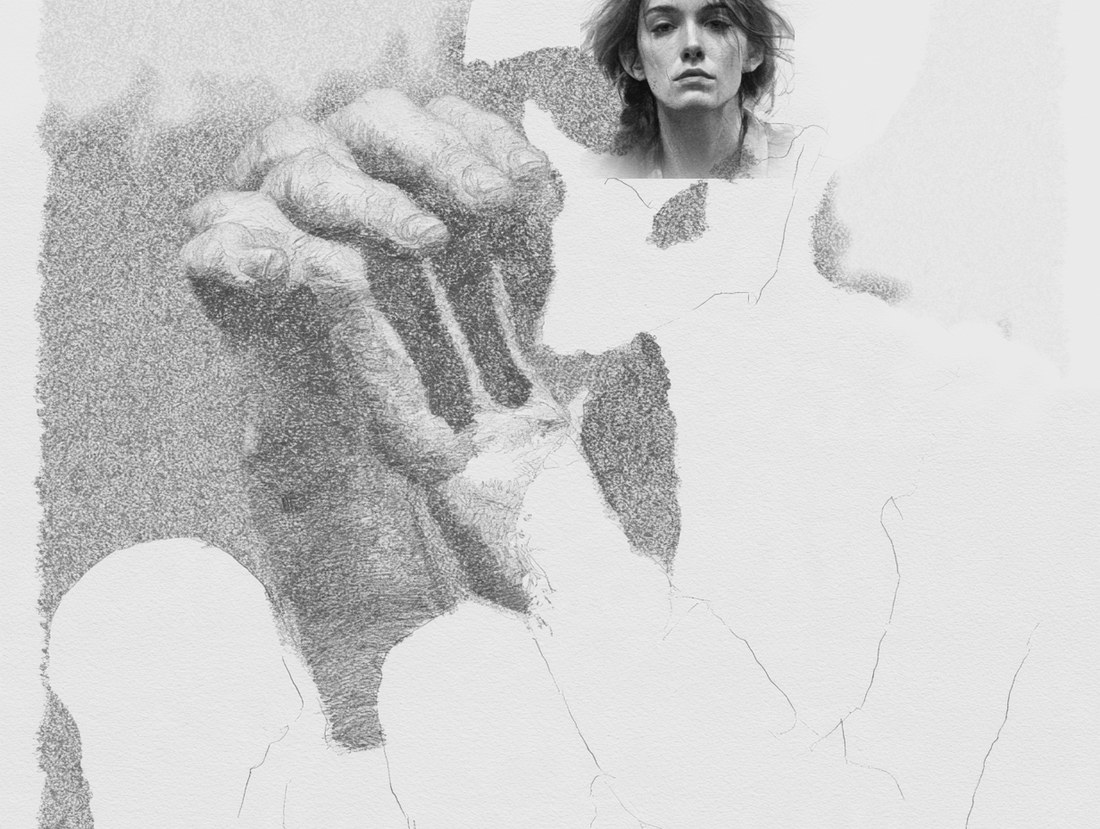
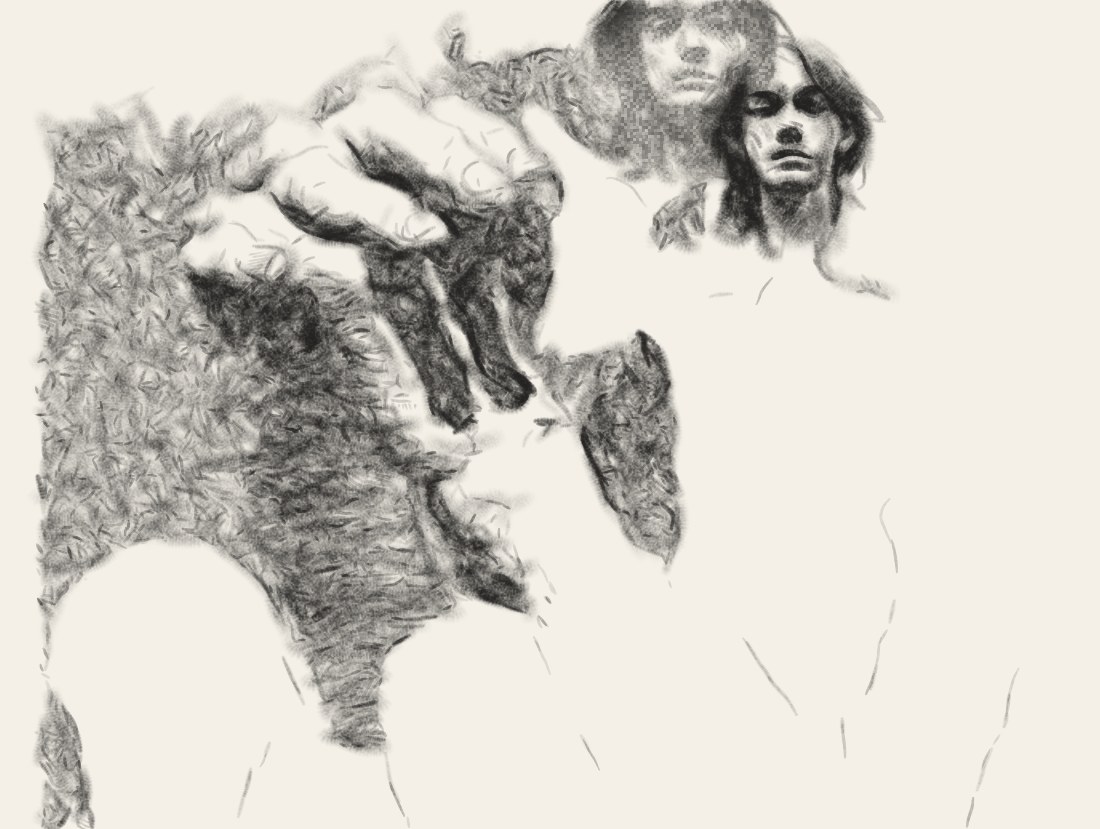
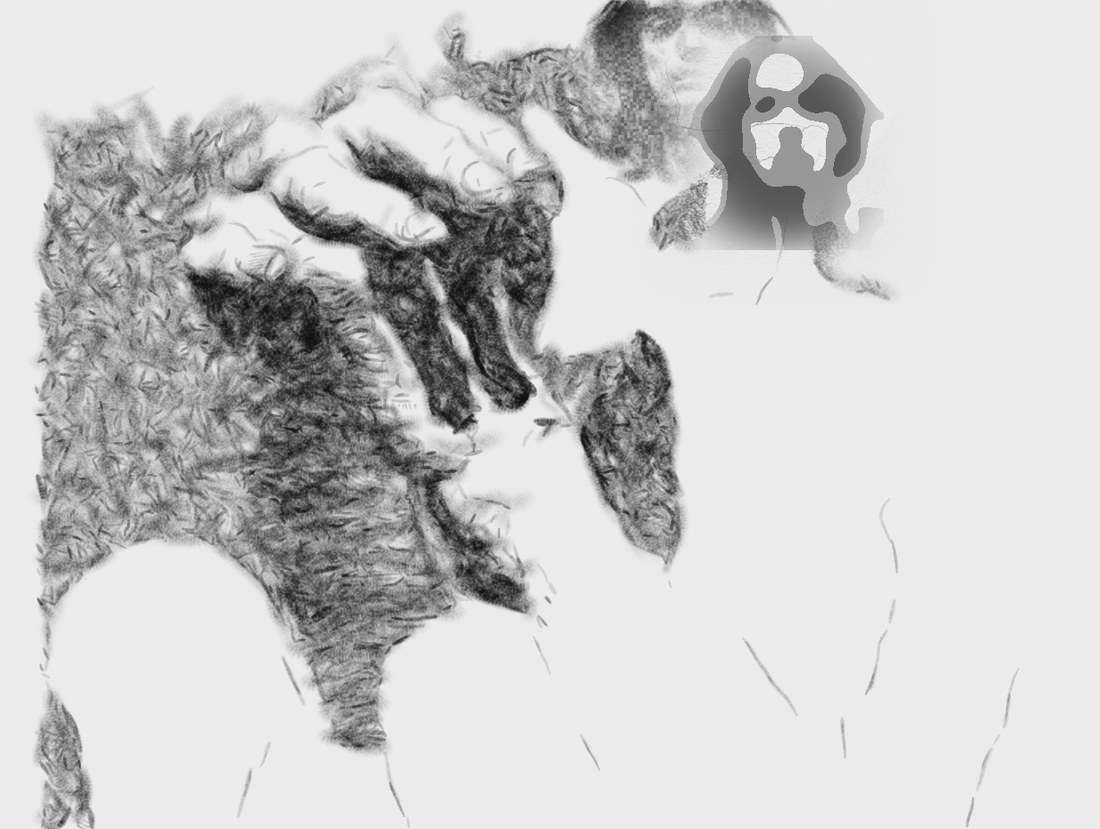
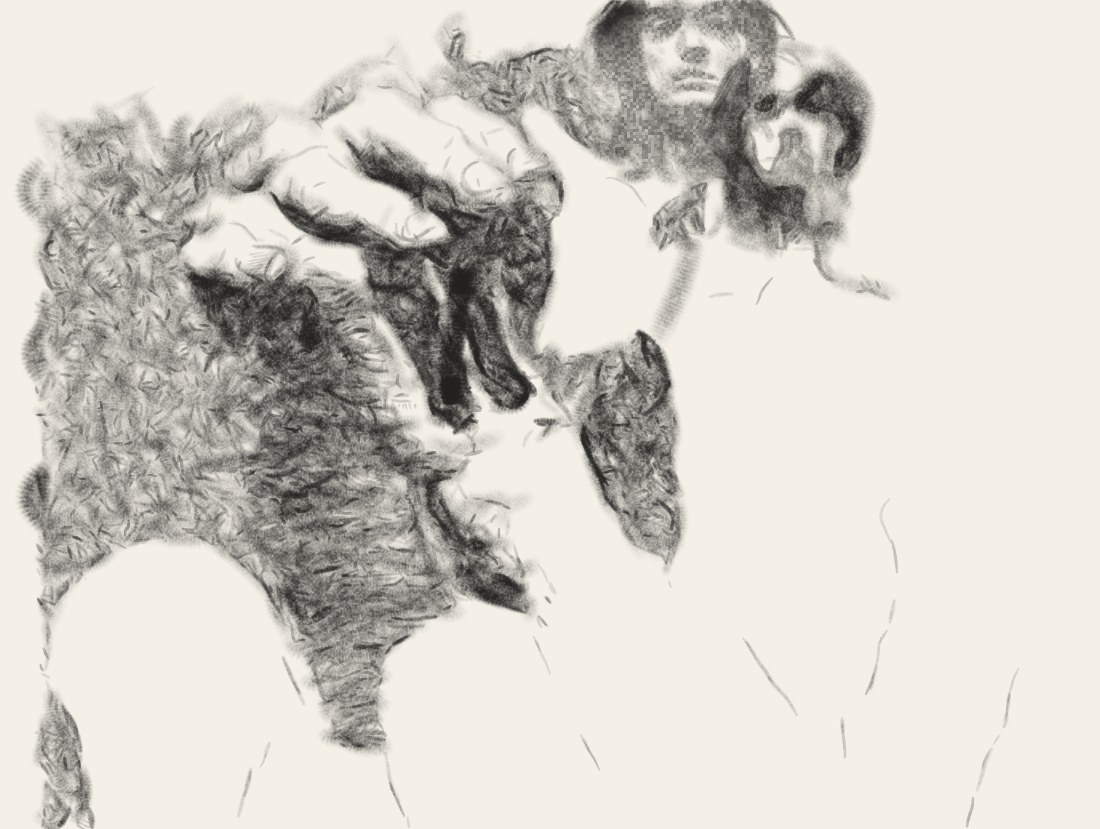
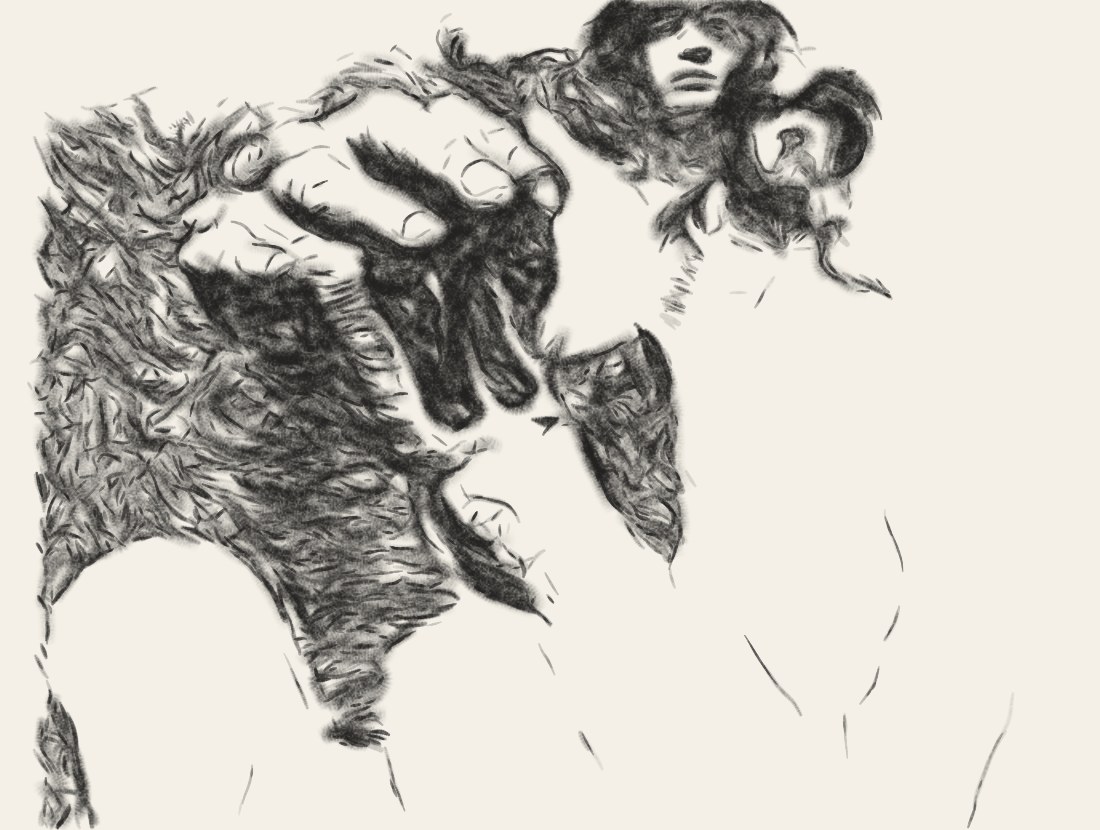
The first drawing made with Hands from the direction the critic chose in the the paint simulator hybrid run (p1 #4 structure, panel removed, a head drawn and taken back, a second unfinished head). It is where the edit tools were built. The line was set aside when the work moved to sheet 5.
Drawn, taken back, drawn again
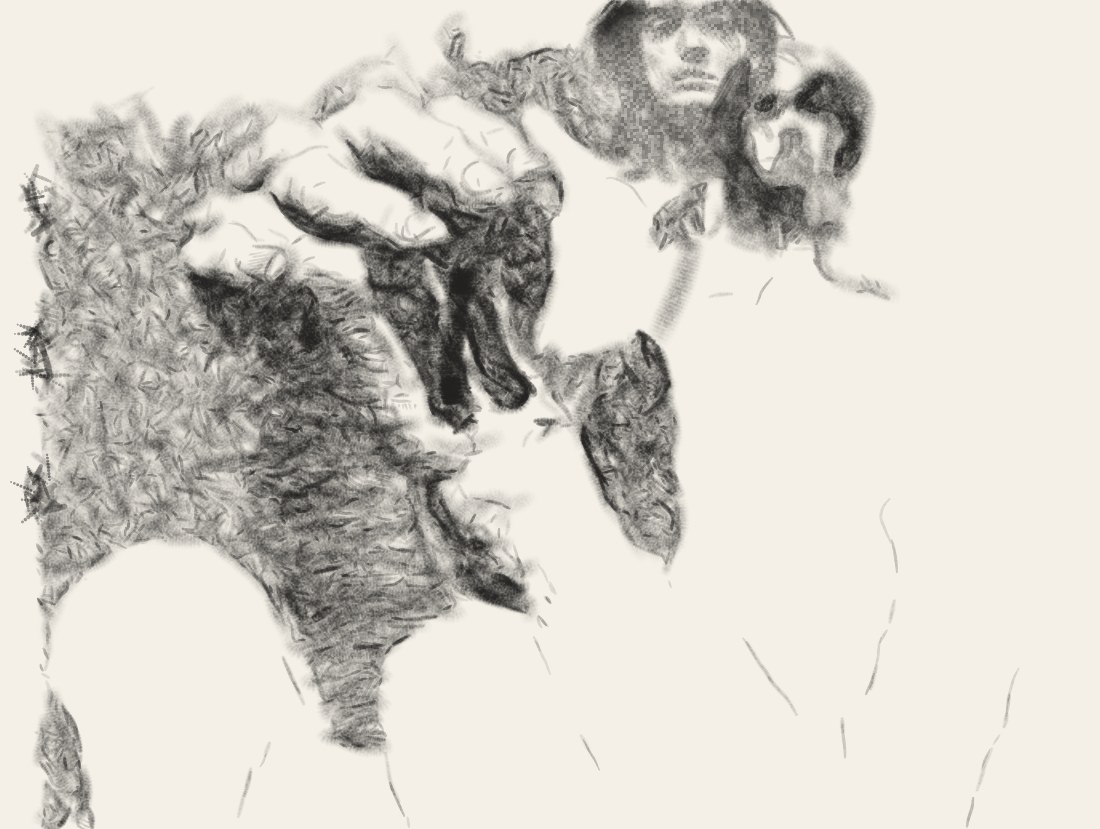
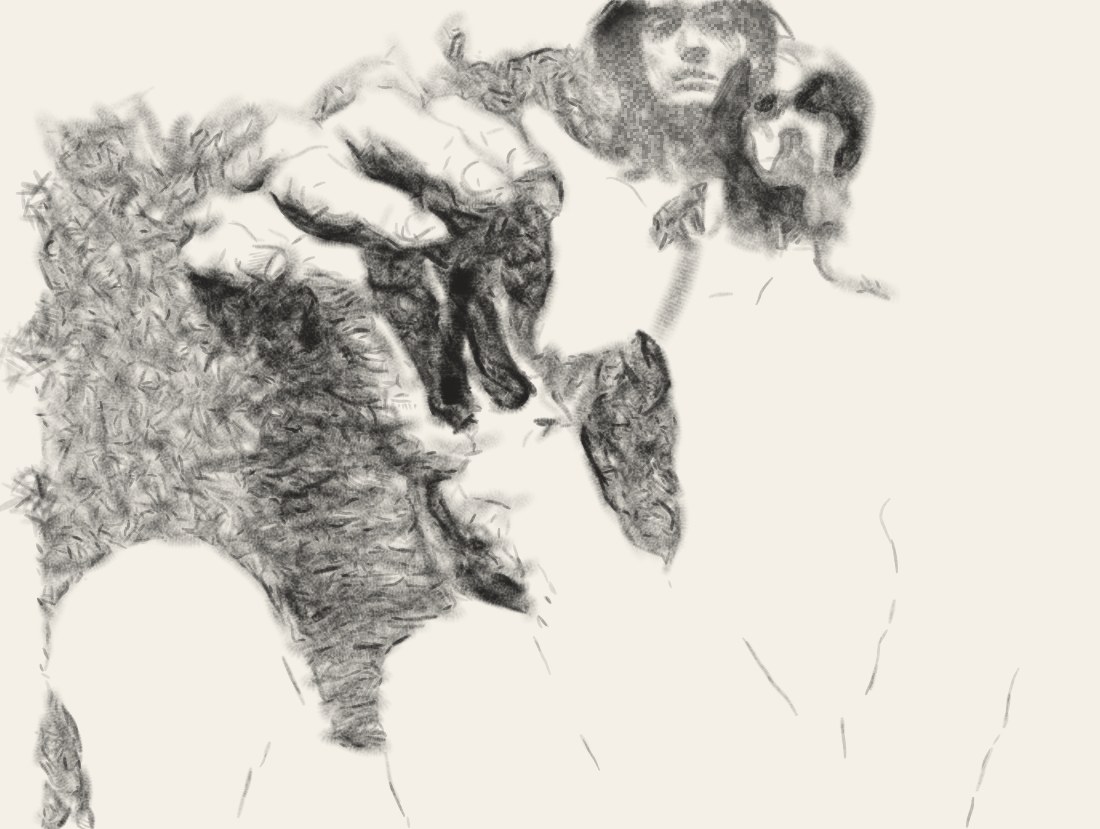
Edits
The translator's run
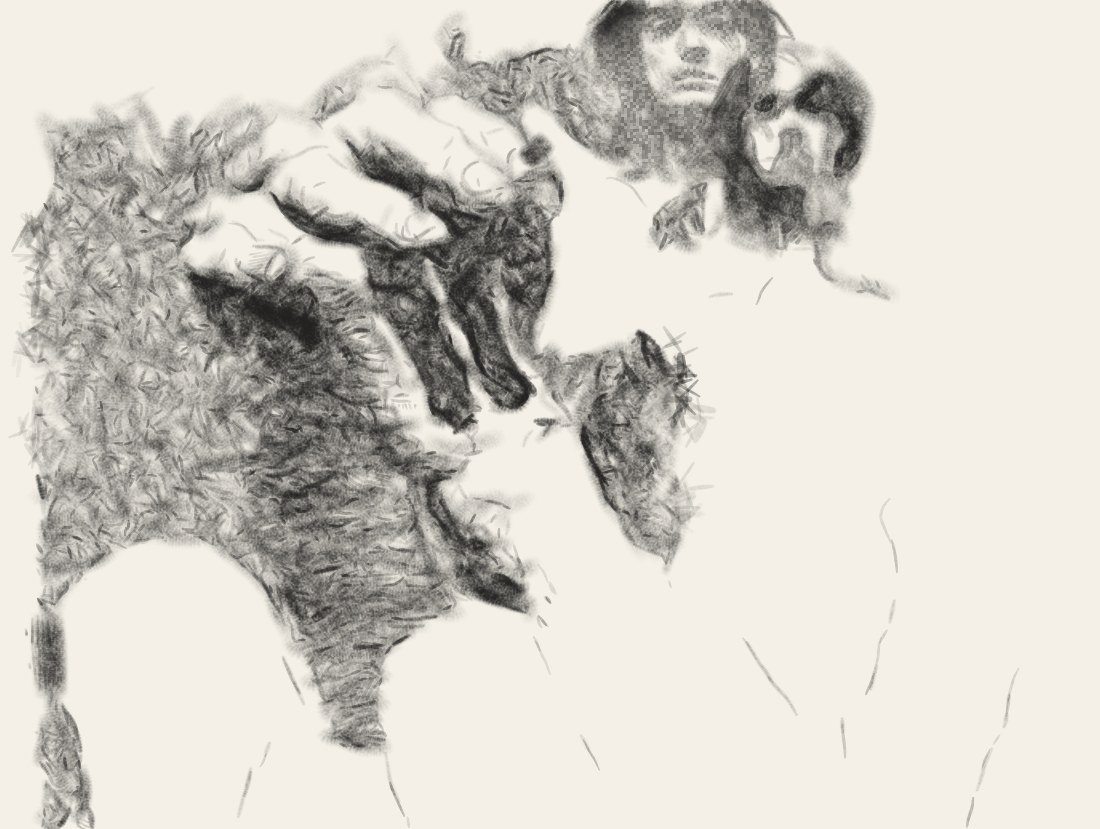
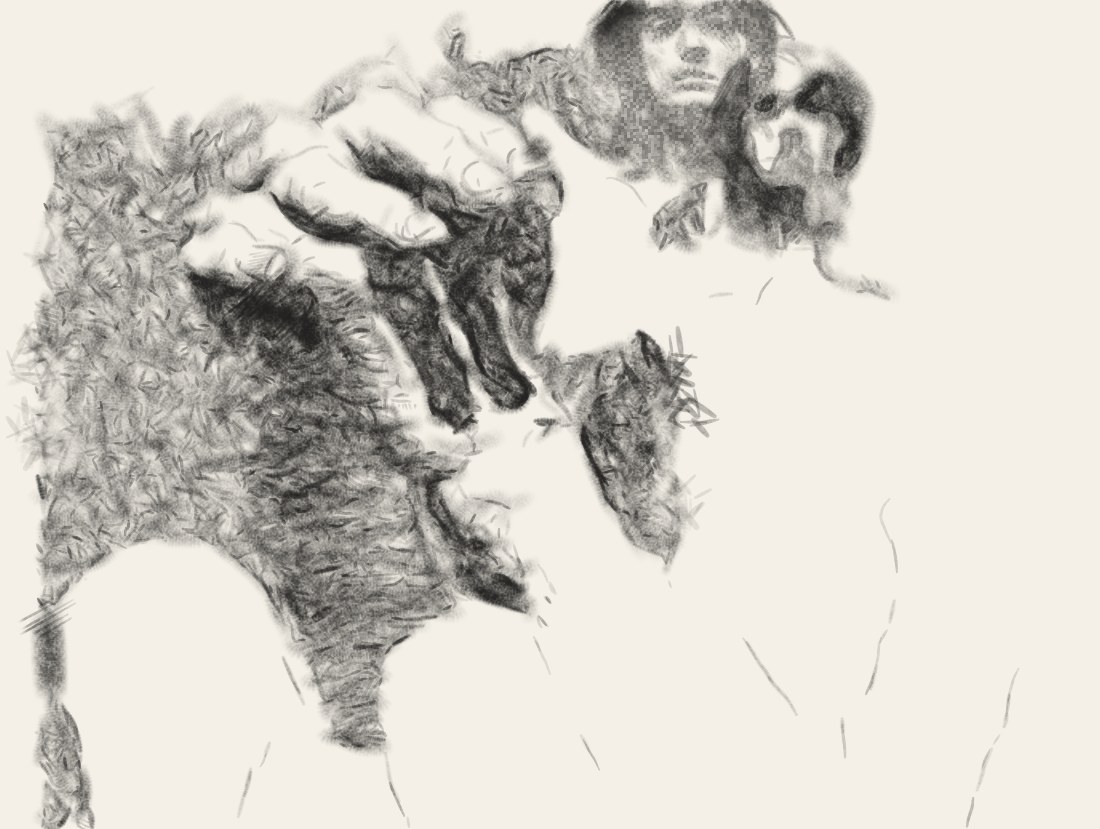
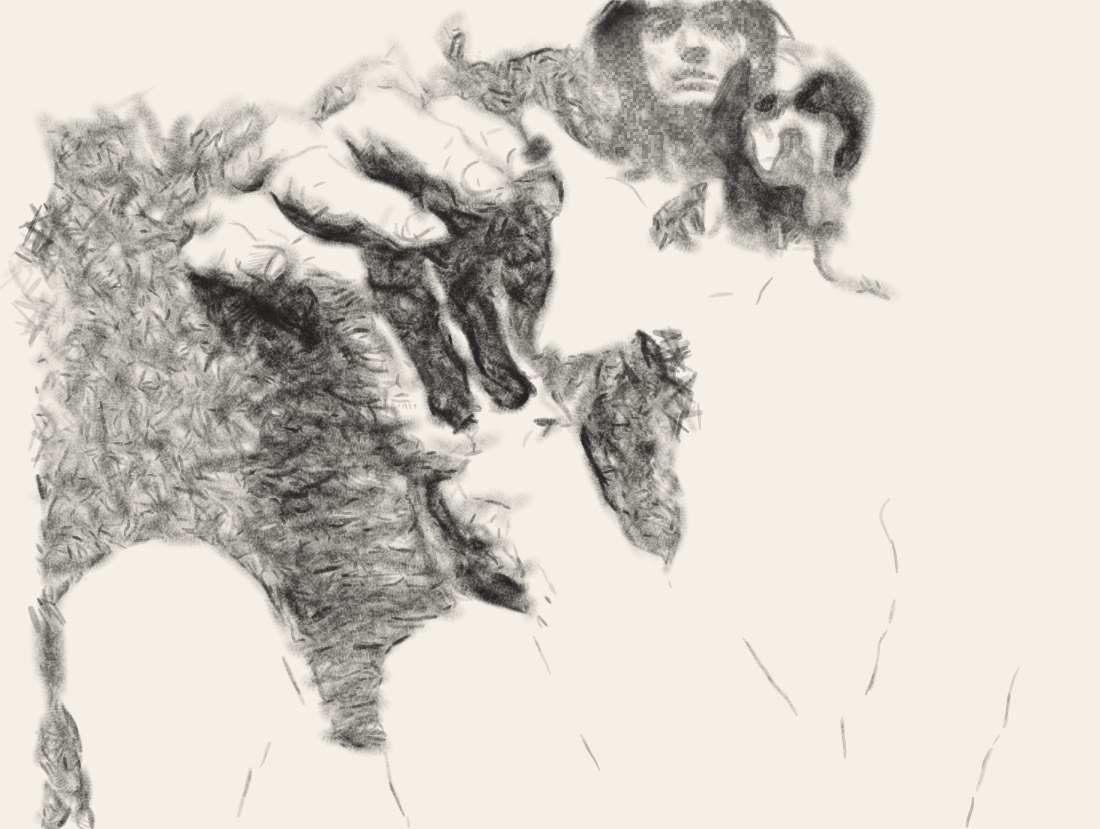
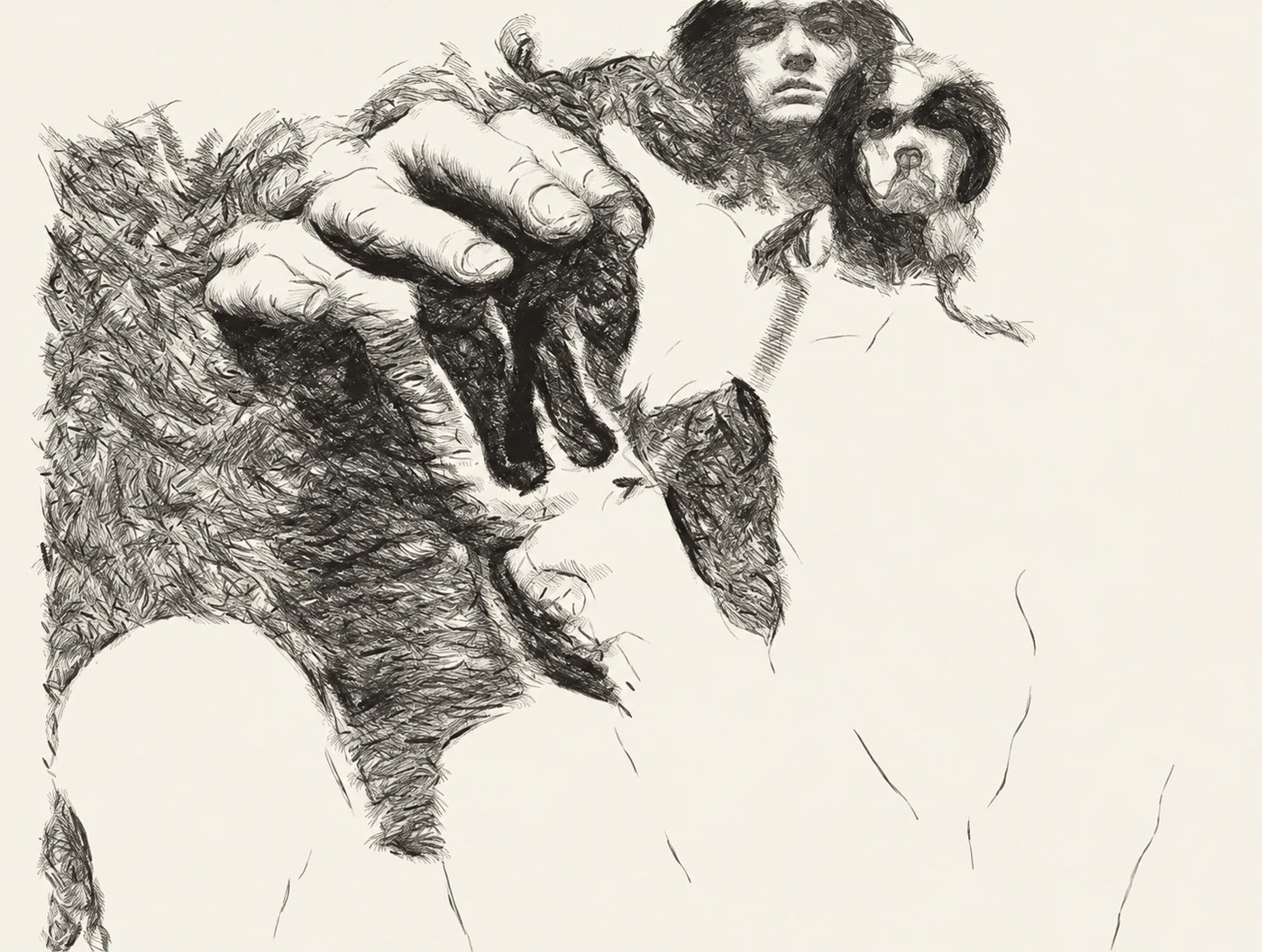
Out to ChatGPT, and a trace back
Notes
Sheet 4: Hands engine, chosen direction (p1 #4 structure)
Stages (all native Kollwitz-charcoal Hands strokes on one canvas; generator images used as targets only):
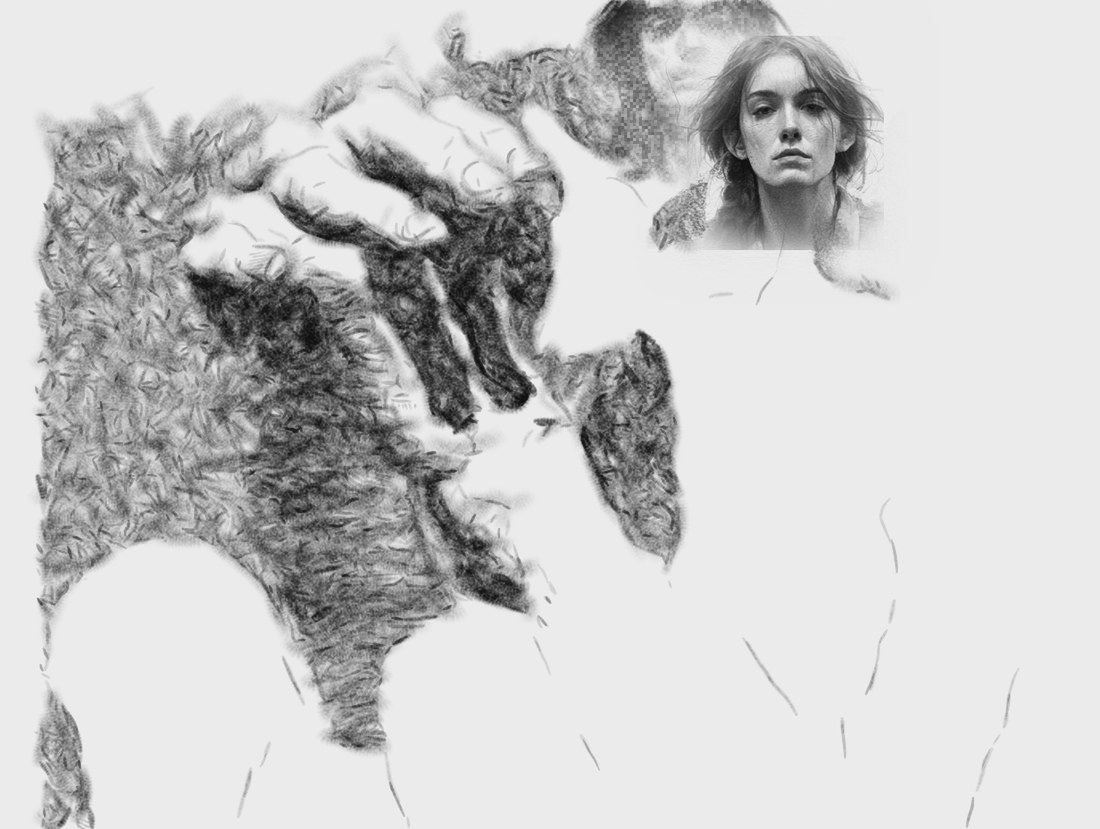
- A: 4285 strokes from planA (p1 #4 base, right panel and top-left lightened, MJ NotSteered #09 default face placed, cut by top edge).
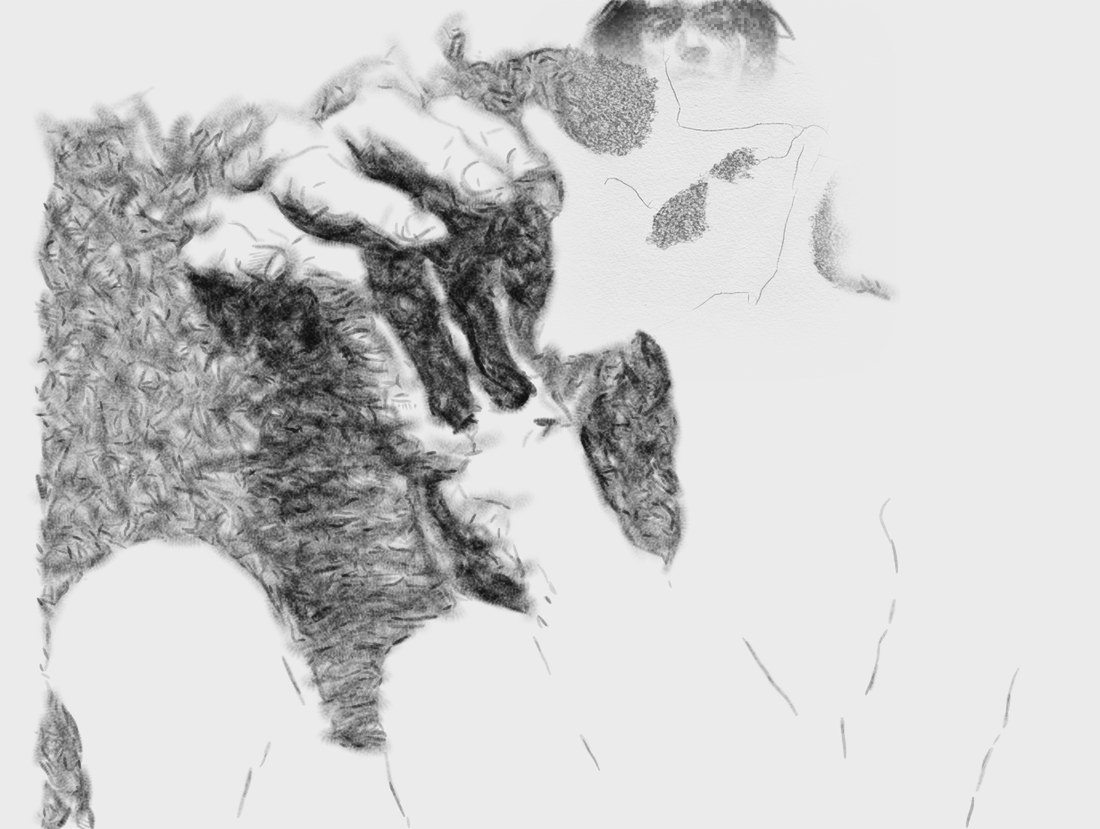
- B: kneaded-eraser lift over the face (box 570,0,805,190 canvas px, strength 0.78, 8 passes). Leaves a ghost in the tooth.
- C: continue from B with planC (no head op). 207 strokes, likeness gain 0.03. No visible second head: the plan did not contain one. Kept as a record.
- C2: continue from B with planC2 (same face crop placed at base box 770,40,990,280; outside that box the target is B). Restraint 0.6, cap 700, seed 21: stopped at 364 strokes.
Observations on C2:
- The ghost head and the displaced second head read as one head that moved (two-time structure).
- The second head resolved to a near-finished face in 364 strokes; the brief asked for "unfinished".
- Both heads are the same MJ default face (centred, frontal, findable), so the default is now present twice.
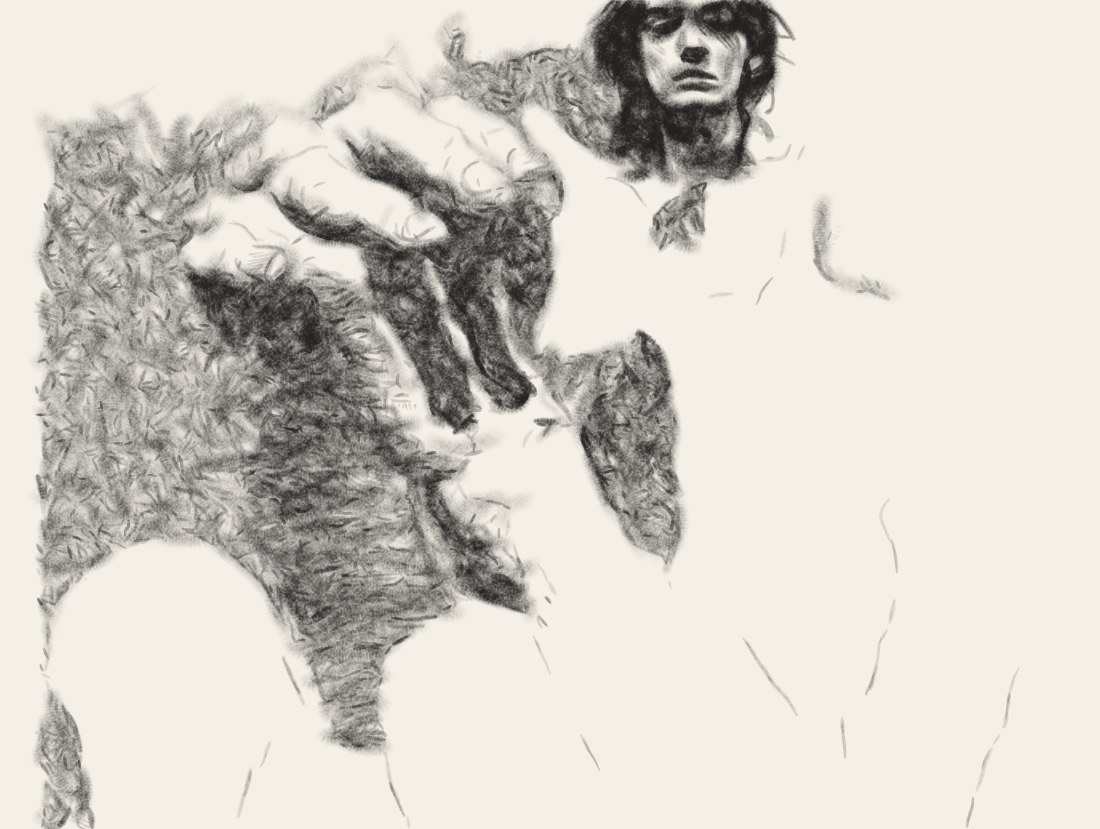
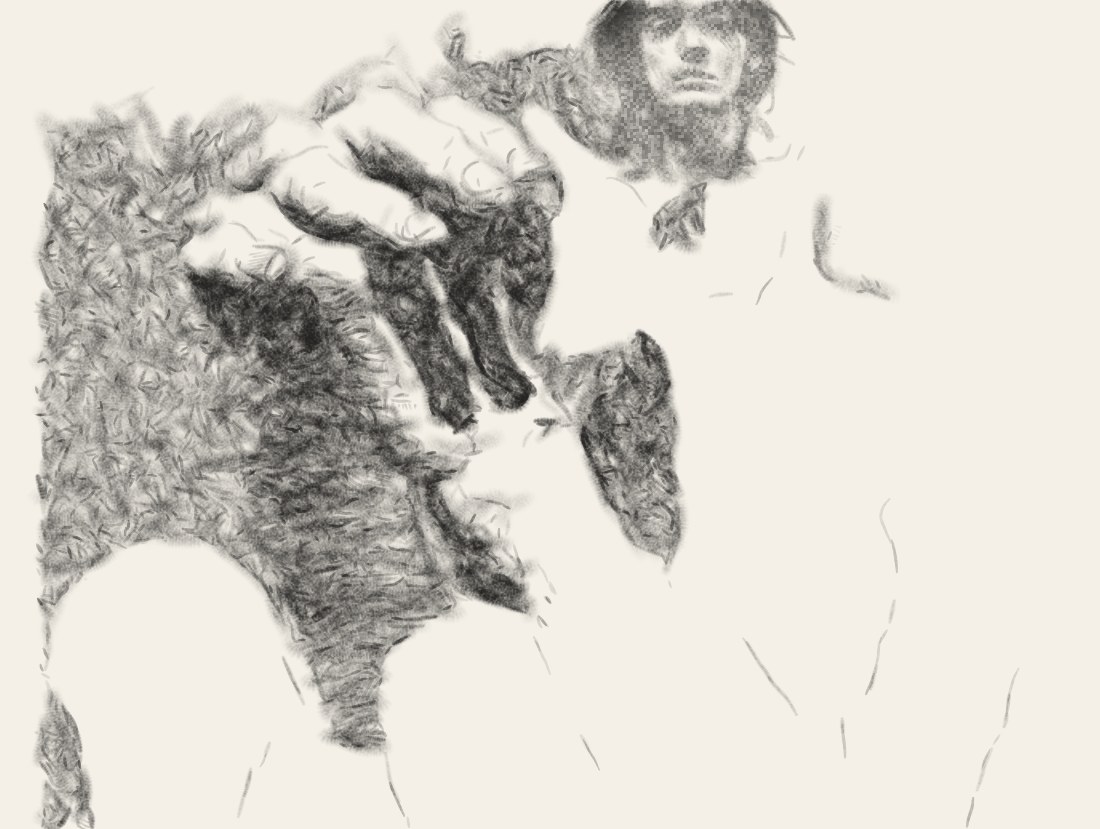
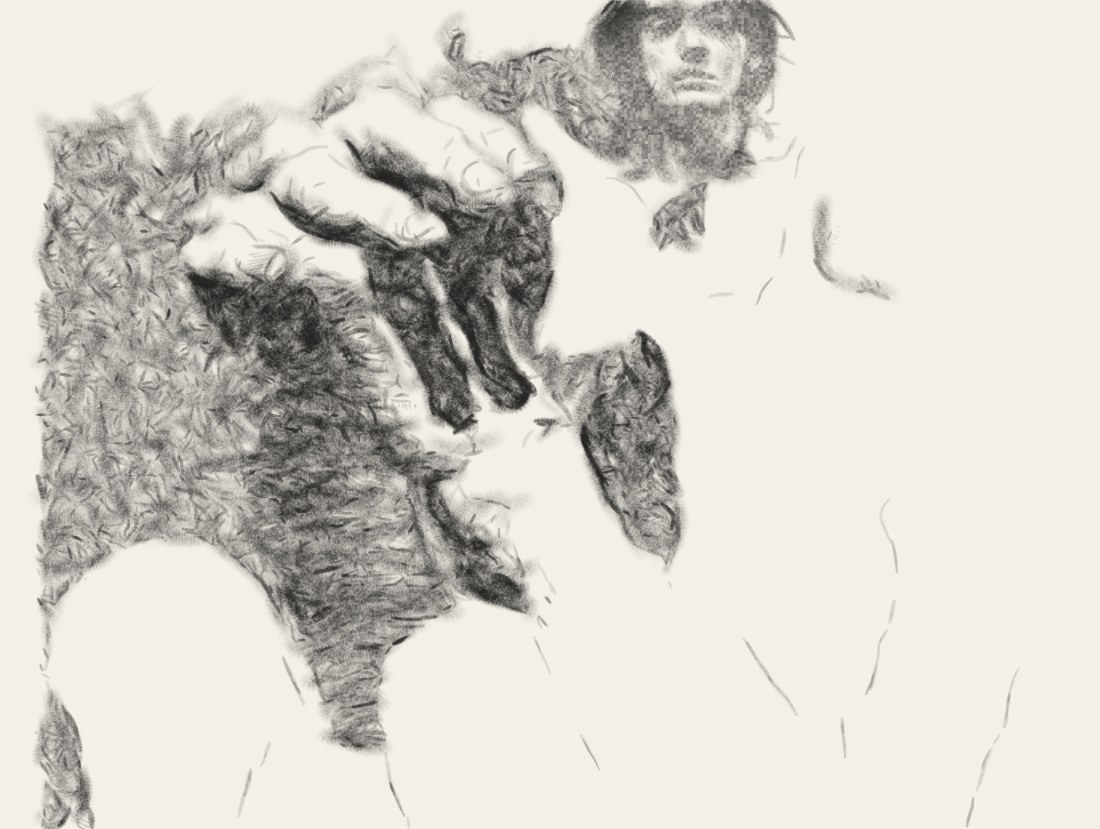
C3: second head as a block-in
- compose
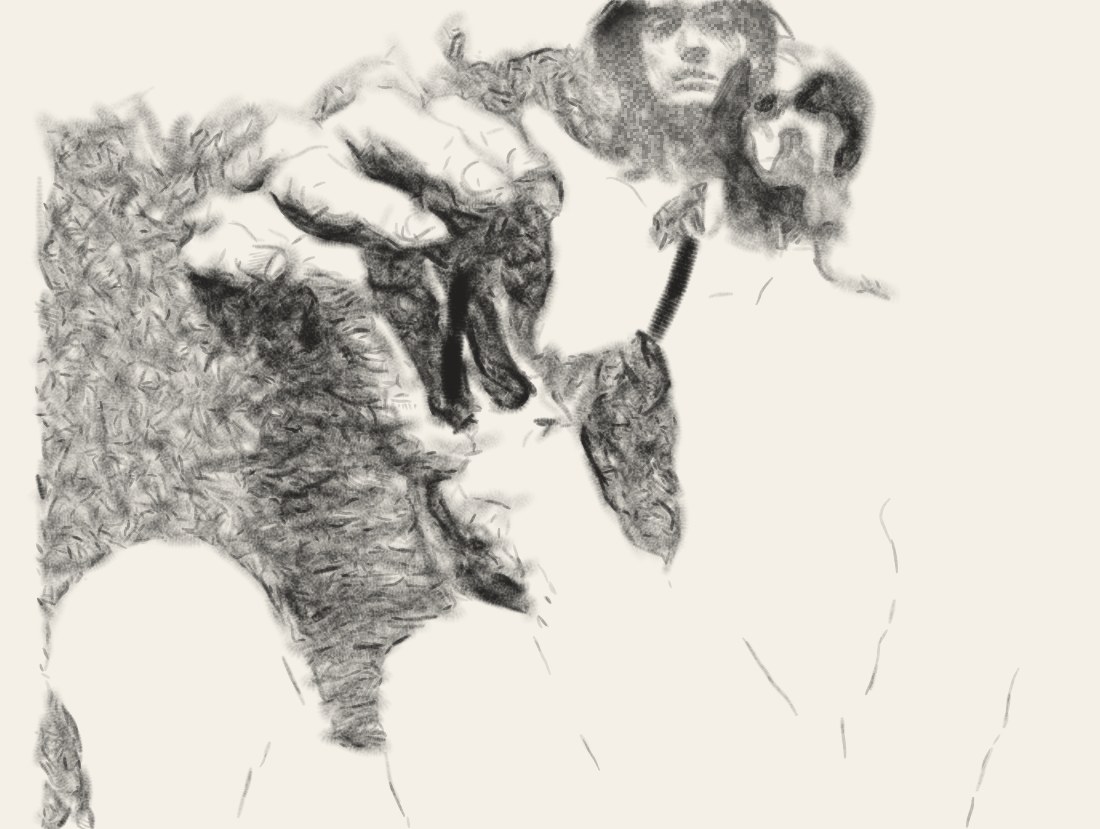
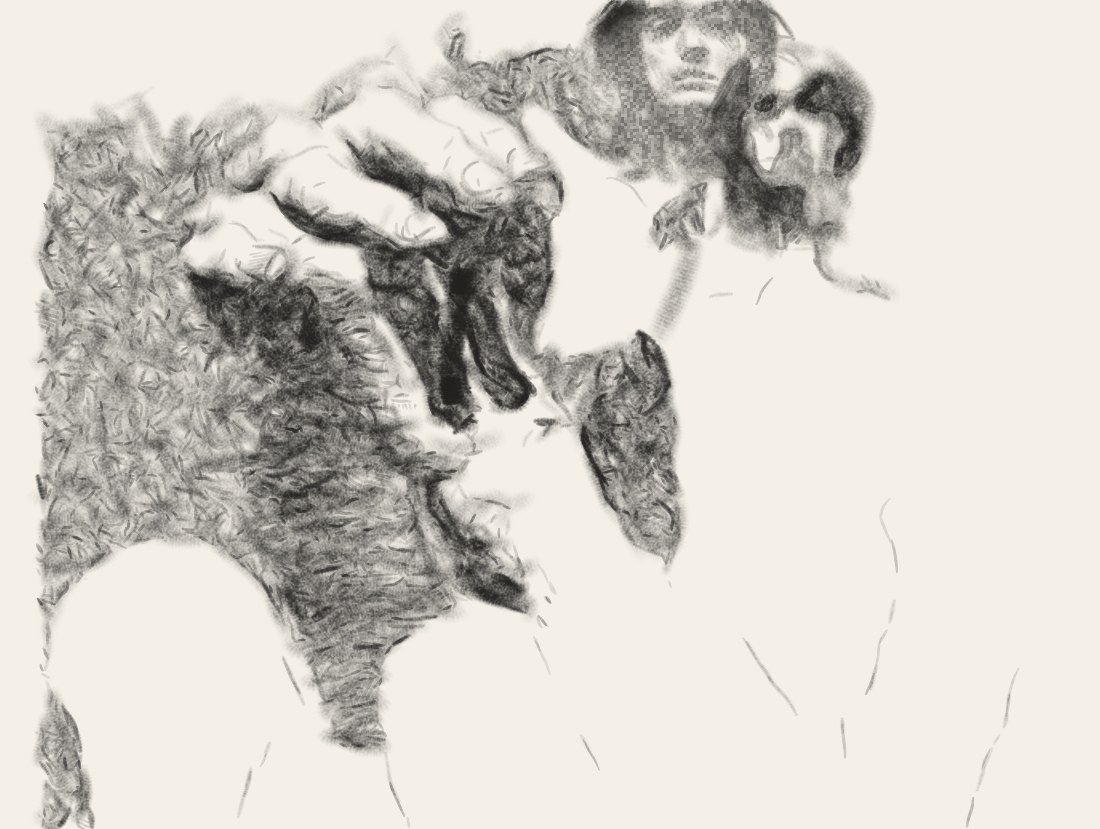
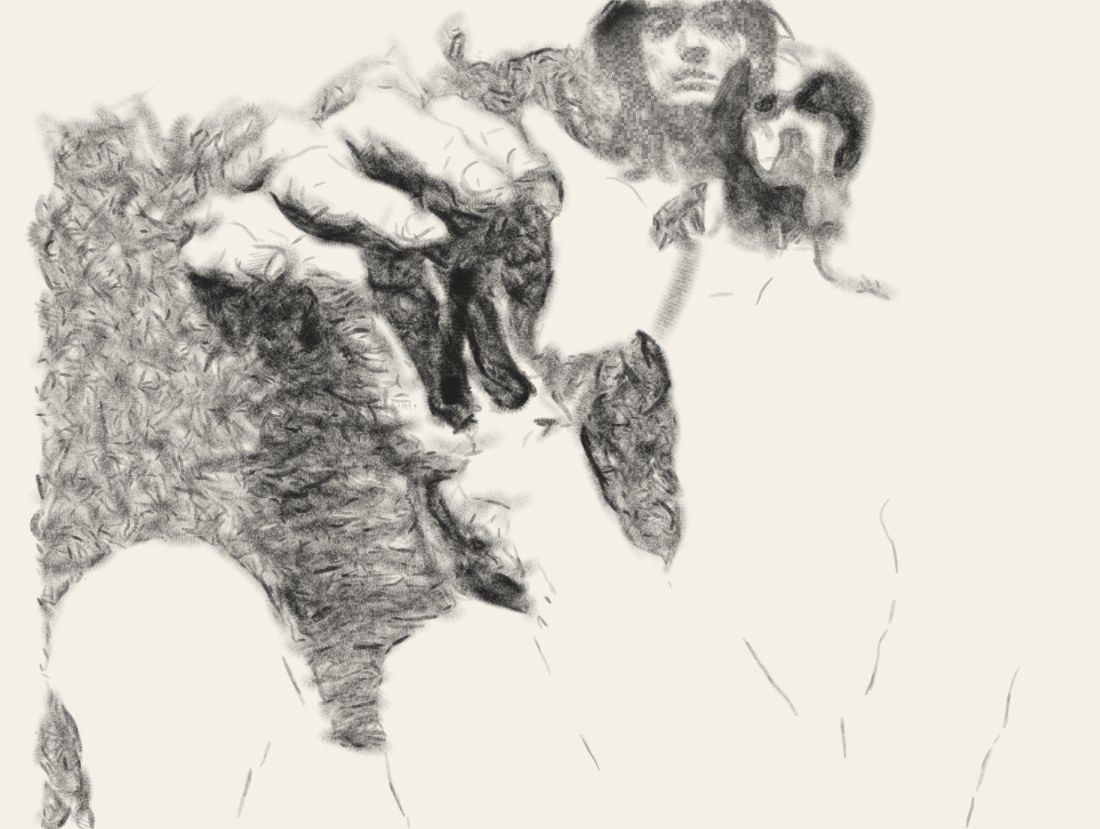
placegainedblurandvalues(squint to N values). planC3 = planC2 with blur 7, values 3. - 350 strokes from B. The second head is hair mass, eye sockets and a nose shadow, no features.
- The taken-back head is now more resolved than the present one.
Critic round on C3 (the paint simulator critic/read.py; packet in critic/)
- canon: VCLI-G 3.31, SCI 2.67, route OMEGA; quiet share 0.48; black share 0.000 (no committed black); 0 controlled anomalies.
- Reading turned into three intentions (intentD.json):
- lose-left-cut (soften-edge, x=44, y 115-545): the mass ends in a straight vertical cut.
- one-black (connect-mass along the finger-shadow ridge): no committed black anywhere.
- neck (connect-mass from head block to shoulder dark): the blocked-in head floats.
D: first intention pass (hand/intend.mjs, kernels v1)
- lose-left-cut: loss 0.0327 -> 0.0323, 3 actions, then 24 candidates rejected as "new light pocket". The edge is low in contrast already (ink 0 -> 0.4); what reads as a cut is its straightness. The soften-edge kernel measures contrast, not shape: this note has no matching kernel yet.
- one-black and neck: kernels satisfied by hard dark stripes (the neck read as a cord). Same failure Codex recorded: a corridor proxy rewards a line.
D2: after the connect-mass fix
- connect-mass now probes 5 points across the corridor, proposes the hand's broad mark nearest the width or its densest hatch, offsets marks across the corridor, and has a softness guard (no new step across the corridor above maxAddedStep).
- one-black: loss 0.1045 -> 0.0050, 30 actions: a soft black mass in the finger shadow.
- neck: loss 0.1051 -> 0.0560, 2 actions, then no admissible action: a faint grey band. The softness guard stopped it.
- Replay exact for D and D2. Tests: tests/test_intend.mjs (all pass).
Comparison (compare.png)
Sheets 1-3 (easel, LLM-written strokes), Codex u03 (Hands, 5539 commands), sheet 4 D2.
break-edge kernel (E, E2, E3, E4 from D2)
- New kernel: boundary located per station (cross profile, smoothed along the edge), wander = mean distance of the smoothed boundary from its best straight line. Loss ((minWander - wander)/minWander)^2. Push / pull actions; maxShift guard.
- E (minWander 4): loss to 0 in 8 actions, visually almost unchanged: 4 px of wander is measurable and does not read.
- E2 (minWander 10, broad flat push): wander reads, but pushes were ribbed "caterpillar" bands.
- E3 (push = cluster of mid-width vocabulary strokes): texture right, but dotted and too dark. Cause: proposal paths were spaced wider than the stamp step (Hands' tracer samples ~0.4 w apart). Fixed with dense().
- E4 (dense paths, push pressure scaled to the tone of the mass): bumps extend the mass in its own texture and tone; loss 0.6503 -> 0.0460, 35 actions. Kept.
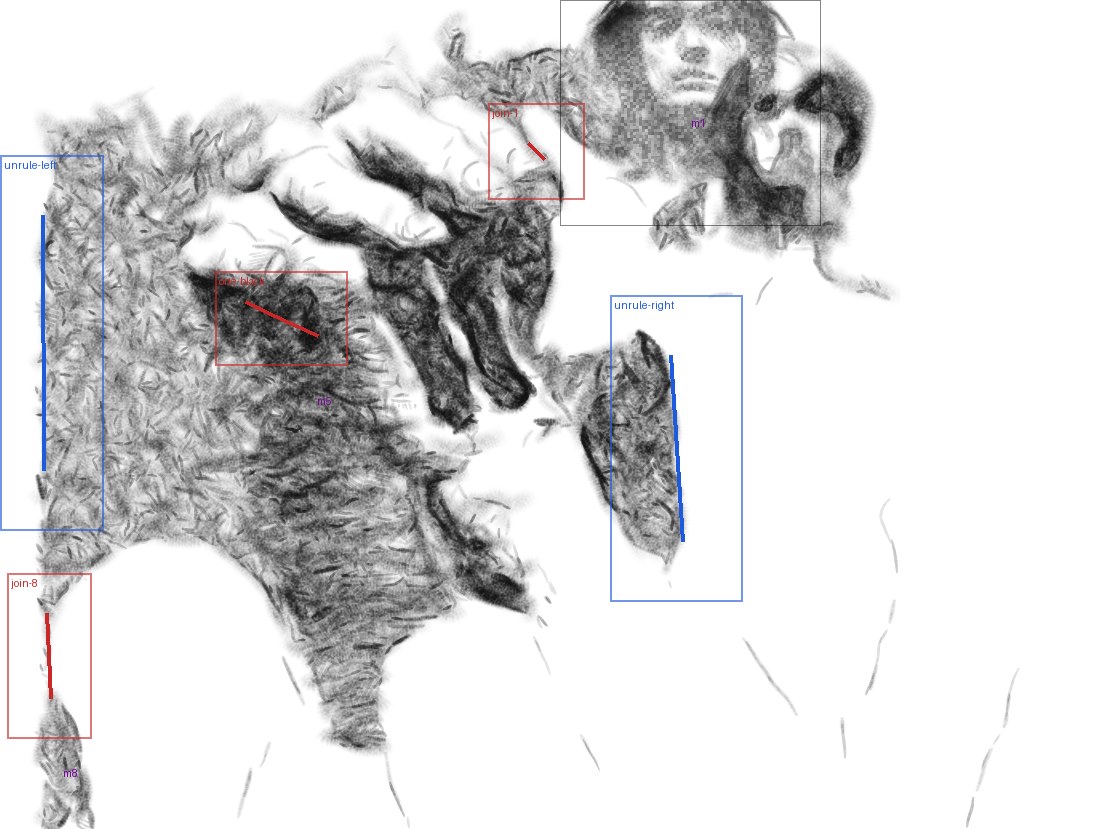
propose.py: critic -> job, tested against the hand-written job on C3 (jobP.json, jobP.png)
Rules: no committed black -> deepen darkest passage; straight boundary >= 150 px -> break-edge; floating mass 15-120 px from main -> connect-mass.
- Hough line detection found no ruled edge (texture breaks it at pixel scale); replaced with side scans of the smoothed mass mask.
- Against the hand-written job: left ruled edge found at the same place (x 42-43); a second ruled edge found (shoulder patch, right side) that the hand-written job did not name; the black rule fired on a different dark passage (under the upper hand, the darkest by smoothed ink) than the hand-written one (finger shadow); the neck was not proposed as such (the nearest gap between the head group and the main mass is elsewhere, at the hair, 23 px); a join across the bottom-left was proposed that would close the reserved white of the knee.
- P (ran jobP): the bottom-left join laid a ribbed bar (hatch mark dragged along a path). P2: hatches laid as patches at the hand's slant. P3: added a cluster option for connect-mass; the broad mark still wins most joins (3 of 4 at bottom-left); the bar is lighter and narrower but is still a band.
Round trip with ChatGPT (gpt/)
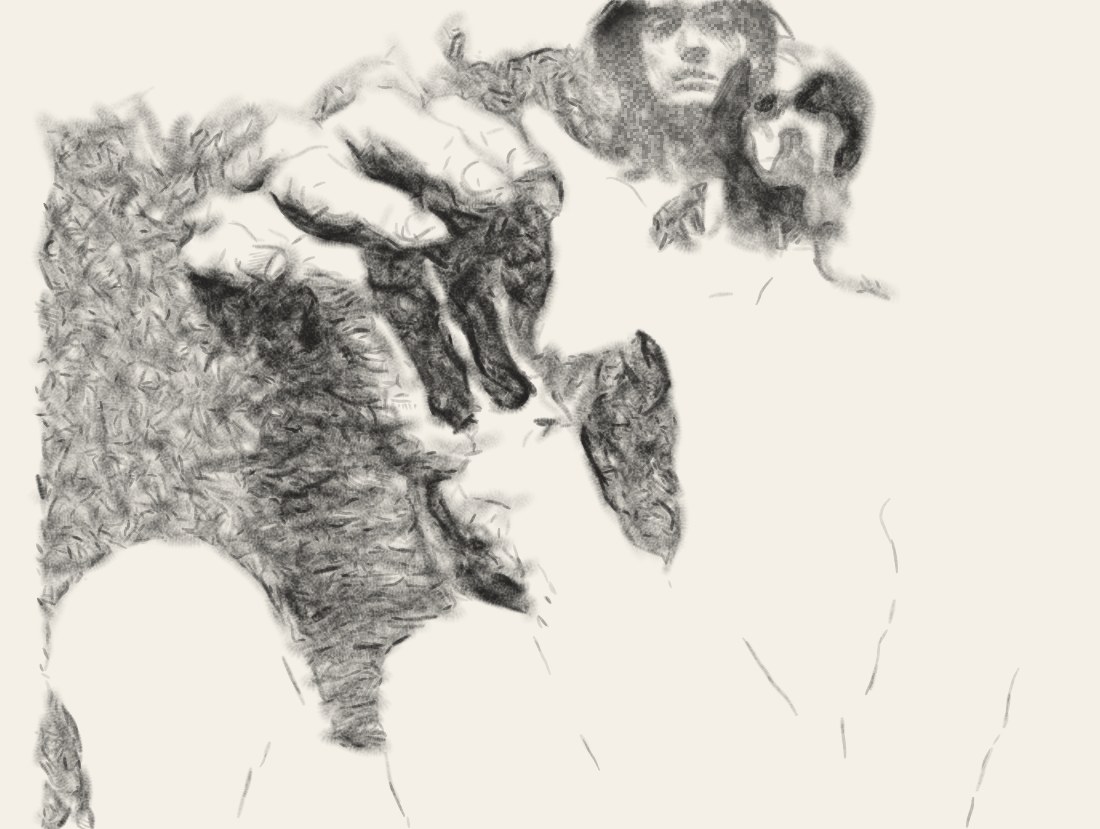
- gpt1.png: Russell's ChatGPT refinement. Prompt (verbatim): "Refine this image with the VTL style, keeping overall look and feel, but seeking additional consistency in mark making, enhance mood and add loose mark making. You can invent."
- H1.png: Hands (kollwitz-charcoal, restraint 0.5, seed 7) redraws gpt1 as its target. gpt_vs_H1.png side by side.
- Critic (both): route OMEGA.
- black_area: C3 0.0004 -> gpt1 0.0142 -> H1 0.0019. hard edges of all edges: 0.169 -> 0.386 -> 0.372.
- In gpt1 the blocked-in second head became a dog.
The ledger: 11 steps, every pull between platforms
| # | tool | platform | by | what happened |
|---|---|---|---|---|
| 1 | compose | local | claude | value plan: p1 #4 structure, panel and top-left lightened, MJ NotSteered #09 default face placed (target only) |
| 2 | hands | local | claude | kollwitz-charcoal, 4285 strokes |
| 3 | eraser | local | claude | kneaded-eraser take-back of the face, box 570,0,805,190 |
| 4 | hands | local | claude | second head as block-in (blur 7, 3 values), 350 strokes, continued on B |
| 5 | critic | local | claude | VCLI-G 3.31 SCI 2.67 route OMEGA; black_area 0.0004 |
| 6 | intend | local | claude | hand-written intentions: one-black, neck |
| 7 | intend | local | claude | break-edge on the left cut |
| 8 | propose+intend | local | claude | translator job from the critic reading |
| 9 | chatgpt | chatgpt | russell | input: one of the sheet-4 stages (as sent by Russell; exact file not recorded) prompt: Refine this image with the VTL style, keeping overall look and feel, but seeking additional consistency in mark making, enhance mood and add loose mark making. You can invent. |
| 10 | hands | local | claude | pull back: Hands kollwitz-charcoal redraws the GPT refinement (restraint 0.5, seed 7) |
| 11 | critic | local | claude | both read; route OMEGA for both |