Visual stages, comparisons and decisions from the original run. Internal prompts, operating documents and downloadable implementation files are omitted. Some interactive comparisons are shown as separate images.
VTL STUDIO / BODY SURFACE EVALUATION / 07 OCT 2026
A connected surface.
A harder test of the fit.
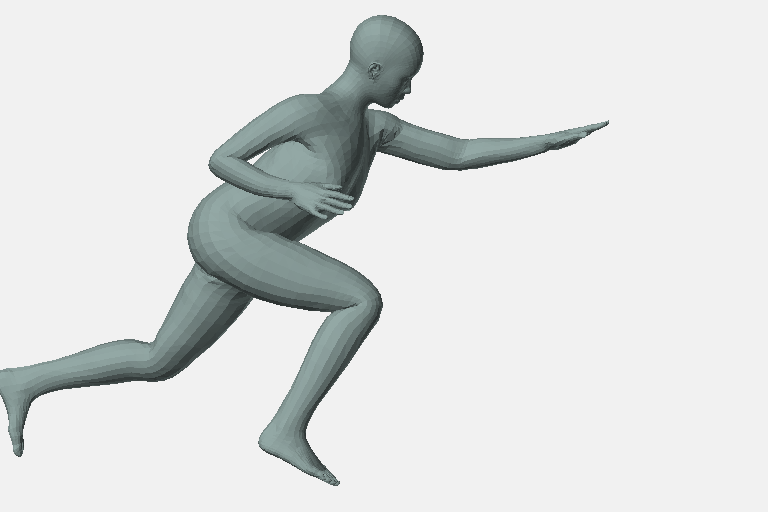
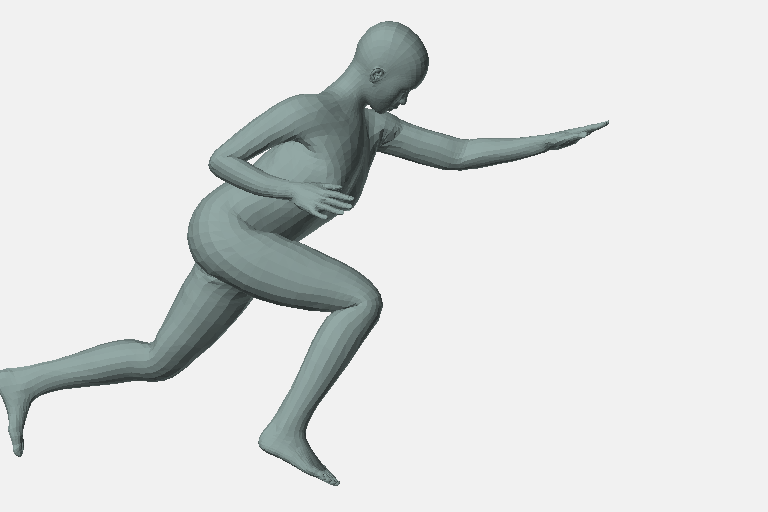
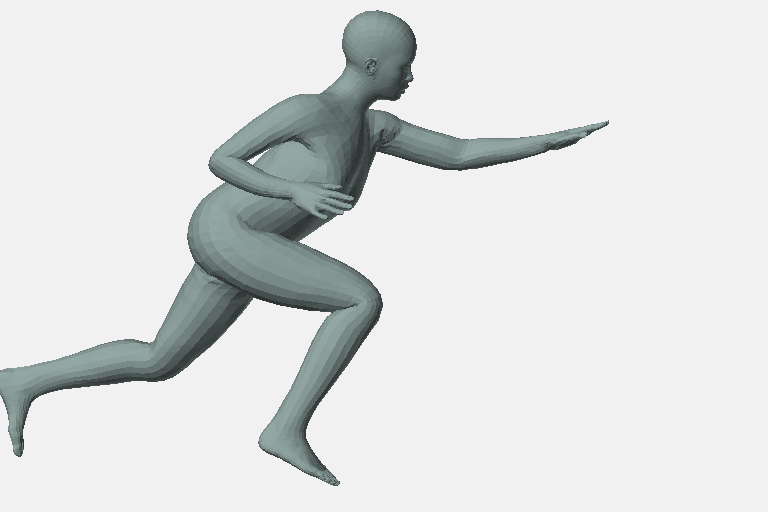
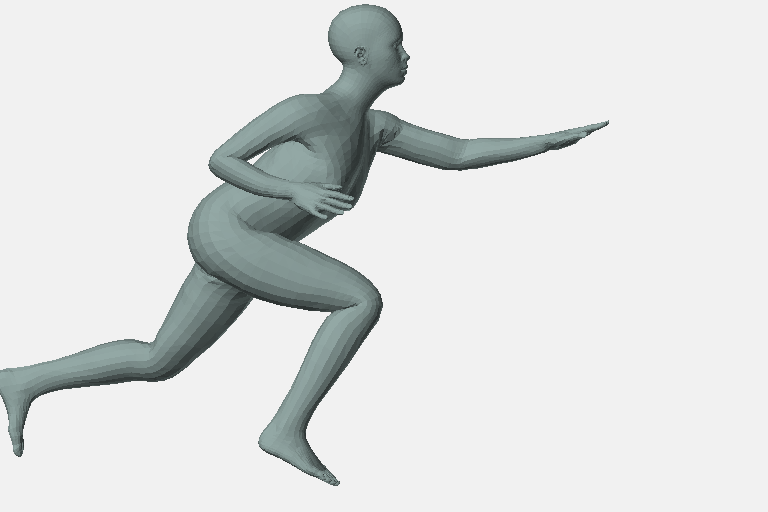
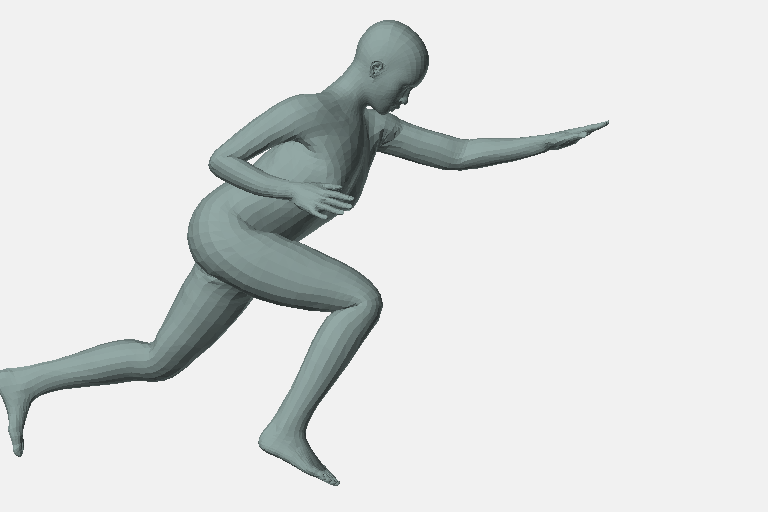
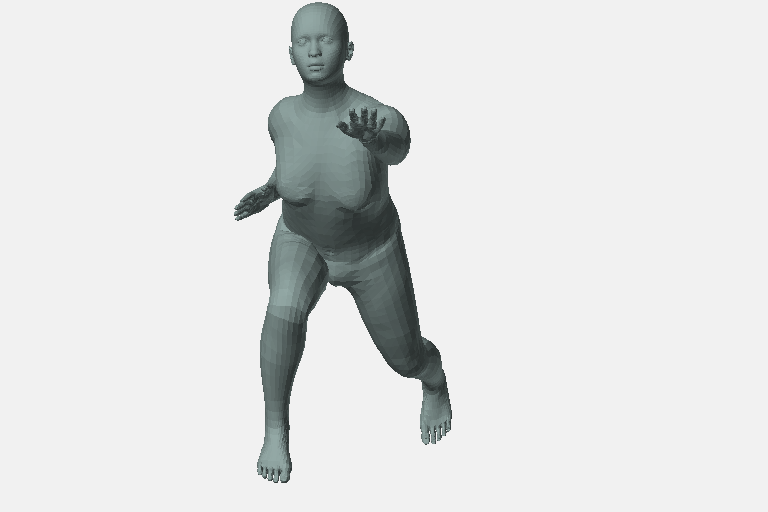
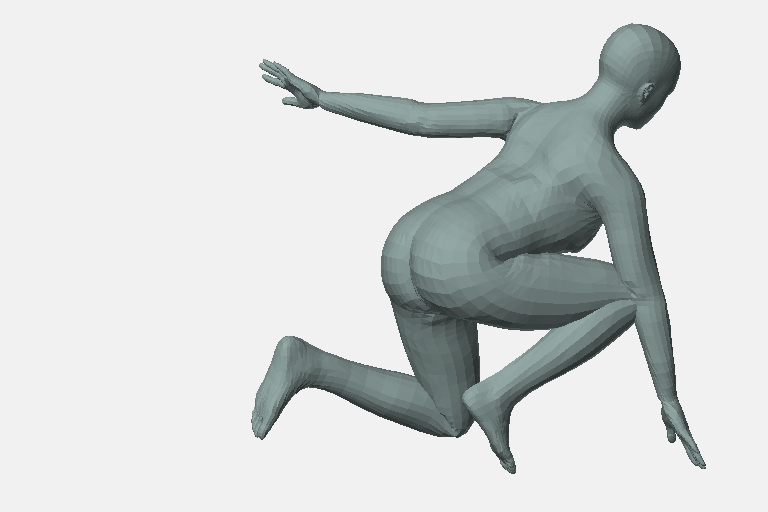
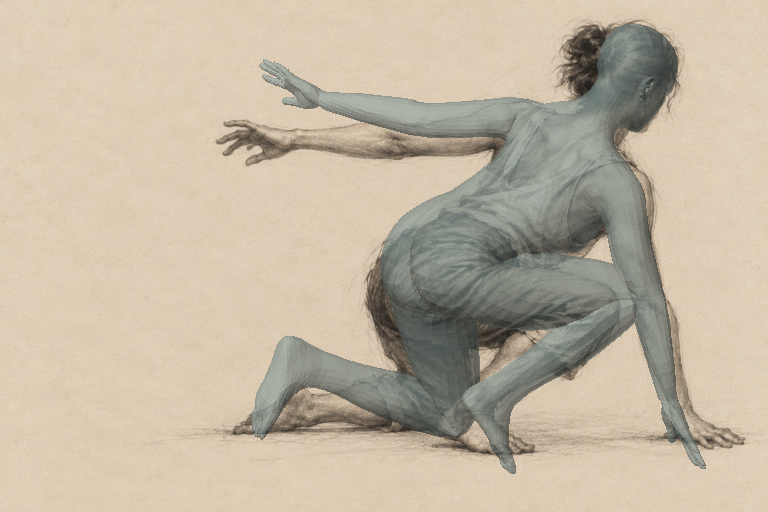
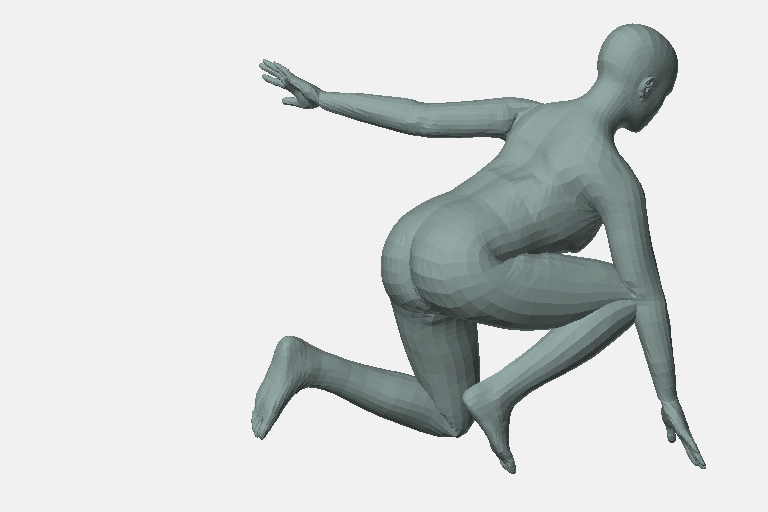
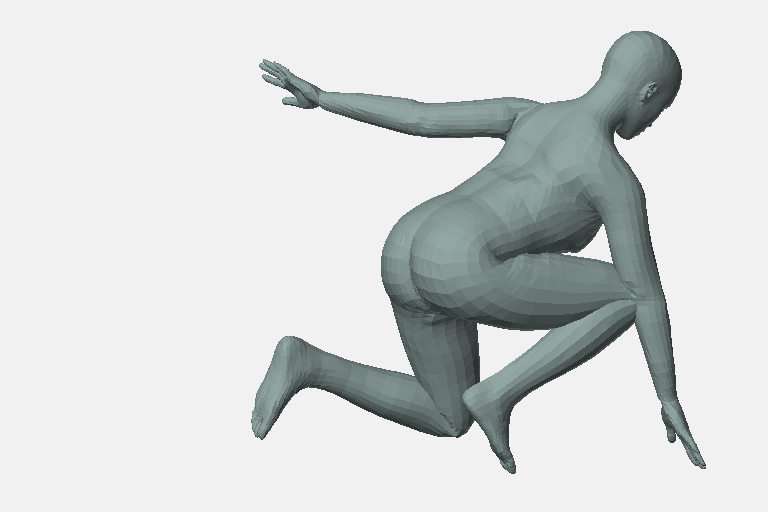
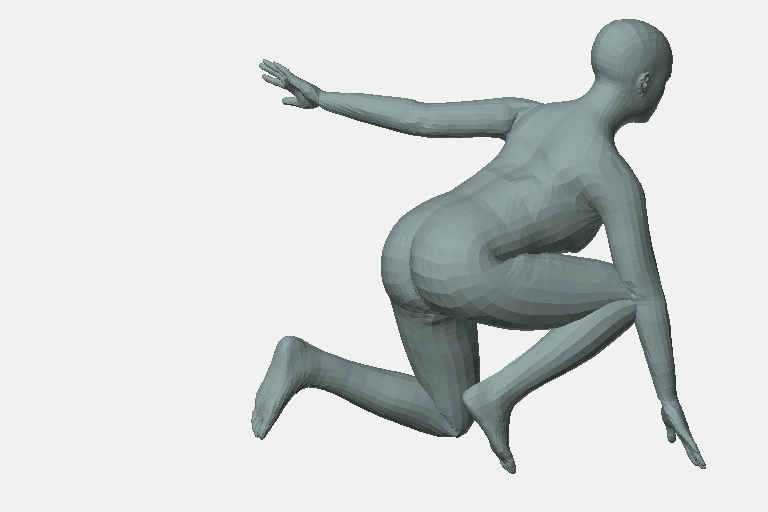
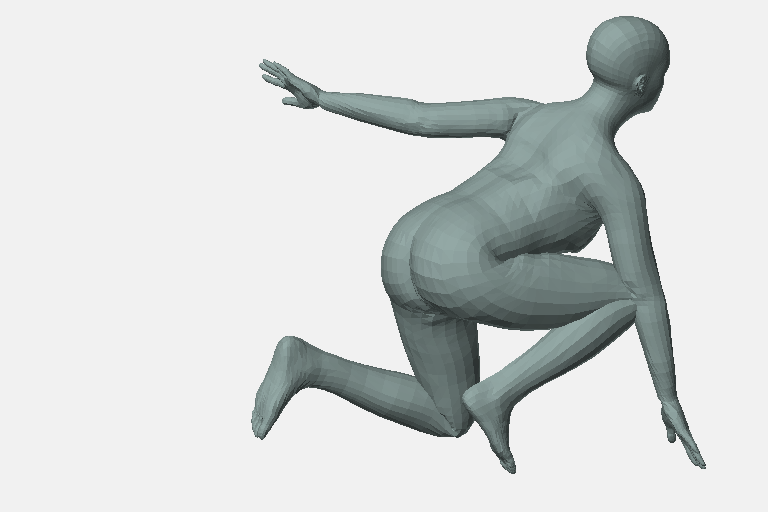
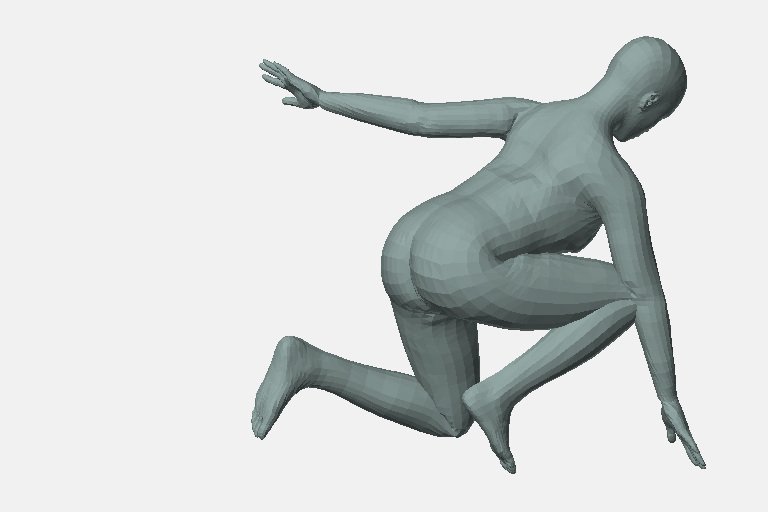
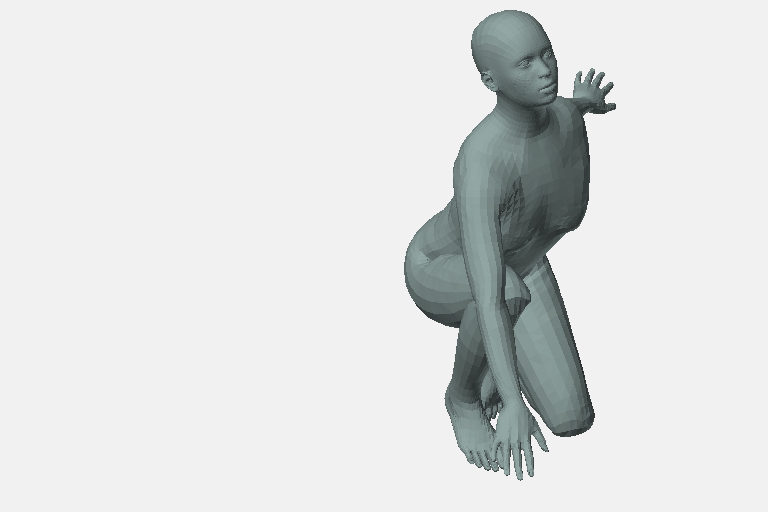
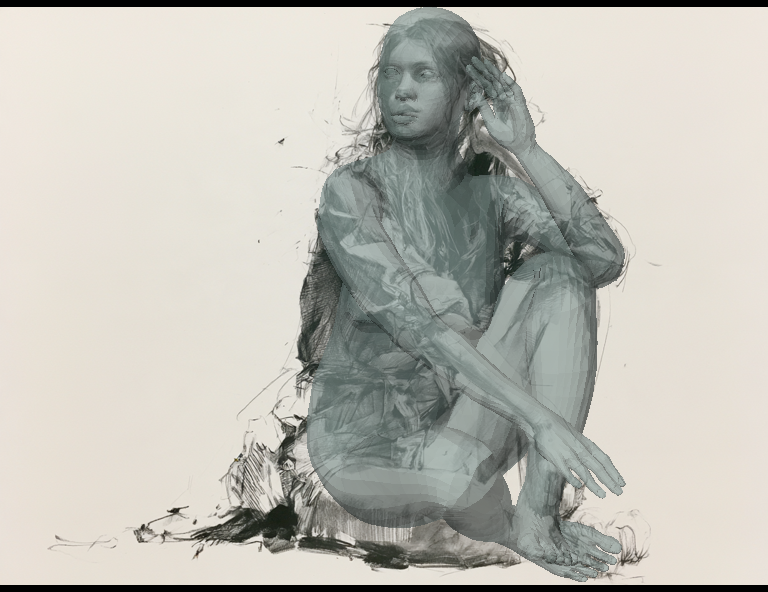
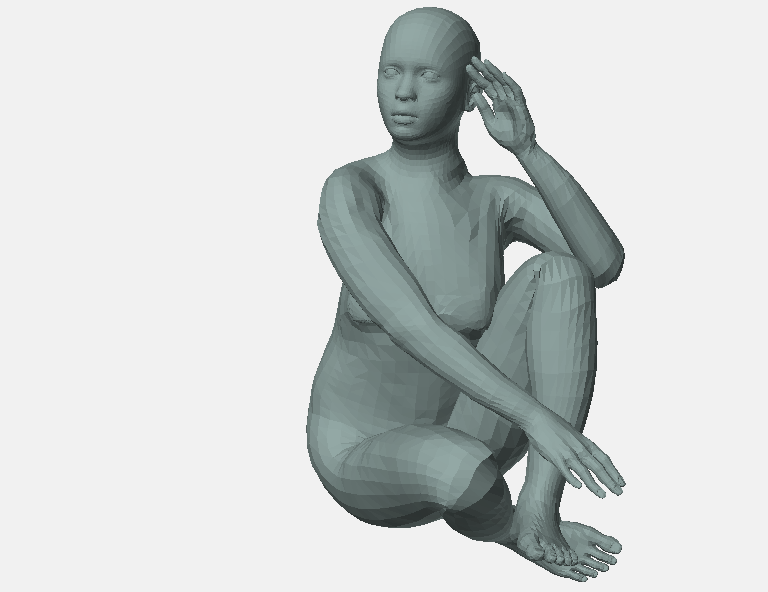
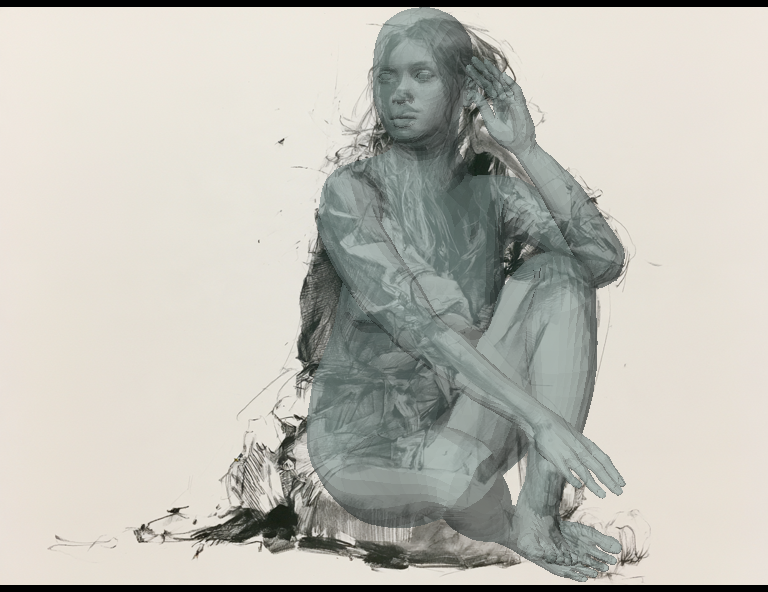
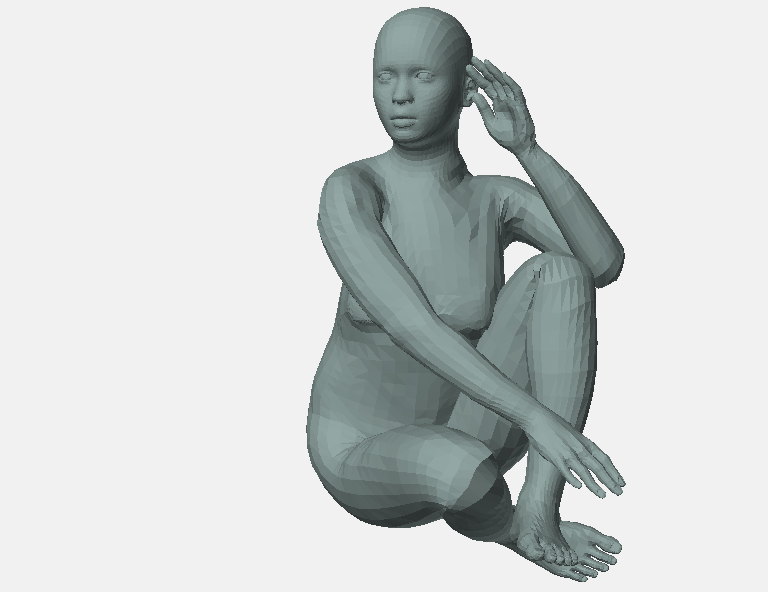
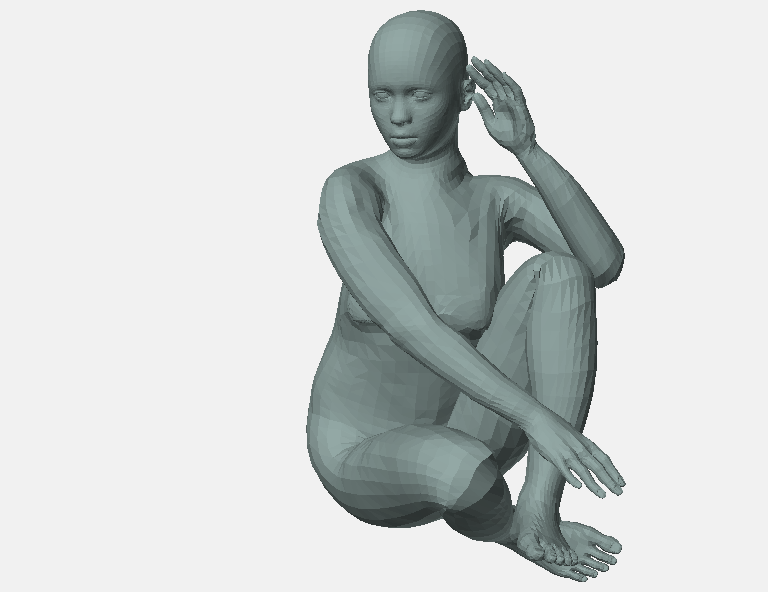
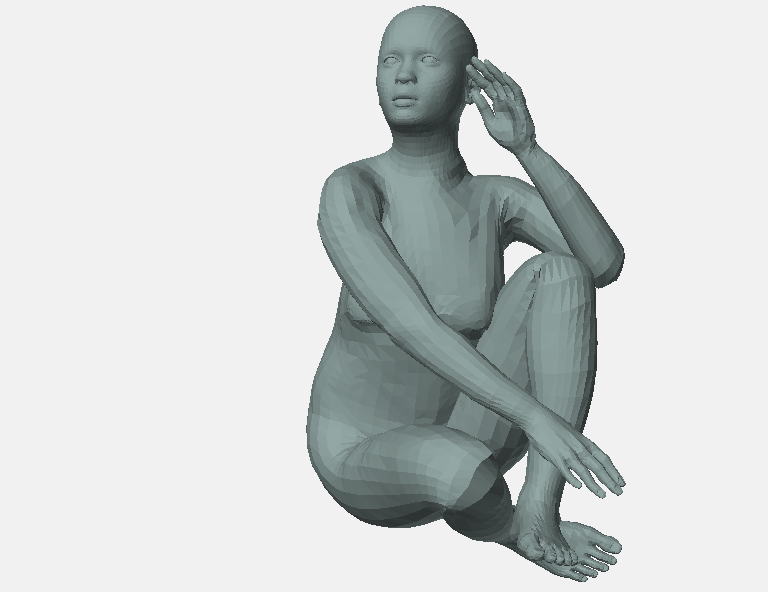
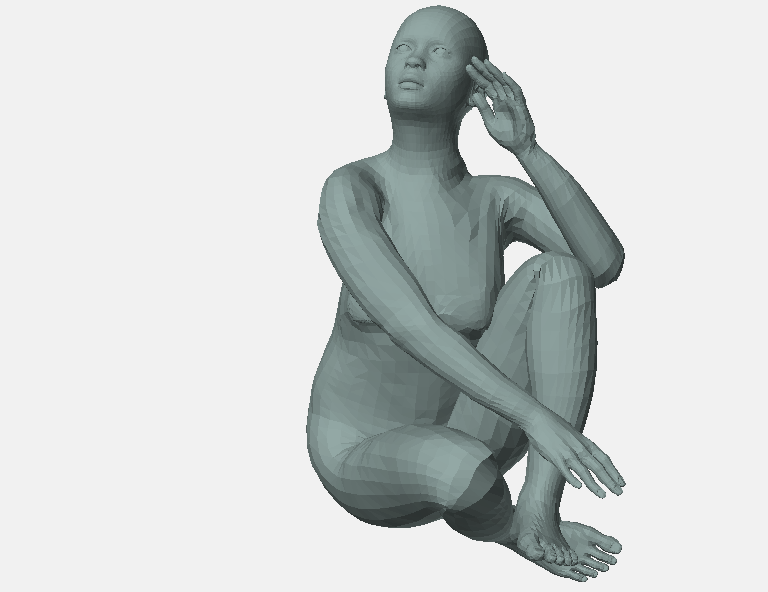
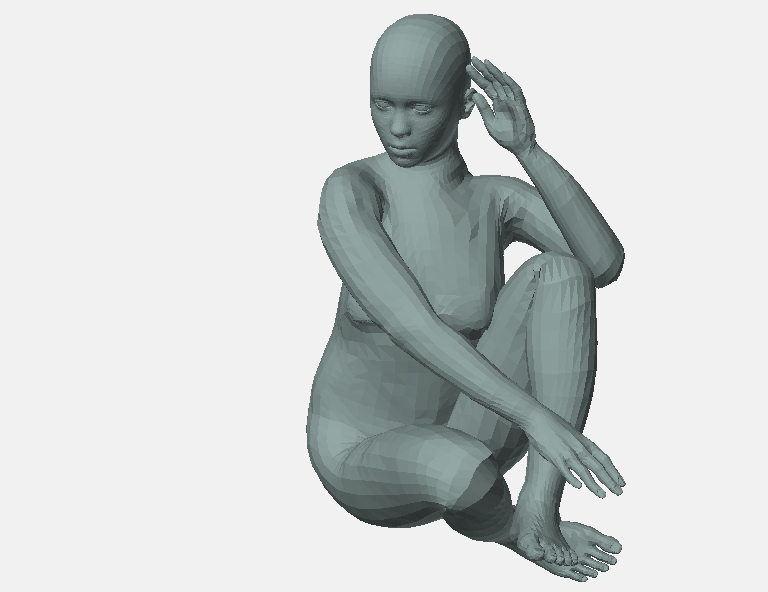
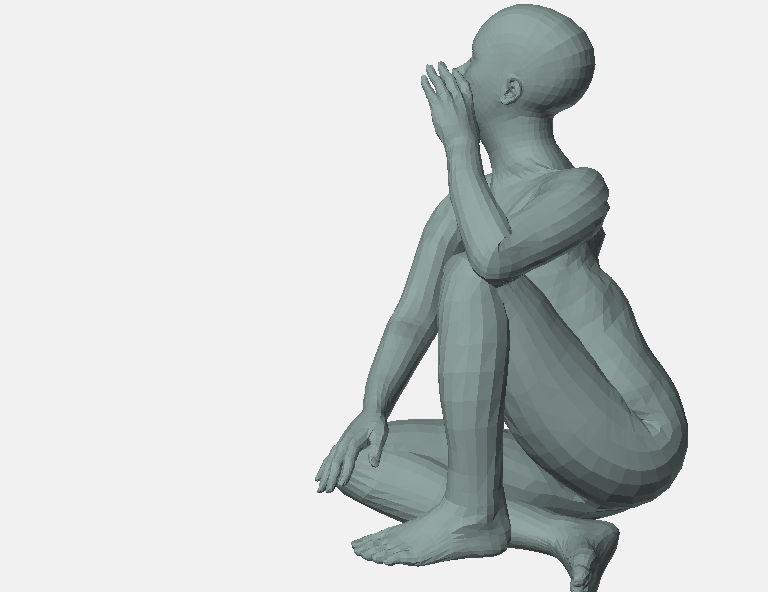
Multi-HMR 2 body inference, Anny articulation, bounded facial-point fitting and diagnostic camera/side views. These are technical meshes, not finished drawings.
All three drawings produced a body mesh; neither nonfigure control did. The rig supports a connected head-lowering edit, but contact, limb placement and uncertain head fitting still prevent artistic retention.
The source-code limitation that matters
The inspected checkpoint decoder fixes head and neck local rotations to their defaults. It supplies a body surface and a rig, but does not itself recover the head articulation we need. The optional fitting stage below is our separate experiment, grounded in the prior model’s estimated facial points.
reach-01
Detected bodies: 1. Facial-point weighted RMSE: 11.45 → 3.15 pixels. This measures agreement with inferred points, not anatomy.
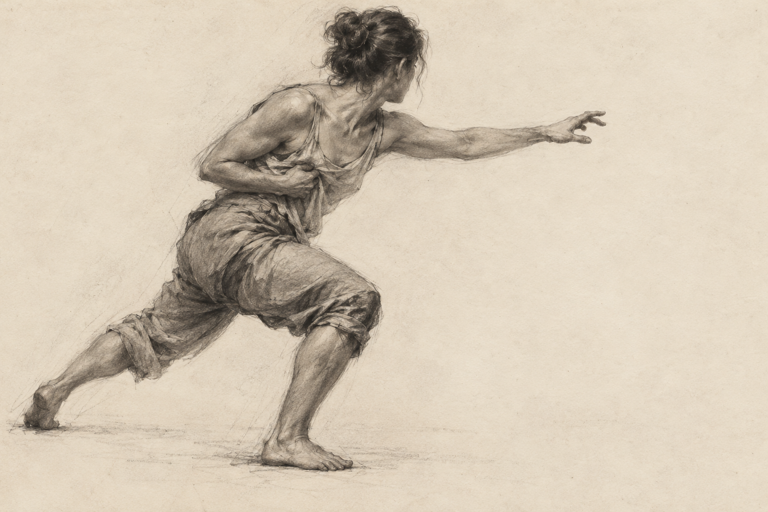
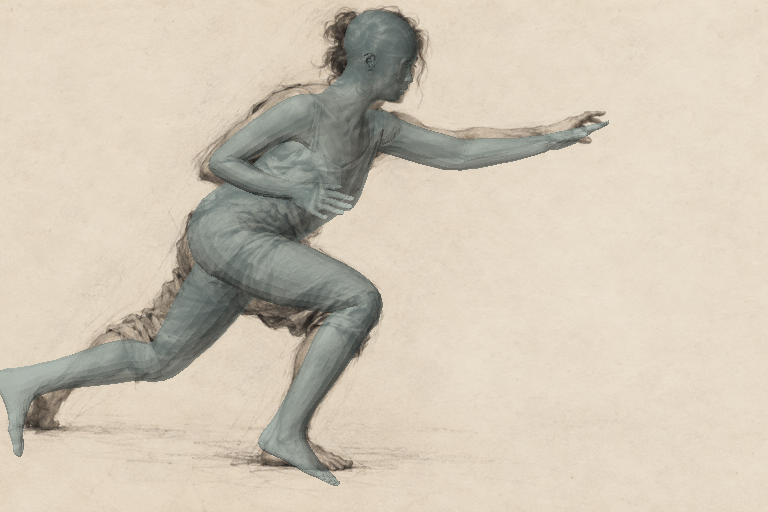
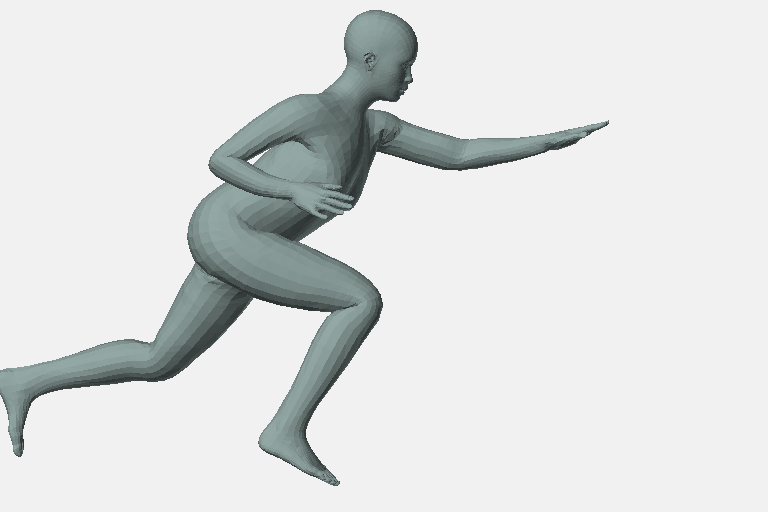
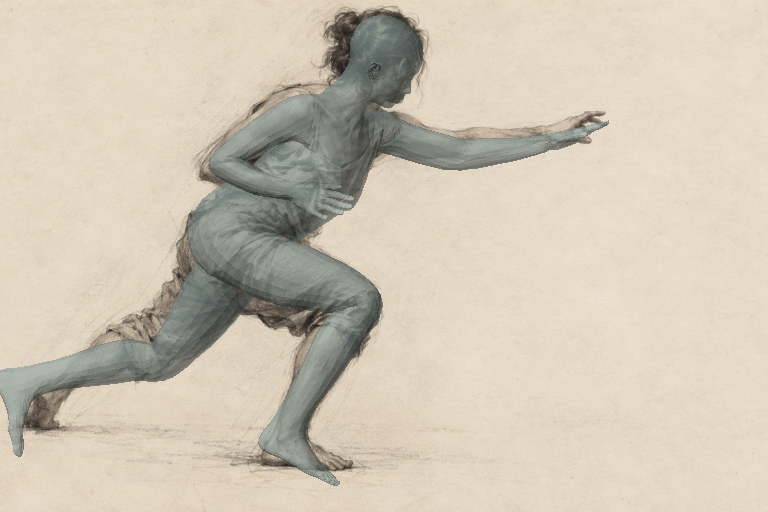
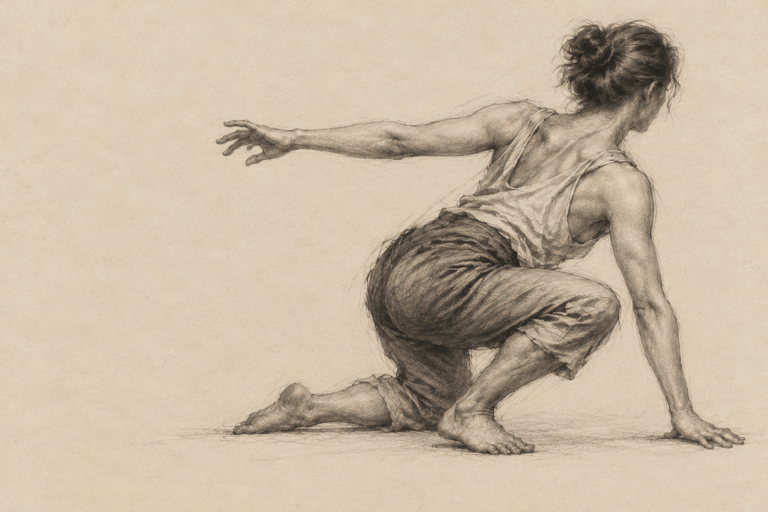
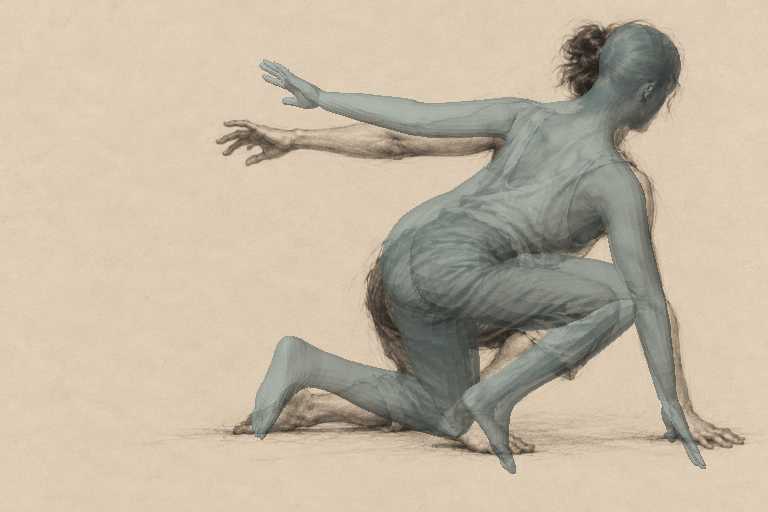
reach-03
Detected bodies: 1. Facial-point weighted RMSE: 13.65 → 12.68 pixels. This measures agreement with inferred points, not anatomy.
plain-00
Detected bodies: 1. Facial-point weighted RMSE: 7.32 → 4.07 pixels. This measures agreement with inferred points, not anatomy.

Negative controls
- control-abstract: 0 detected bodies.
- control-stilllife: 0 detected bodies.
Visual judgment and retention
Reach-01: the torso and reaching gesture are recognizable. The rear foot extends beyond the image and misses its original ground contact; the forward foot also differs. A high detection confidence did not protect these relationships.
Reach-03: the broad crouch survives, but the reaching arm is higher than the source and the feet/supporting hand do not convincingly share its ground. The inferred head orientation remains uncertain. Facial-point fitting changed weighted RMSE only from 13.65 to 12.68 pixels.
Plain-00: the seated construction is comparatively recognizable, including the hand raised beside the head. Hands, shoulder and leg placement still differ from the source; clothed contours are not reconstructed by a body mesh.
Facial-point fitting reduced RMSE from 11.45 to 3.15 pixels for reach-01 and from 7.32 to 4.07 for plain-00. These are agreements with another model’s estimates, not measurements against anatomical ground truth.
The initial negative local-X articulation lifted the chin. Visual review rejected that direction. The positive local-X version lowers the head in the inspected views while keeping a connected neck. Both attempts are preserved.
Side views expose plausible-looking but unverified depth arrangements. Fixed topology and unchanged unrelated joints do not rule out self-intersection, unstable balance or an incorrect body interpretation.
Retain the body-model adapter as a research component. Before converting these meshes into drawing plans, fit and validate whole-body constraints: source-aligned limb landmarks, hand/foot contacts, camera and occlusion. Reject a mesh that improves one local fit while breaking those relationships. Artistic simplification and mark planning remain separate from mesh fitting.
What was actually computed
- Infer camera, shape and bone transforms from pixels, preserving the uncorrected result.
- Reconstruct the mesh from its saved parameters and require a close vertex roundtrip before editing.
- Change local neck/head rotations through the connected rig, regenerate the surface, and check unrelated bones.
- Separately fit three shared rotation parameters to nose/eye/ear estimates. Hold camera, shape and body fixed.
- Render the resulting meshes with a depth buffer. Inspect camera and side views separately from the numerical checks.
A lower projection error is not proof of correct anatomy. The tests do not certify collision freedom, identity, clothing, balance or artistic quality. No source image pixels are warped into these mesh surfaces.
Sources and reproduction
Multi-HMR 2 · Anny · SAM 3D Body access requirements
Local CPU research evaluation. Multi-HMR 2 has and ; no new rights are assigned. Weights, caches and runtime environments are excluded from the microsite copy. No image generator or cloud inference was used.