Visual stages, comparisons and decisions from the original run. Internal prompts, operating documents and downloadable implementation files are omitted. Some interactive comparisons are shown as separate images.
Round complete: six transfer studies, findings and full ledger →
Construction batch completed: results and updated ledger →
Can the instrument
do what we ask?
Twelve fixtures, three paper seeds each. One consolidated checkpoint. U03 was not changed.
Verdict: proceed to construction, with limits
All 36 fixture executions passed their stated numerical criteria. Visual inspection still identified a defect: sparse paths bead along their edges. The original 10% tone-tolerance check passed with 9–9.4% variation, but was too permissive to judge edge quality.
Corrected in an opt-in adapter: uniform arc-length sampling removes the visible beading for the tested straight path. Nine follow-up density/seed combinations agree within a scalar tolerance of 0.000001. The adapter is ready to trial in construction tests; it has not replaced the production planner or been validated for every mark family.
Do not promote native lifting to full removal. Twelve lifts recover about 97.86% of the deposited tone, yet leave a readable outline. Use explicit digital erasure when complete removal is intended. This finding separates tone recovery from perceptual success.
The controls now justify a construction comparison. They do not establish expressive drawing, anatomy, autonomous artistic judgment or superiority to other systems.
Progress ledger
| Batch | Planned outputs | Completed | Status |
|---|---|---|---|
| Instrument control | 12 | 12 | Complete · 36 executions |
| Drawing construction | 12 | 12 | Complete · see construction review |
| Artistic transfer | 6 | 6 | Complete · see transfer review |
The sampling correction adds nine focused checks to this batch. These are robustness checks, not nine additional artworks. The 30-output plan remains a bounded exploratory round.
Next checkpoint: four passages × three approaches—current method, finer observation, selective reconstruction. Use hands, contour, fabric supporting weight, and an arm–torso opening. Compare actual renders in context, preserve failed results, and choose methods only when the whole drawing benefits.
Required: construction comparison and contextual judgment. Optional: more media, larger seed sweeps and physical charcoal simulation. No further fixture expansion unless a new change or unresolved result calls for it. .
Process and methods
The harness exercises the existing Hands-based native canvas directly with known paths and mark parameters. It varies one principal control at a time and repeats with paper seeds 11, 29 and 73. The charcoal vocabulary's first mark supplies the base settings; this does not test its entire repertoire.
Each figure shows seed 11. Tone is measured as scalar distance from the paper value. Support uses an explicit contrast threshold. Boundaries and replay use exact pixel/state comparisons. Engineering thresholds are declared in the harness and are not published perceptual standards.
Most fixtures bypass the planner and apply known commands. This isolates the instrument but leaves planner choice, anatomy, pressure along a single stroke, complex curvature and artistic quality unproven. The numerical verdict and the assistant's visual judgment are separate.
The correction resamples a supplied polyline at uniform arc-length intervals. It cannot recover curvature missing from the supplied points. Intentional dots and broken marks must not be silently normalized into continuous strokes.
See corrected straight-path rendering
Contact sheet
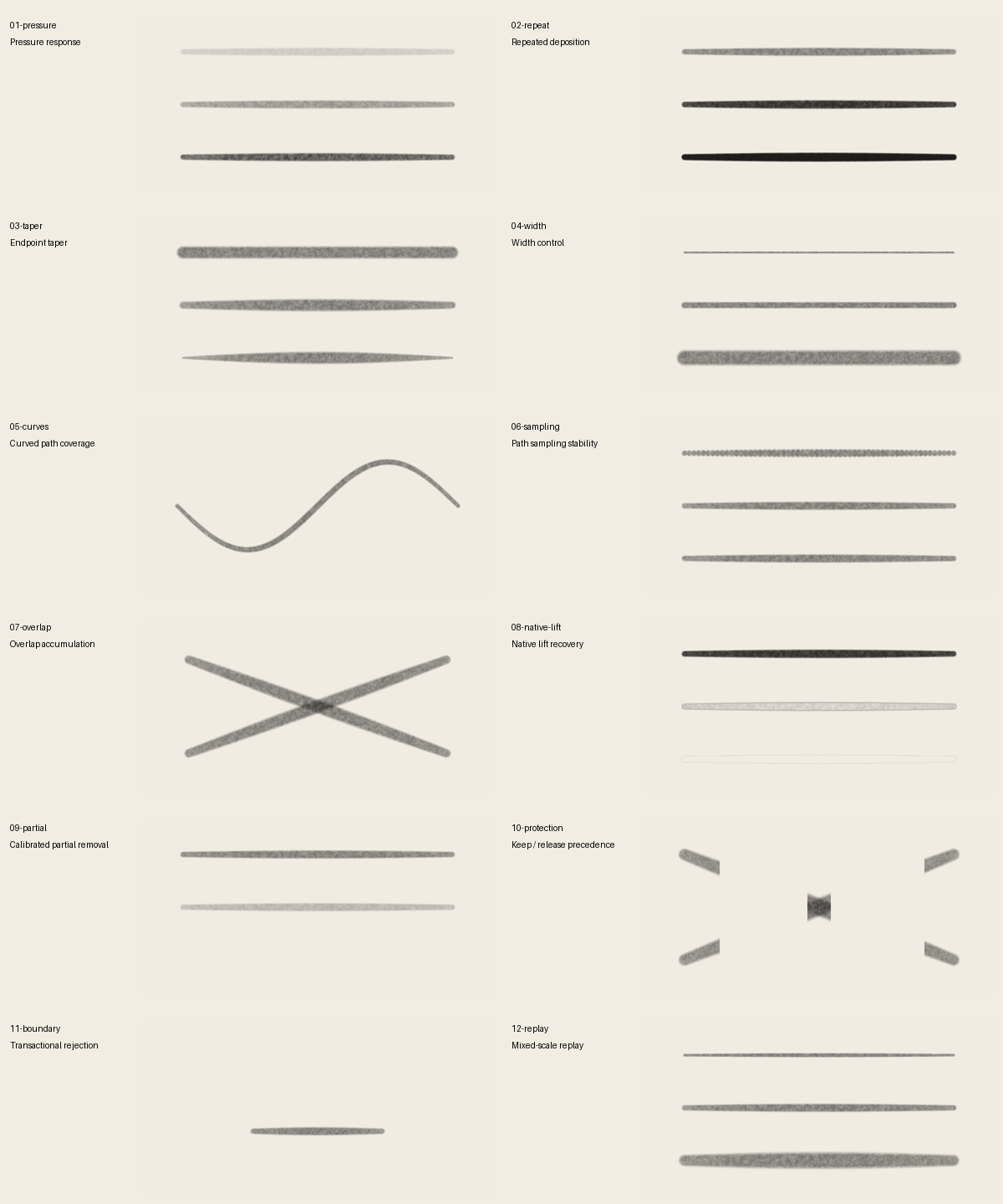
Fixture results
01-pressure · Pressure response
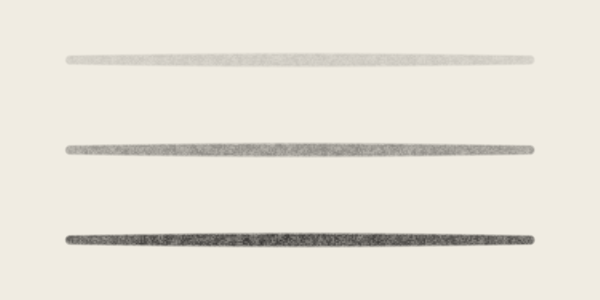
Three equal paths at pressure 0.2, 0.5, 0.9, top to bottom.
Check: Mean deposited tone strictly increases. Passed across 3 paper seeds.
Adopt within this tested range. This is an execution check, not a measure of drawing quality.
Measurements for displayed seed 11
02-repeat · Repeated deposition
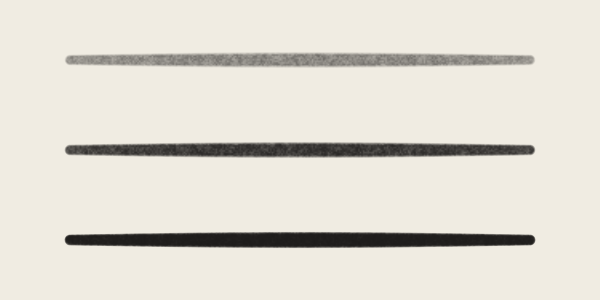
The same path receives 1, 3 and 8 passes, top to bottom.
Check: More passes deepen tone without values leaving [0, PAPER]. Passed across 3 paper seeds.
Adopt within this tested range. This is an execution check, not a measure of drawing quality.
Measurements for displayed seed 11
03-taper · Endpoint taper
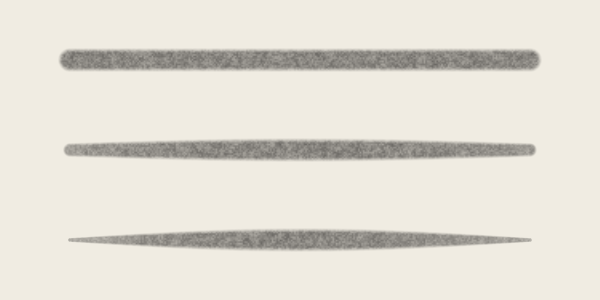
Taper 0, 0.5, 1 on identical horizontal paths.
Check: The endpoint-to-middle tone ratio decreases with taper. Passed across 3 paper seeds.
Adopt within this tested range. This is an execution check, not a measure of drawing quality.
Measurements for displayed seed 11
04-width · Width control
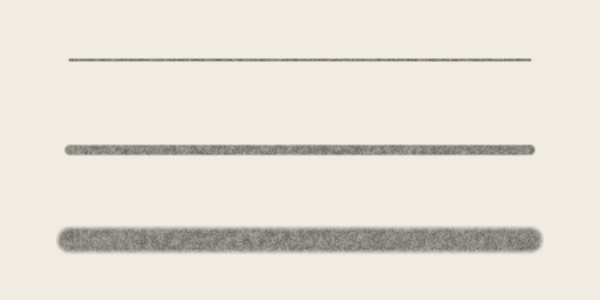
Widths 3, 12 and 30 on equal paths.
Check: Measured central support height increases. Passed across 3 paper seeds.
Adopt within this tested range. This is an execution check, not a measure of drawing quality.
Measurements for displayed seed 11
05-curves · Curved path coverage
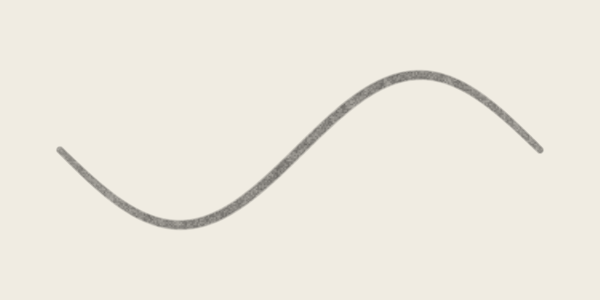
Render a sampled S curve. Measure tone within 8 px of each interior centerline point.
Check: At least 95% of sampled interior points have visible support. Passed across 3 paper seeds.
Coverage checks continuity around the supplied S curve, not learned gesture or anatomical accuracy.
Measurements for displayed seed 11
06-sampling · Path sampling stability
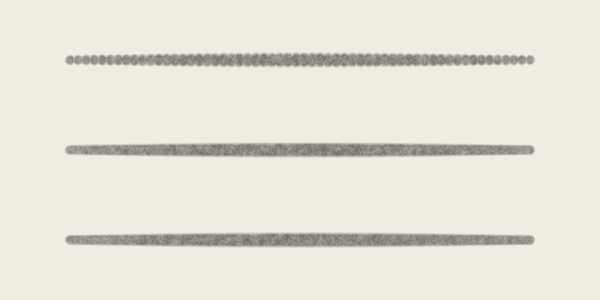
Same straight geometry with 20, 120 and 480 samples.
Check: Deposited tone varies by at most 10% relative to the middle sampling. Passed across 3 paper seeds.
Numerical pass is insufficient: sparse path visibly beads. Use the opt-in spacing correction for smooth paths; further curved-path validation remains.
Measurements for displayed seed 11
07-overlap · Overlap accumulation
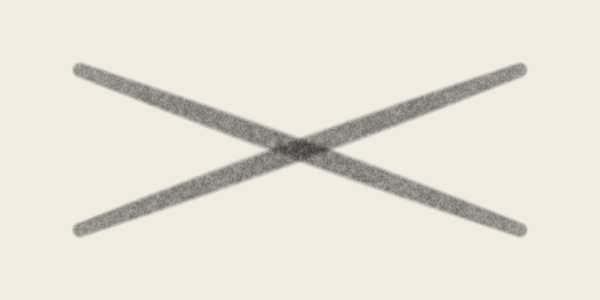
Cross two dark strokes; record intersection before and after second stroke.
Check: Second deposit deepens the crossing and changes no pixels beyond its raster support. Passed across 3 paper seeds.
Adopt within this tested range. This is an execution check, not a measure of drawing quality.
Measurements for displayed seed 11
08-native-lift · Native lift recovery
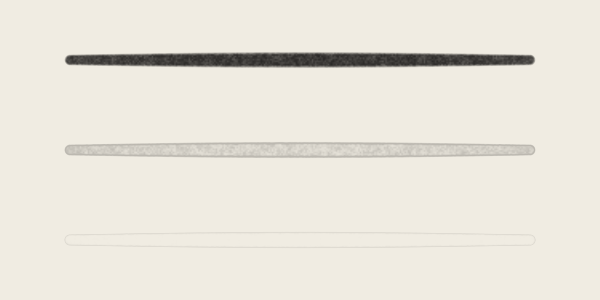
A three-pass dark stroke, followed by 0, 3 and 12 identical native lifts.
Check: Residual tone decreases monotonically; report whether 12 lifts clear 95%. Passed across 3 paper seeds.
About 2.14% of deposited tone remains after 12 identical lifts, and the outline is still visible. Tone recovery does not establish perceptual removal.
Measurements for displayed seed 11
09-partial · Calibrated partial removal
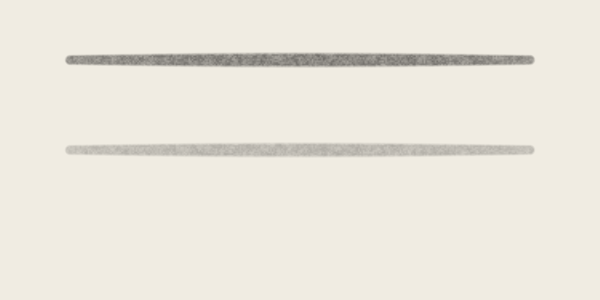
Equal marks followed by digital removal strengths 0, 0.5 and 1.
Check: Interior scalar deficit matches requested fraction within 1e-6. Passed across 3 paper seeds.
Adopt within this tested range. This is an execution check, not a measure of drawing quality.
Measurements for displayed seed 11
10-protection · Keep / release precedence
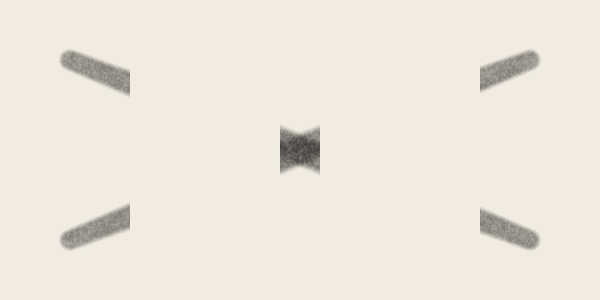
Erase inside a polygon across two marks, protecting a vertical strip.
Check: Keep and exterior pixels remain bit-exact; eligible interior clears. Passed across 3 paper seeds.
Adopt within this tested range. This is an execution check, not a measure of drawing quality.
Measurements for displayed seed 11
11-boundary · Transactional rejection
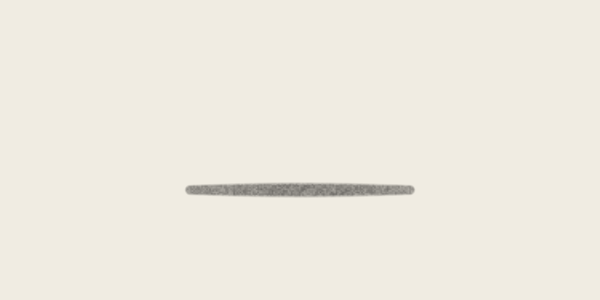
Attempt a stroke crossing an allowed rectangle; then render a valid interior stroke.
Check: Rejected stroke leaves zero state change; valid stroke renders. Passed across 3 paper seeds.
Adopt within this tested range. This is an execution check, not a measure of drawing quality.
Measurements for displayed seed 11
12-replay · Mixed-scale replay
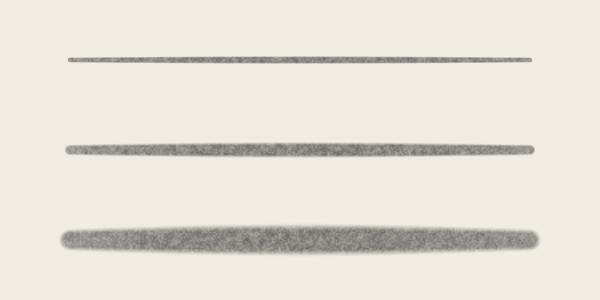
Render 3 commands at scales 0.5, 1 and 2, then replay serialized commands.
Check: Replay equals original scalar hash exactly on this runtime. Passed across 3 paper seeds.
Tests exact replay at mixed scales, not equal appearance across scales.