Bounded rotations and translation align inferred joints and three assistant-marked projected contacts. Body landmark error: 29.6 → 4.9 px at 768 × 512.
STUDIO RECORD / PUBLIC EDITION
Visual stages, comparisons and decisions from the original run. Internal prompts, operating documents and downloadable implementation files are omitted. Some interactive comparisons are shown as separate images.
VTL Studio / bundled construction and drawing round
A connected head movement reaches native marks.
Reach / Retreat: bow the head without losing the reaching gesture or the ground. This round takes the body model through fitting, articulation, rejected appearance transfers, a corrected attachment, and a drawing from blank paper.
Retain as a working drawing, not finished artwork.
The edit is more coherent. The source-conditioned method and repetitive native marks remain limits. No new GPT image was generated.
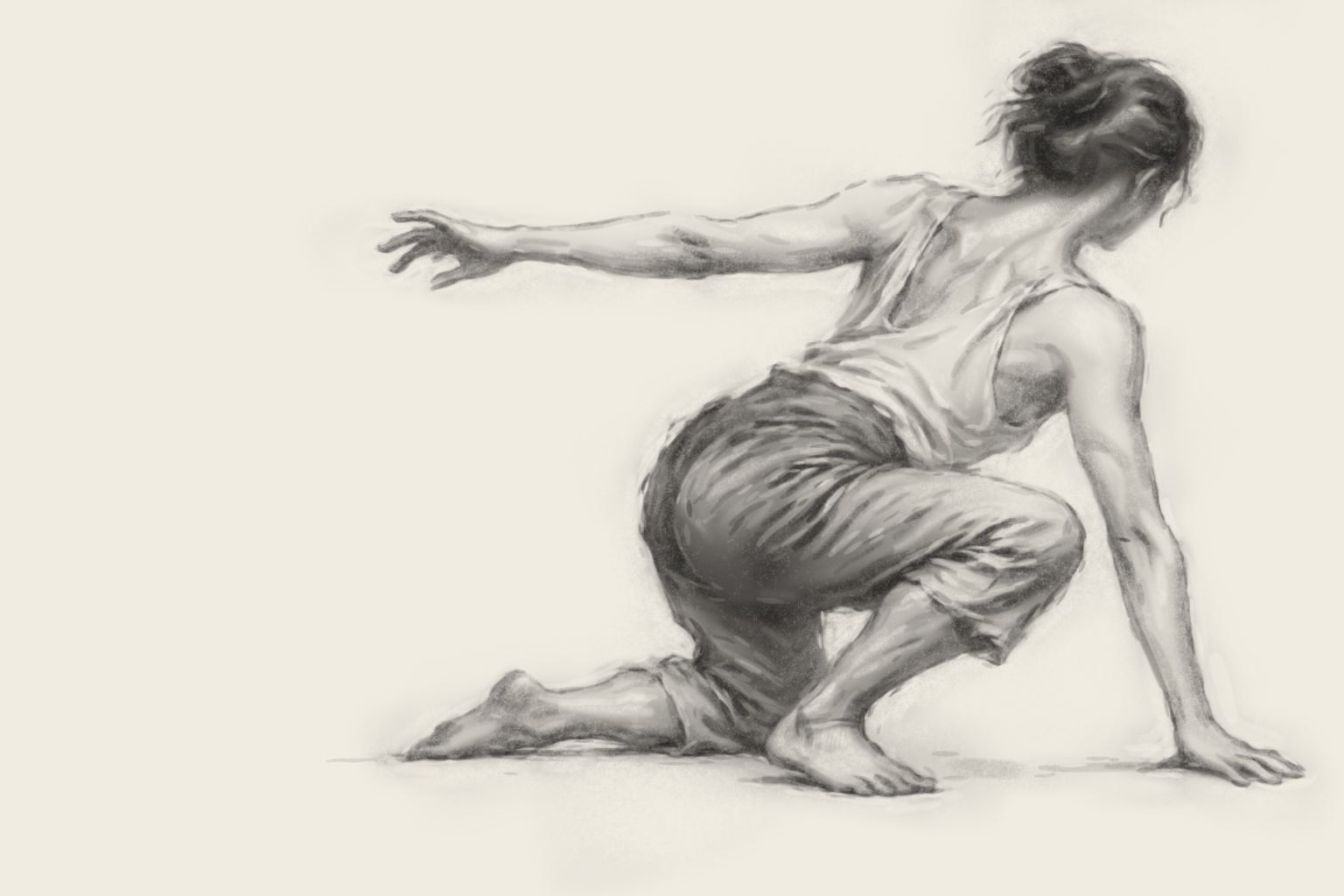
Full-resolution image · · ·
What changed from the earlier drawing?
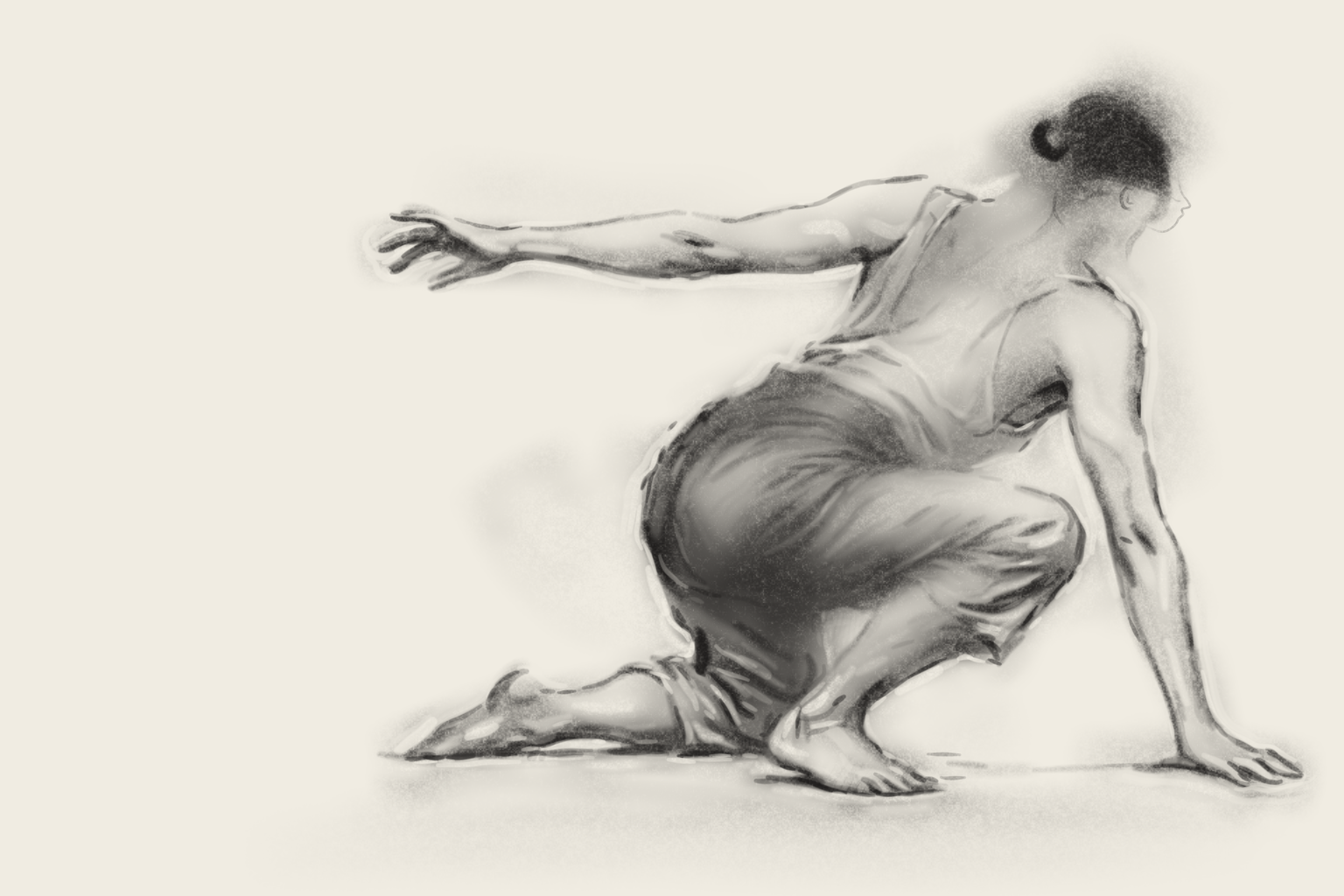
These runs also differ in tone choices and mark scale. This is a history comparison, not a controlled measurement of the body model alone.
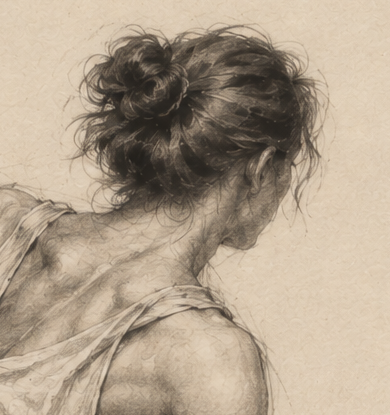
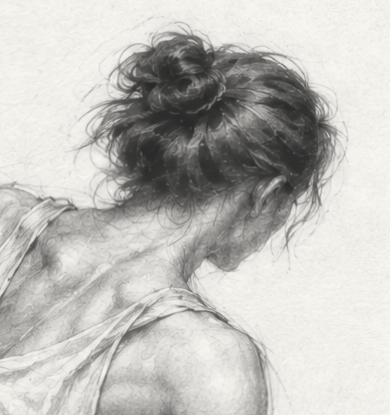
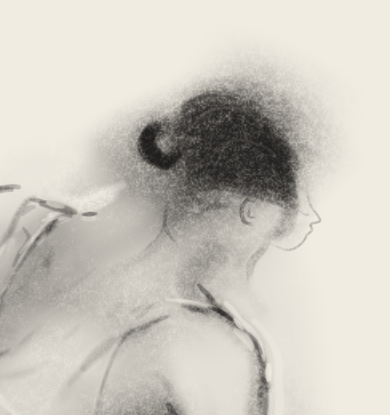
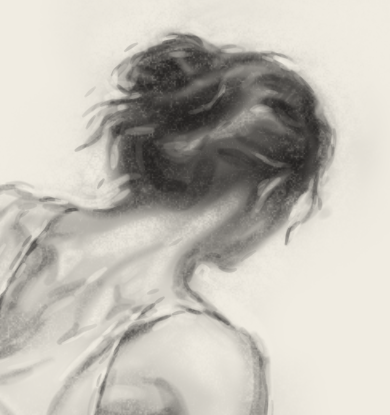
The actual bridge
A 20° local-X command is shared across three neck bones and the head. The projected nose lowers 18.4 px. This is not a 20° measured image-plane rotation.
The source supplies appearance; the construction supplies movement. A regularized 2.5D sheet carries hair and neck. The native engine then makes every final mark from blank paper.
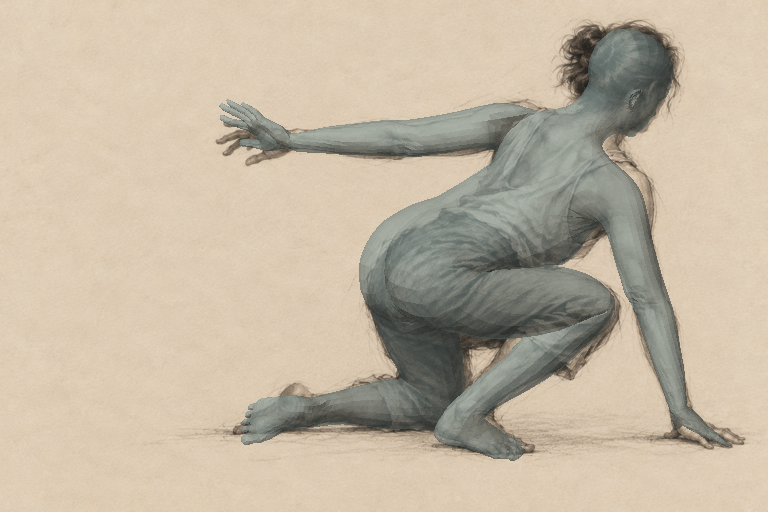
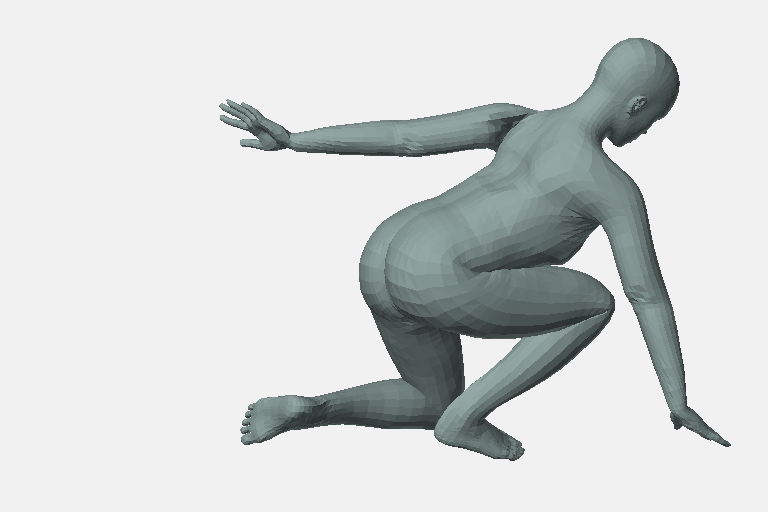
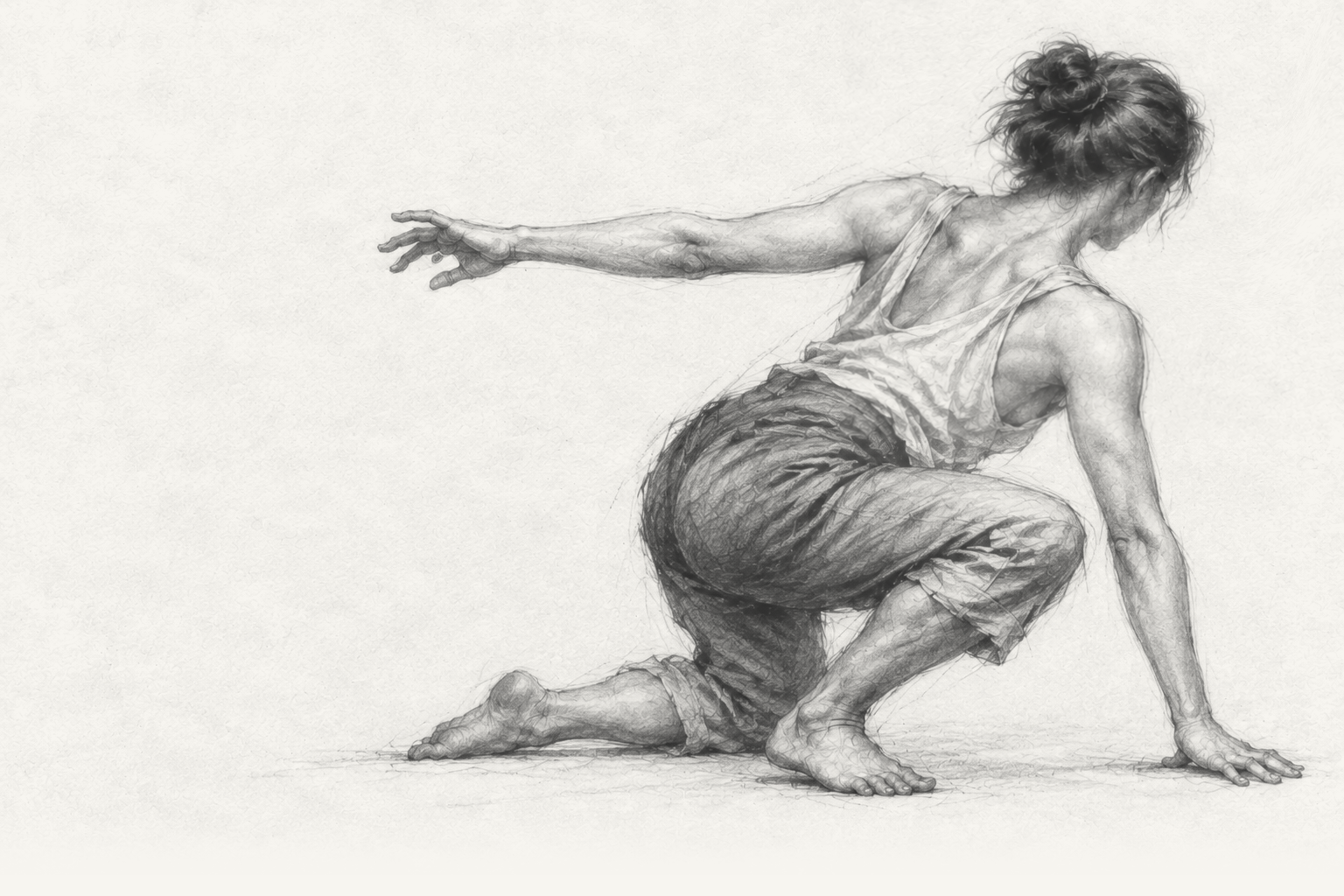
The 3D model does not replace the reference with an independently reconstructed person. The accepted drawing preserves the source body and hands and uses a scoped head/neck edit. Contact fitting is projected agreement, not a solved ground plane or validated balance.
The rejected work stays visible
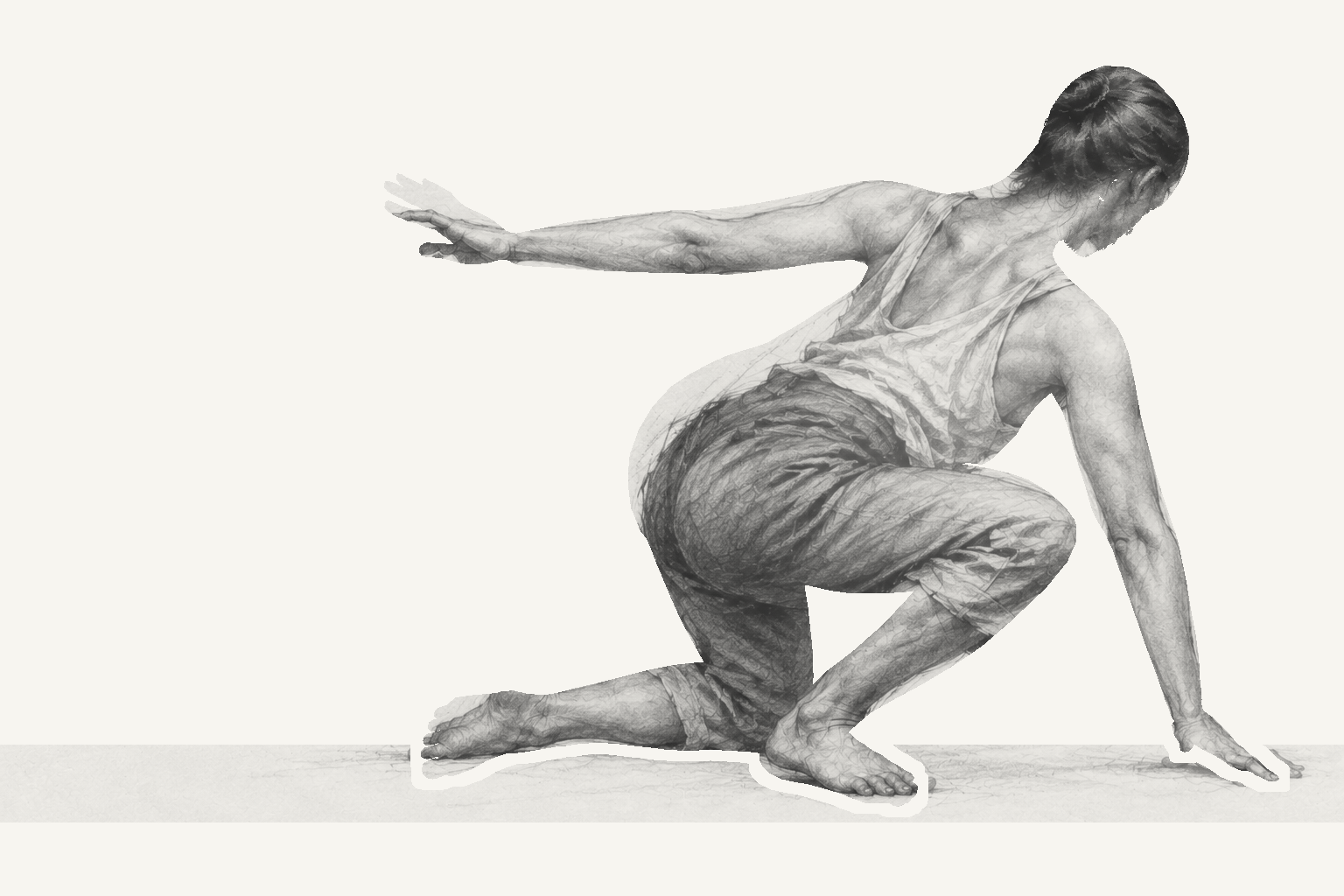
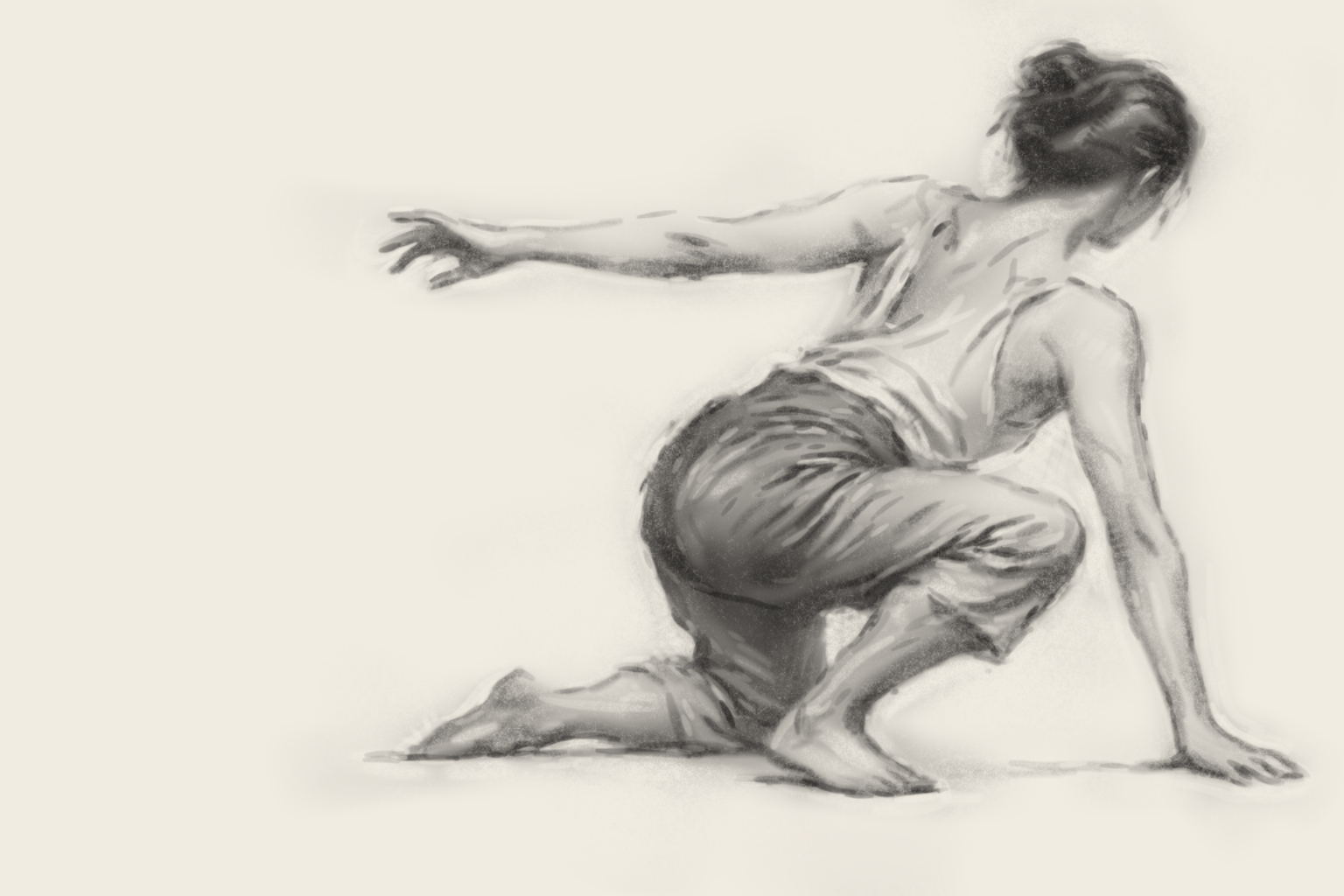
The accepted appearance sheet needs 24 px of displacement smoothing. Its smallest signed triangle area is 0.351 of the original; local folds are rejected. This regularization is a real approximation, not exact surface skinning. Hidden anatomy is still not reconstructed.
Raw full-body transfer · Unknown surface mask · First attachment target · Second attachment target ·


Critique of the actual drawing
What holds: the crouch compresses toward the ground while the arm pulls away. The head belongs more convincingly to the neck. The finer pass improves several transitions without changing the overall gesture.
What does not yet hold: the clothing’s bright grooves still compete with the bodily conflict. The hands remain simplified. The drawing is faithful to a supplied appearance rather than showing a new, independently constructed artistic direction.
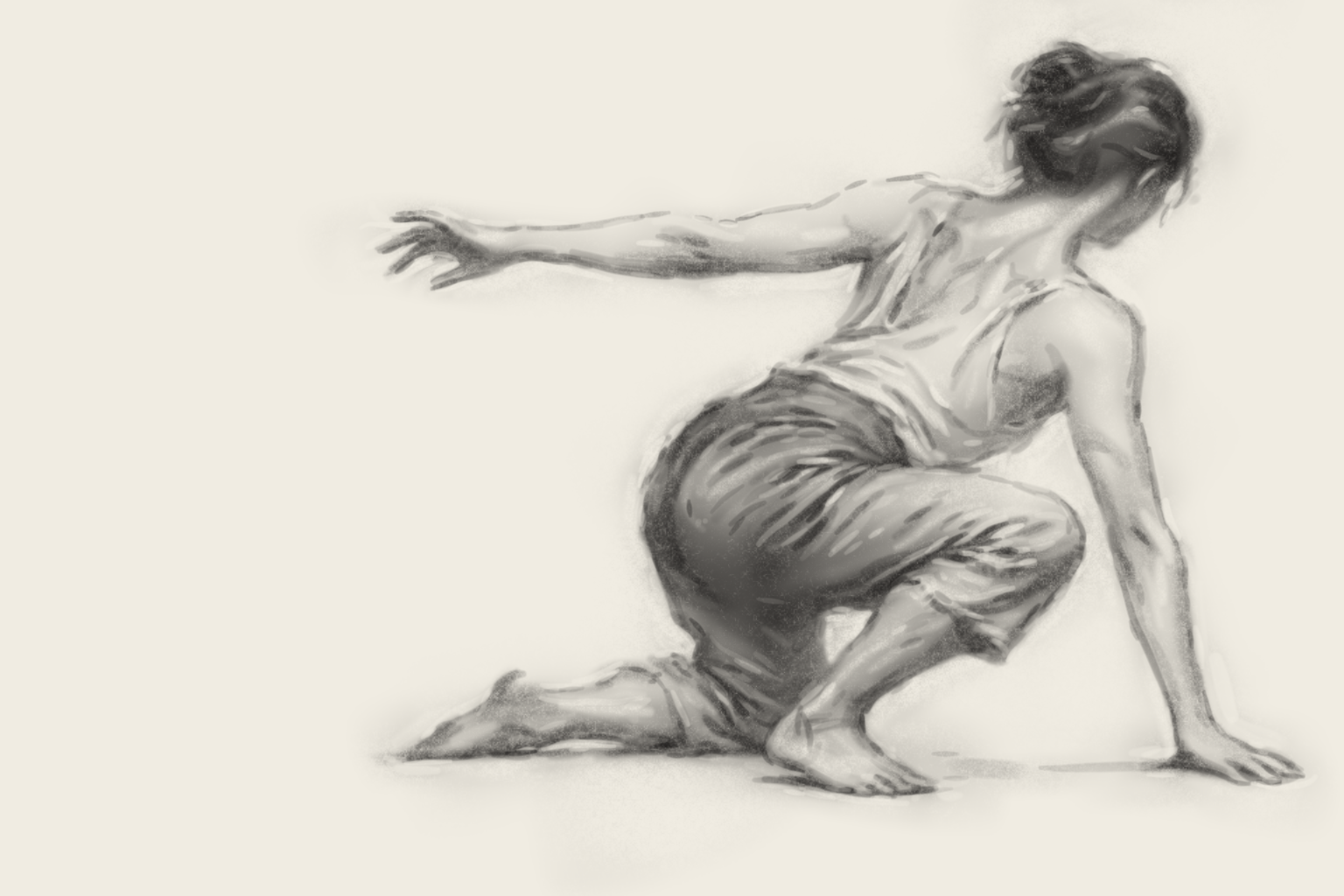
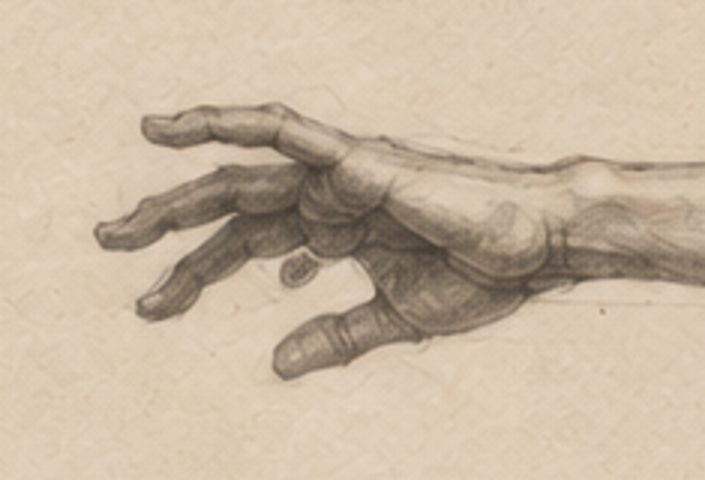
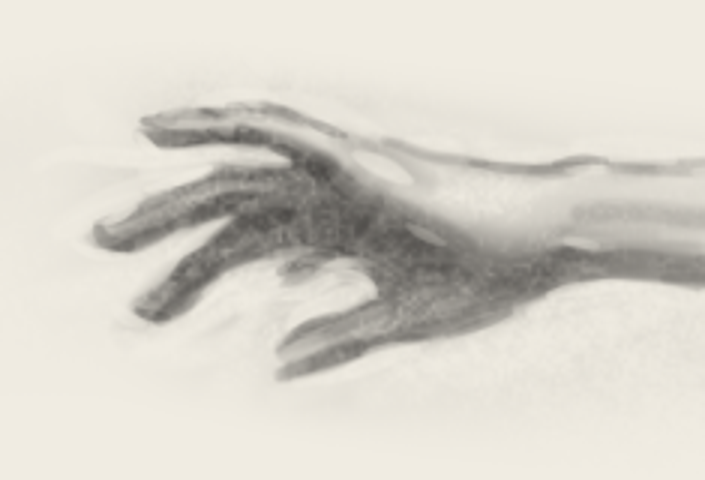
VTL route: Δ, not Hold.
The next artistic move should reorganize the whole drawing around the reaching arm and the loaded knee/supporting hand. Quieten the clothing as a mass decision. More local detail alone will not establish that direction.
Evidence and limits
- Only neck01, neck02, neck03 and head local transforms change in the bow; topology and finite coordinates verified.
- Elbow/wrist/hip/knee/ankle projected regressions remain fixed. Shoulder regressions shift up to 0.135 px with neck skinning.
- Appearance outside the explicit crop is pixel-exact before tonal translation. This does not claim that the final native canvas is unchanged there.
- Transfer checks cover identity, nearest-depth ordering and refusal of occluded source appearance. Appearance triangles pass a local fold check.
- Native commands replay exactly. Resource caps stopped the numerical drawing passes; the critic did not declare the artwork complete.
- Review is by the main assistant. No independent anatomical assessment, clothing simulation or generalization benchmark.
· · · · · · · · · Prior body-model review