Visual stages, comparisons and decisions from the original run. Internal prompts, operating documents and downloadable implementation files are omitted. Some interactive comparisons are shown as separate images.
Build the ground.
Then judge the drawing.
The previous workshop stopped with cutouts and disconnected strips. Here the local instrument works through connected terrain, path support, building volume and light over sustained passes.
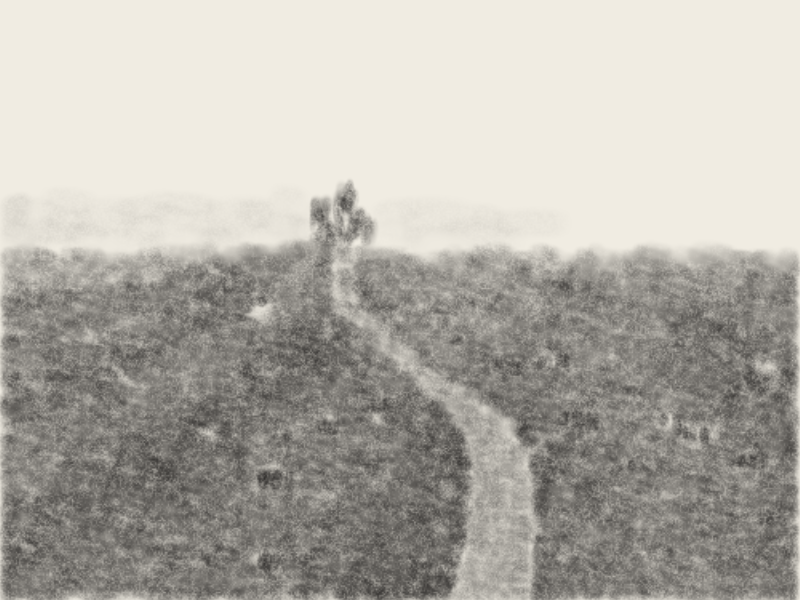
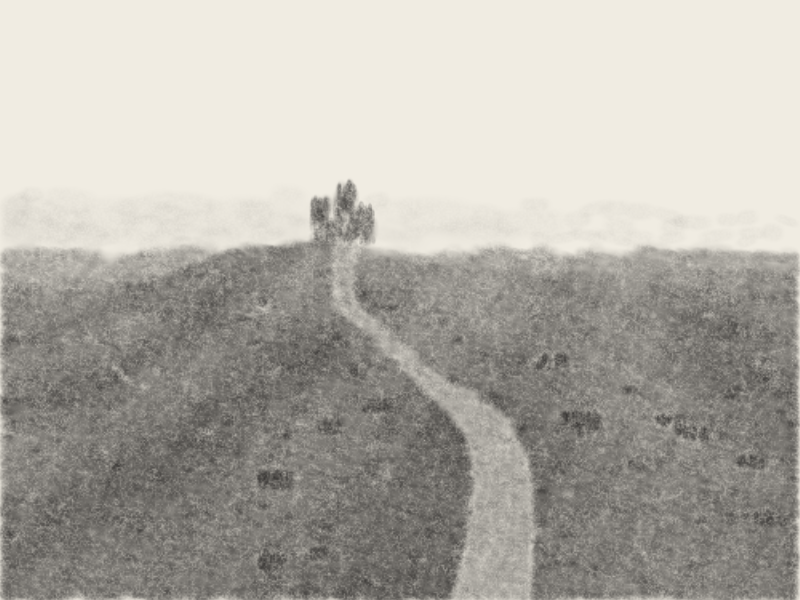
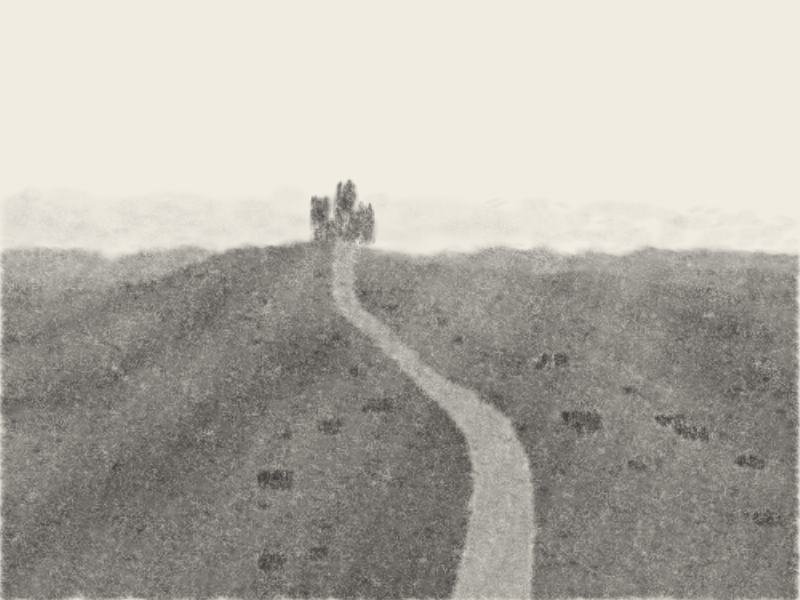
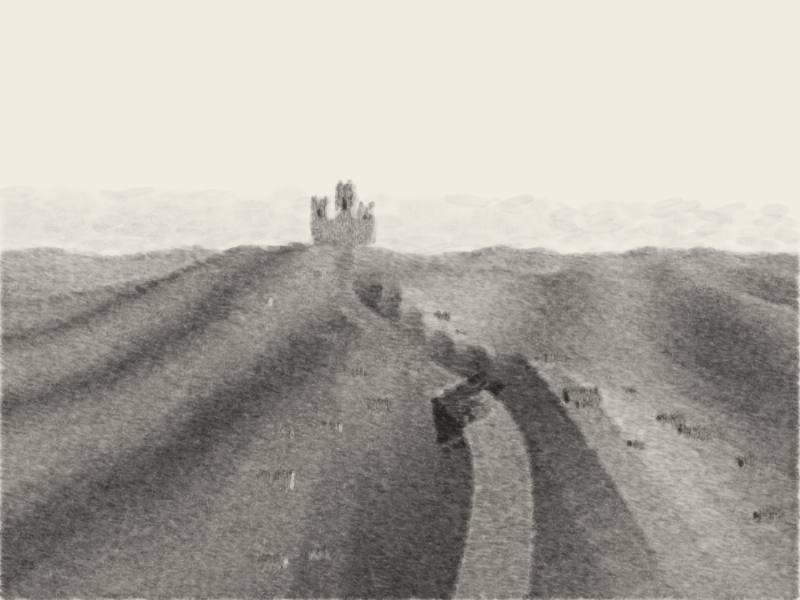
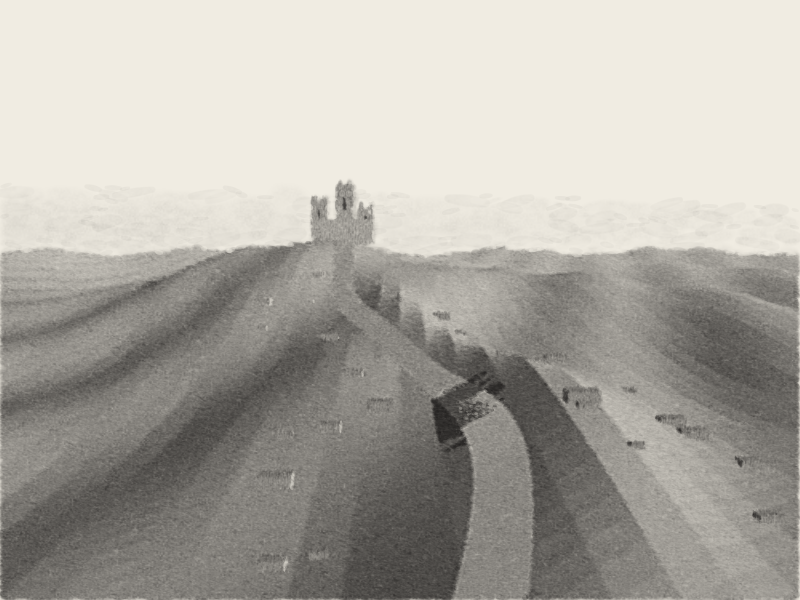
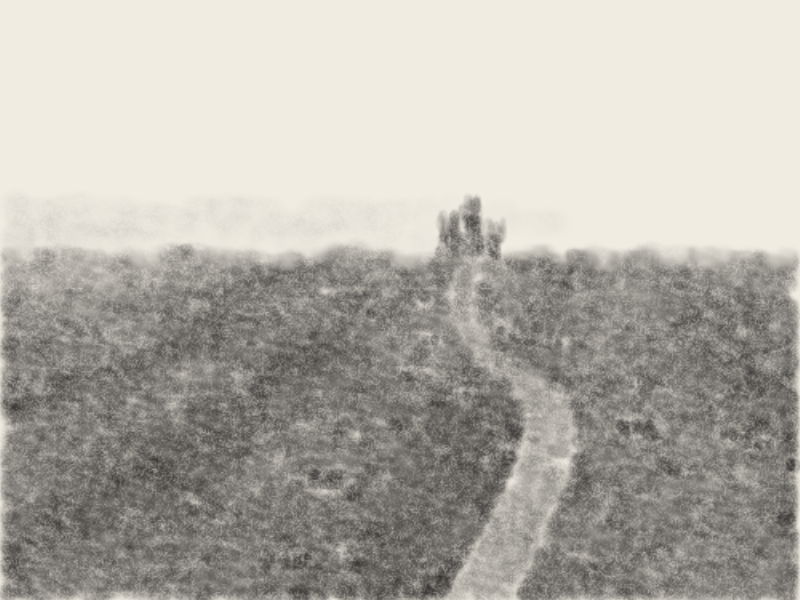
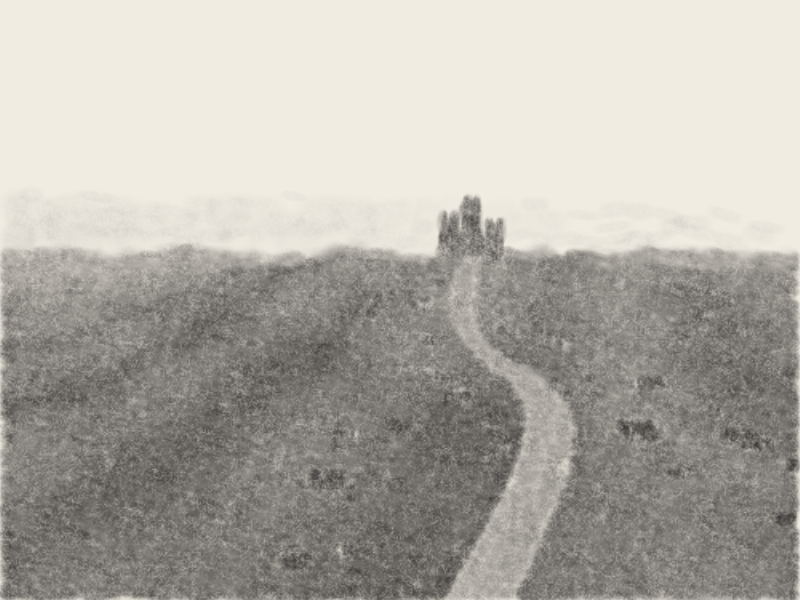
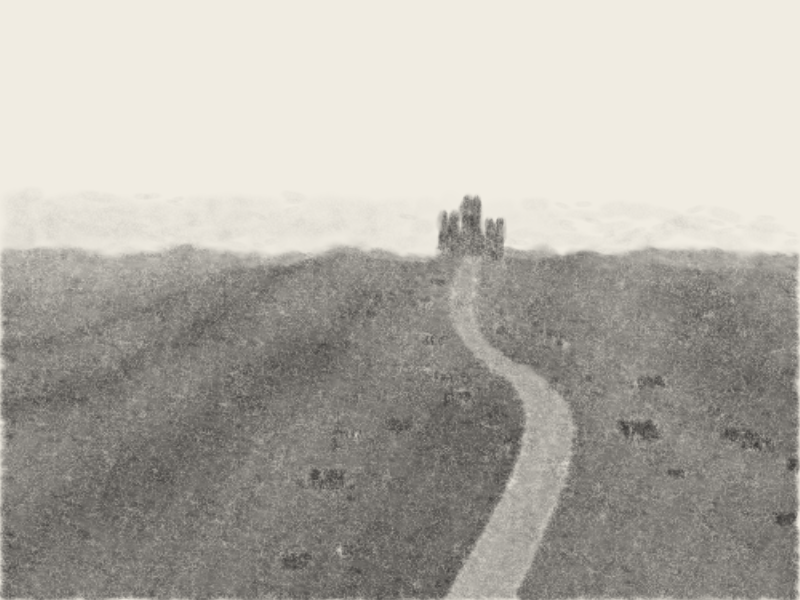
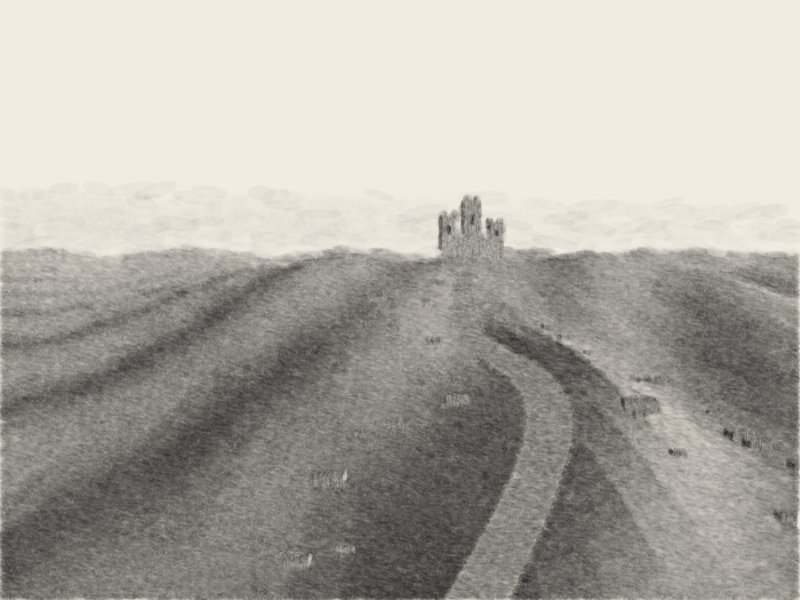
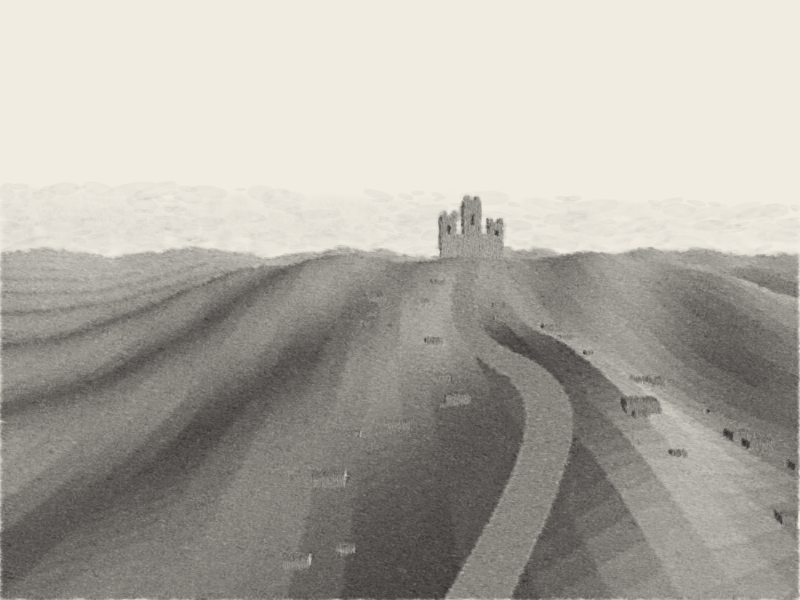
Construction checkpoint — not a finished drawing. Space is more legible. The smooth road, generic hills, block-like stones and schematic castle remain weaknesses. No generator was used. No Hold or handoff is claimed.
The current comparison
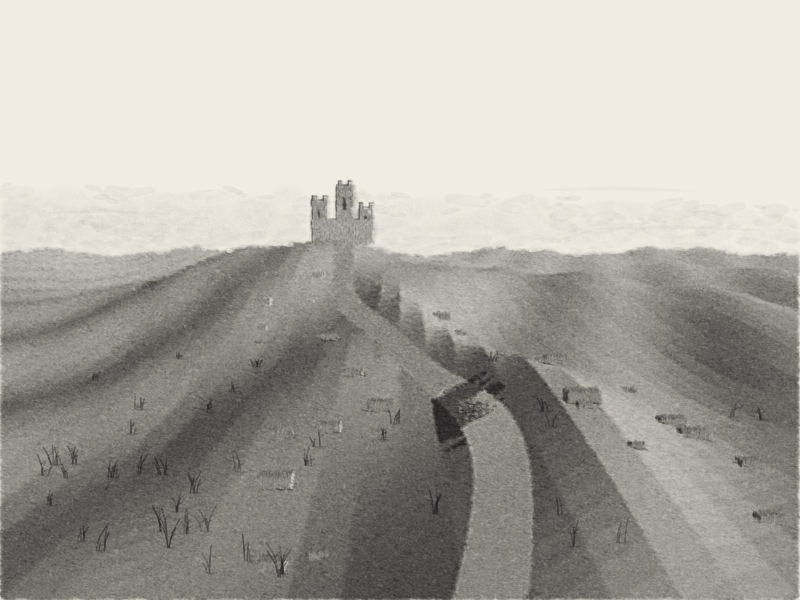
Quieter construction. Ground and distance read, but the road and rocks remain synthetic.
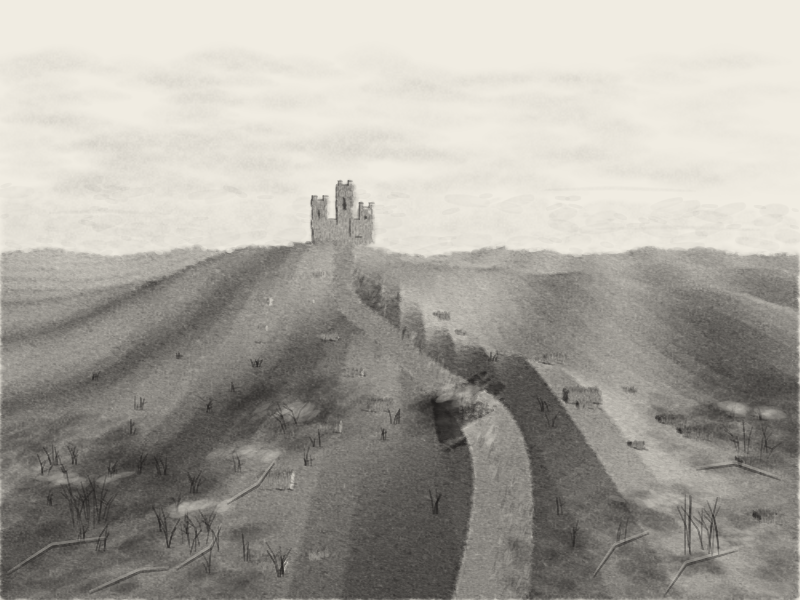
Direct native charcoal passage. More weight; also decorative seams. Retained as a mixed branch.
A second approach
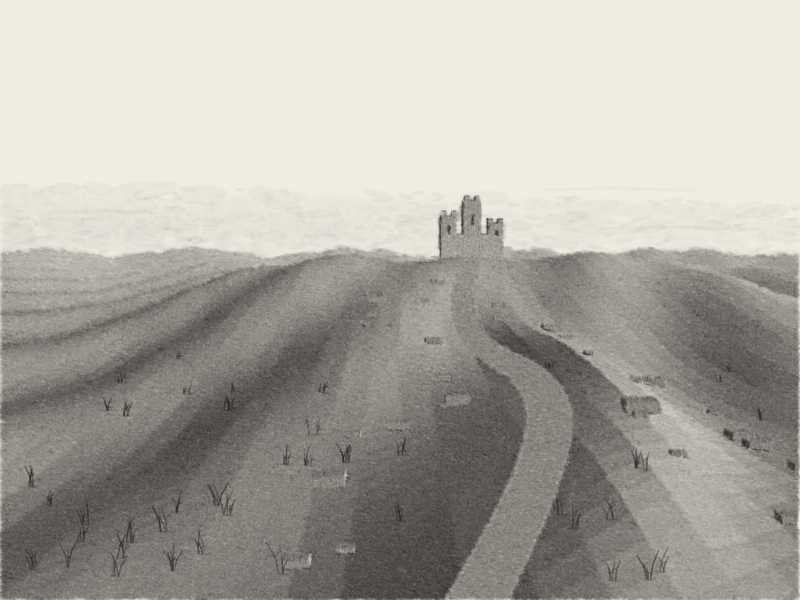
Castle moves right; the shared terrain model limits this as a distinct proposition.
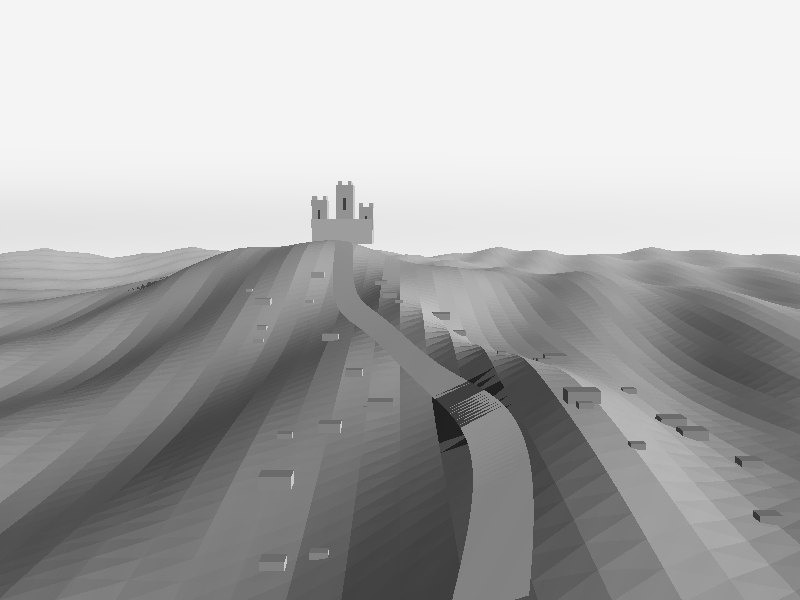
Local geometric projection, not an artwork or generator return. Passes 1–5 fit native marks to versions of this guide.
What changed in the method
I had encoded the earlier landscape as filled polygon shapes. Repeated charcoal strokes then made those shapes look like cutouts. This rebuild uses authored terrain and masonry as a spatial scaffold, draws native marks toward that scaffold, and adds selected direct passages. It supplies information missing from the thumbnails, but the scaffold also explains the new synthetic regularity.
These are new blank-canvas constructions responding to workshop 09 and 11, not painted-over versions of those images. The user’s sources were not traced. This uses the existing Hands/Canvas charcoal instrument; it is not the legacy Rust oil-paint simulator.
Earlier workshop evidence
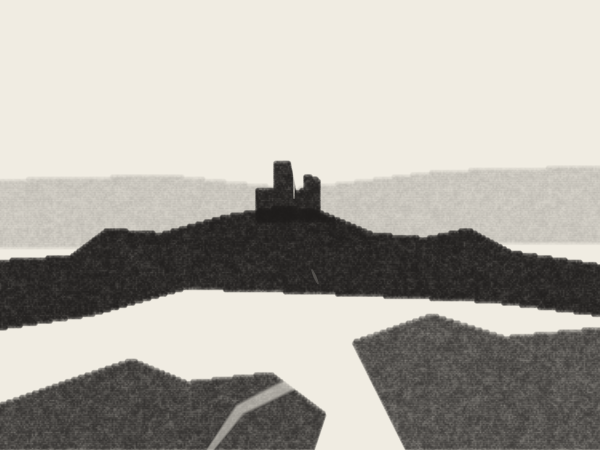
Conceptual starting question; original unchanged.
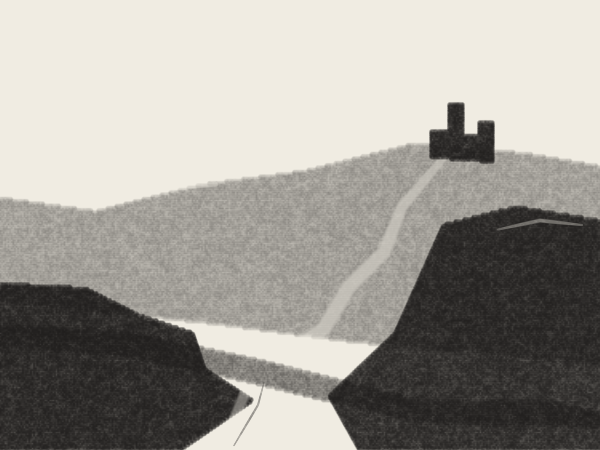
The local rebuild does not constitute a controlled revision of this arrangement.
Ridge / complete progression
·
·
·
·
·
·
·
Climb / complete progression
·
·
·
·
·
·
What the images say
The connected ground is a real construction gain. It does not settle the artistic direction. The two scenes are too similar, the road still follows a smooth ribbon, and the irregular marks sometimes sit on the surface instead of describing its forms. Sunset is also insufficiently developed.
The next local passage needs different underlying landforms and a route whose width, contact and visibility respond to them. More grass or finer hatching would repeat the present limitation. Earlier “coherence” judgments should not be used to promote these to finished work.