Visual stages, comparisons and decisions from the original run. Internal prompts, operating documents and downloadable implementation files are omitted. Some interactive comparisons are shown as separate images.
Field and Pattern
A connection continued. A small interruption.
The progression film
44 recorded stages and branches, including rejected returns. Images remain uncropped; this is not a stroke-by-stroke replay.
The beginning
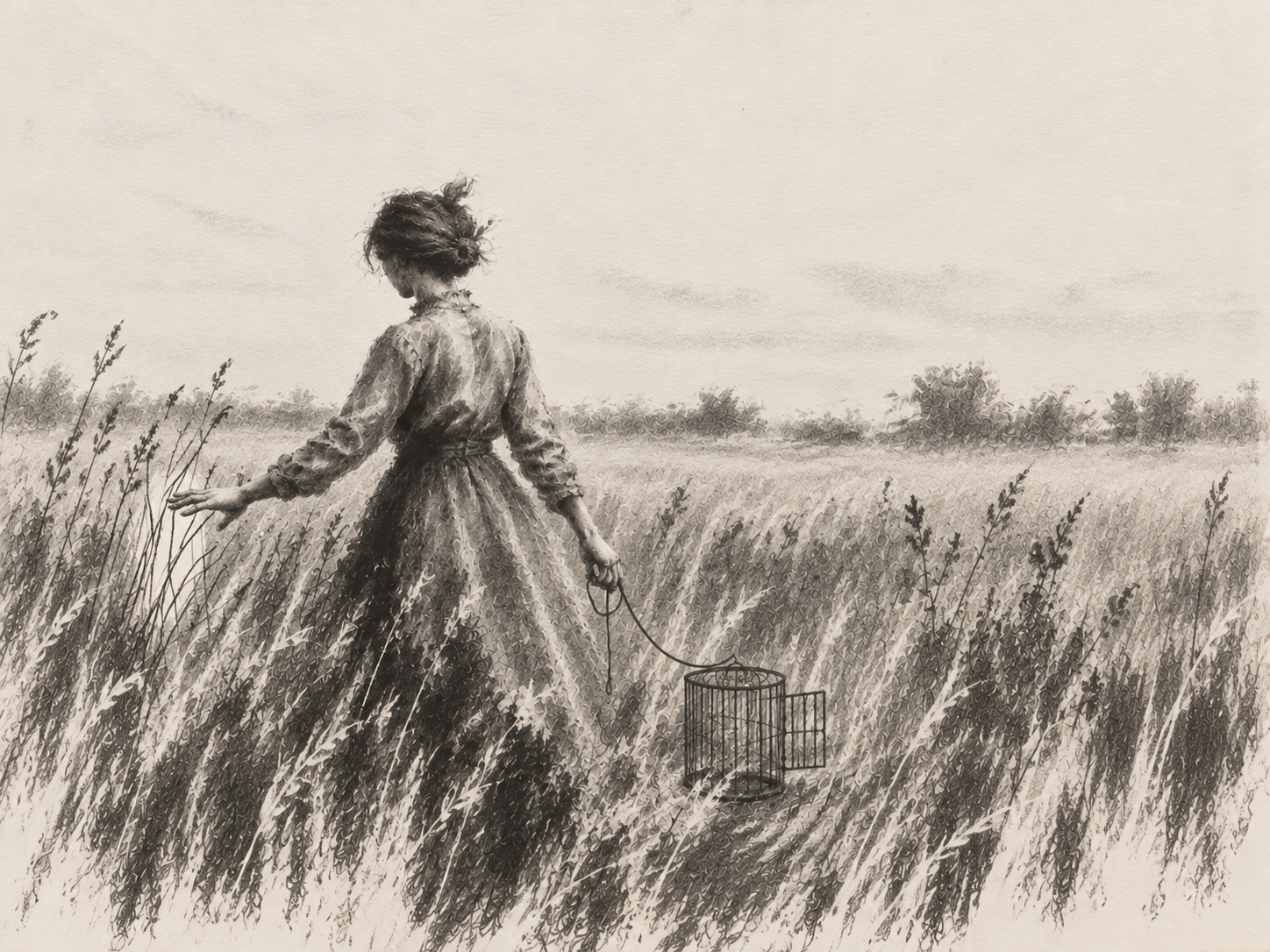
Charcoal drawing. A figure in a field both part of and apart from her surroundings--one hand tethered to an open bird cage, the other absent or resisting. The cage is less prison than pattern.
The first question was whether “pattern” could become a relationship among marks, body and field, instead of an explanation attached to a captivity symbol. These four supplied images are starting material, not outputs of this run.
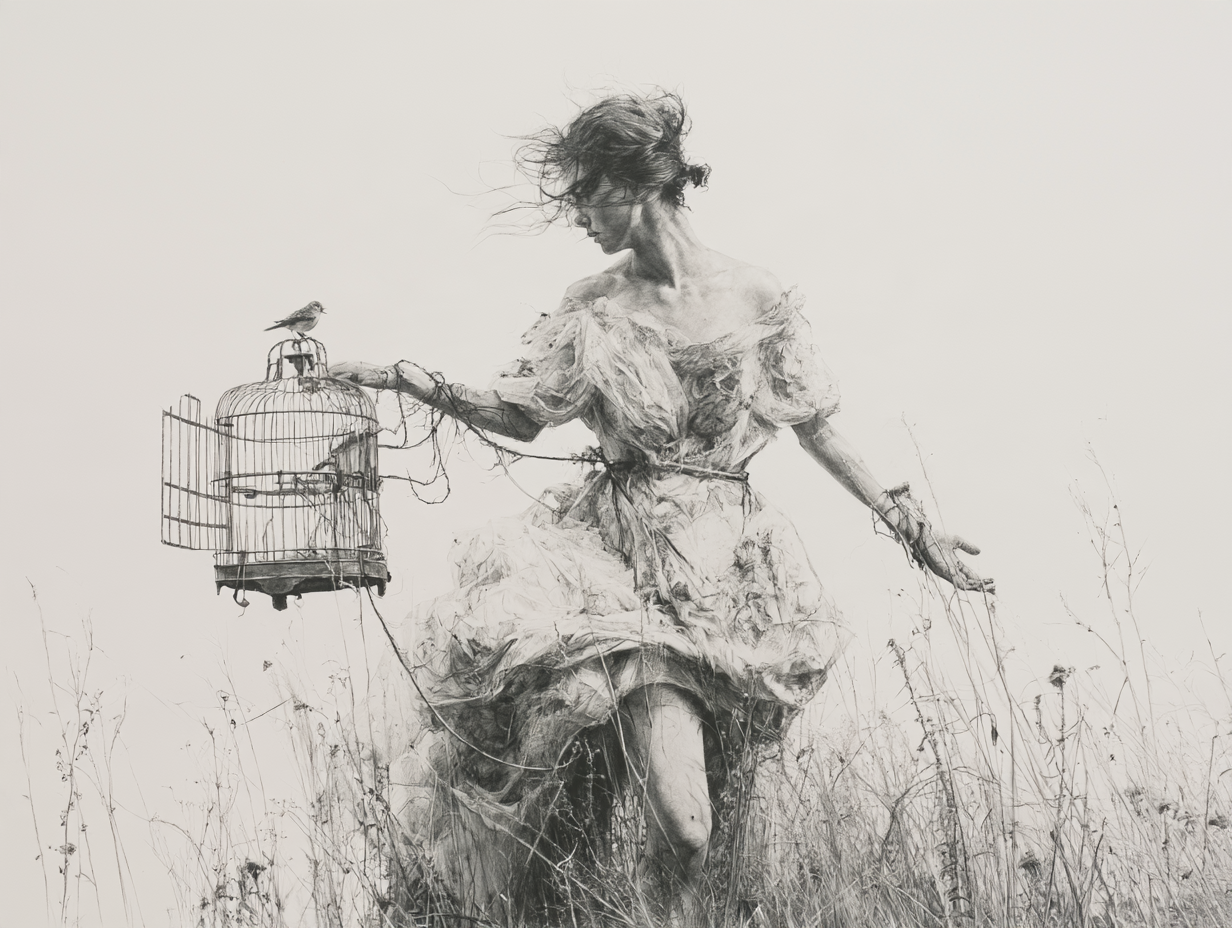
Cage, cords and open palm are presented together; the bird sustains the familiar allegory.
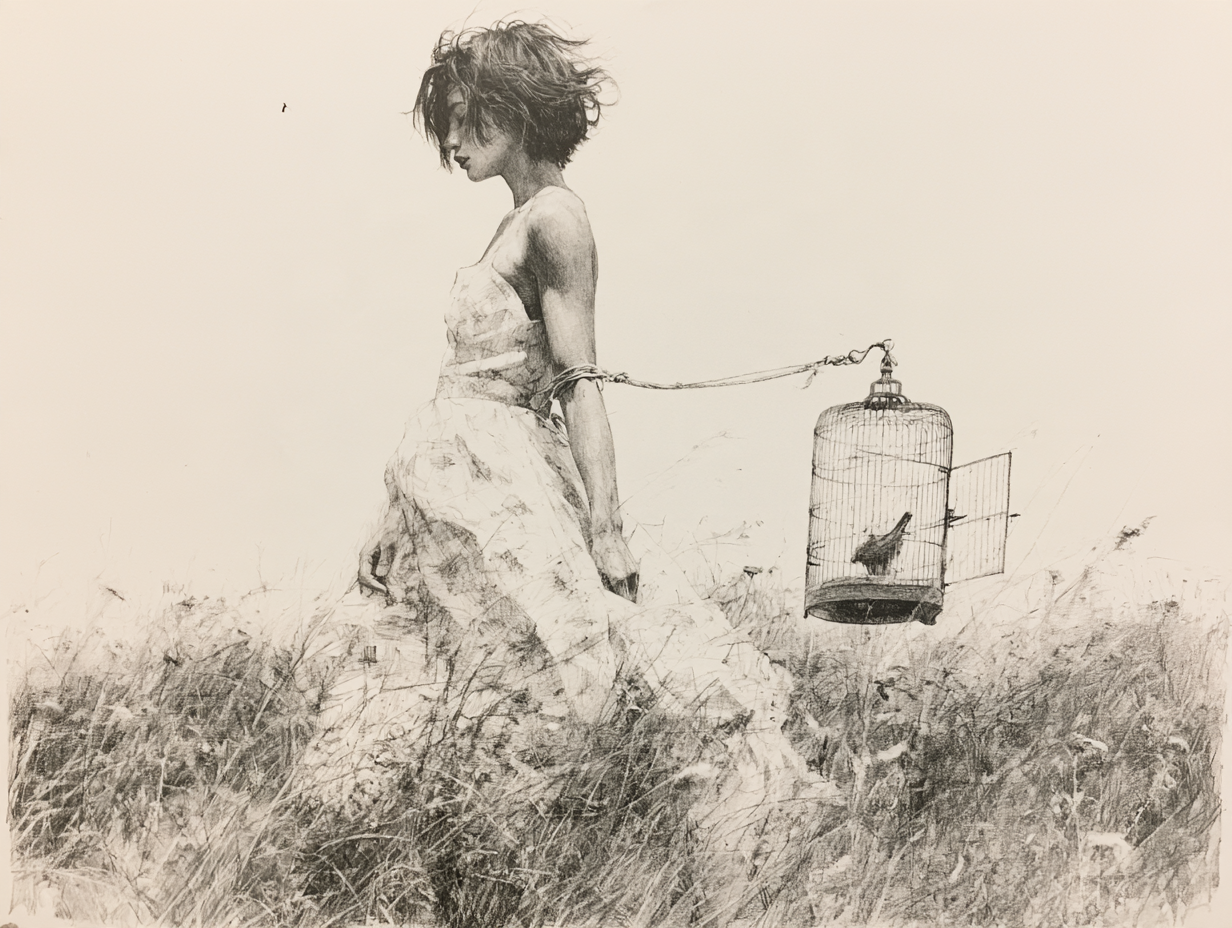
The upper-arm tether and apparently floating cage complicate physical support.
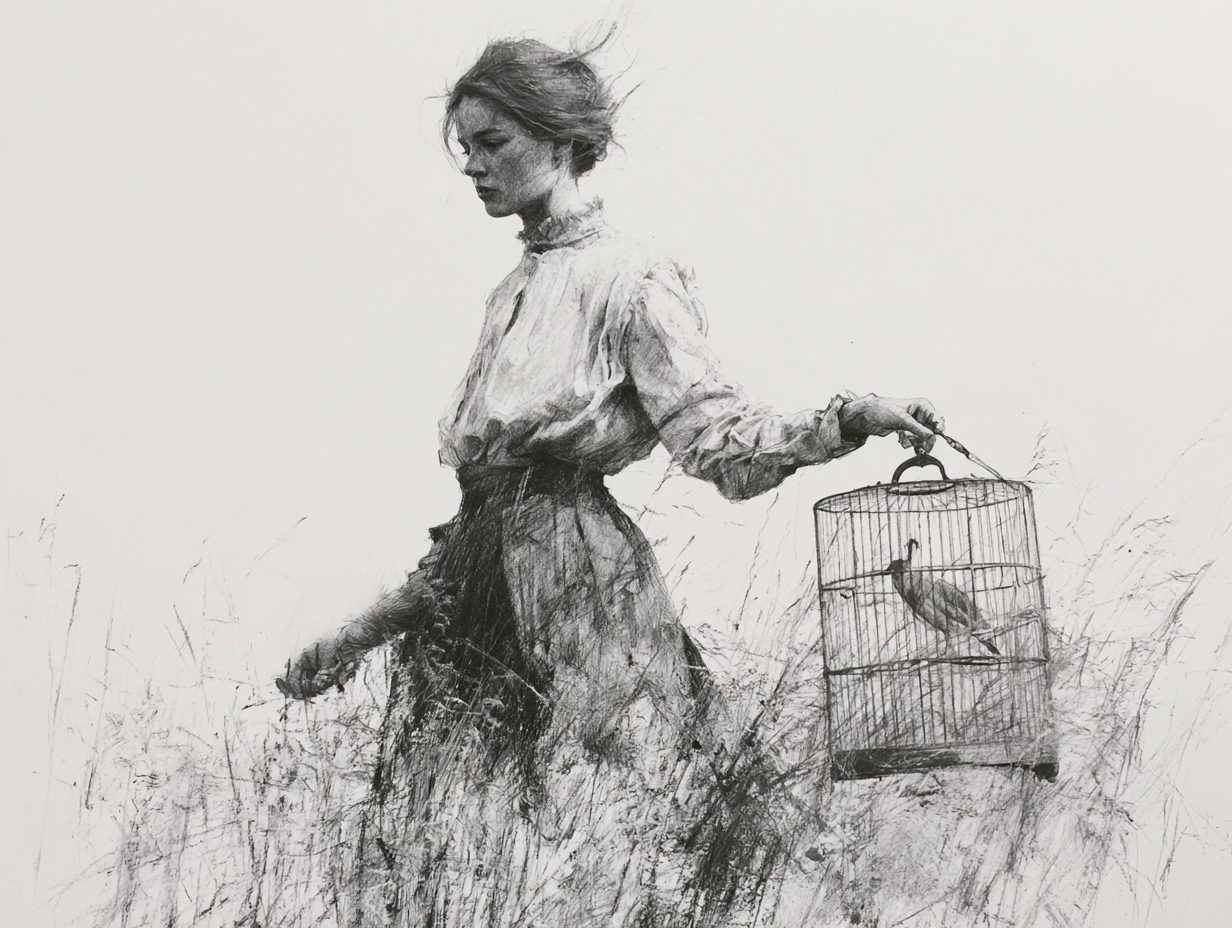
Clearest carrying anatomy; field and dark skirt already share marks. Chosen for native observation.
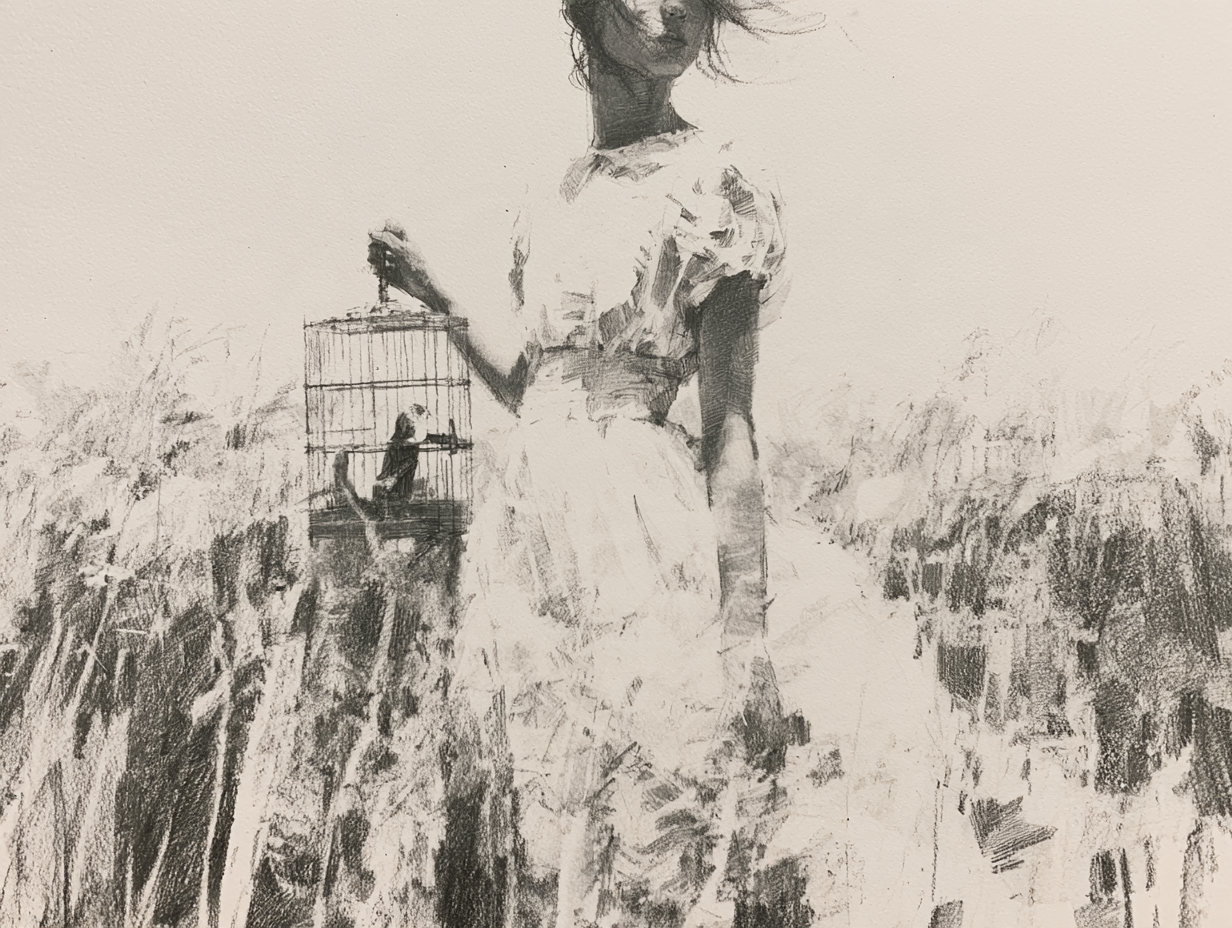
Broad omissions and charcoal masses are more useful than its unresolved cropped anatomy. Material reference.
What the words were pulling toward
Figure / her: an idealized solitary woman. Field: scenery behind her. Tether / cage: restraint and release. Absent: accidental amputation. Pattern: decorative bars. None were forbidden motifs; each needed a visible consequence.
Marrowline asked whether the symbolism was doing all the work. Sketcher asked where material and gesture actually asserted a relationship. No numerical score was assigned to tension, originality or meaning.
Learn the source before changing its story
Four native redraws established what the local instrument could articulate. They are explicitly source-guided: grayscale targets and tangent directions guide charcoal deposits in a scalar canvas. They are not four invented compositions, and no source pixels were pasted onto these canvases. Each has three saved build passes.
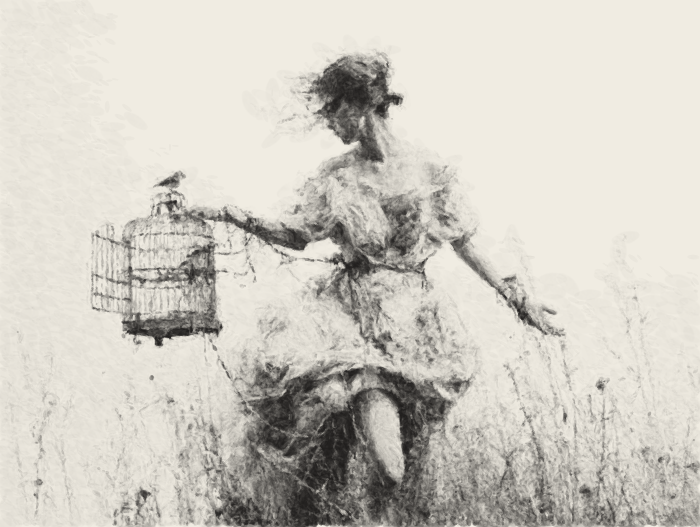
Inherited anatomy and composition.
Pass 1 · Pass 2 ·

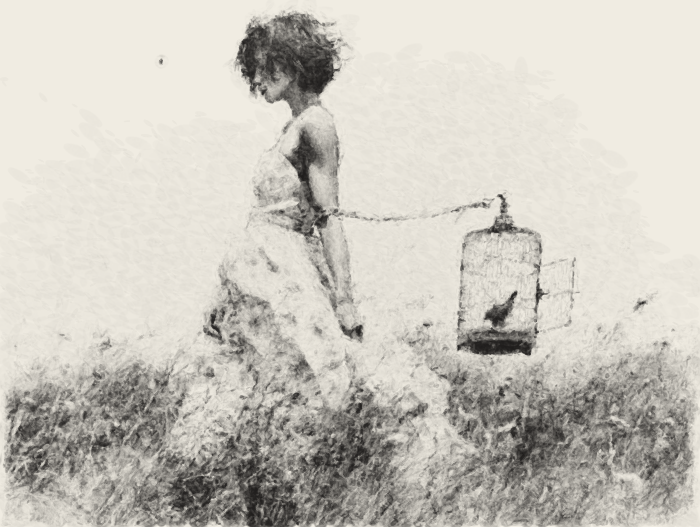
Inherited anatomy and composition.
Pass 1 · Pass 2 ·

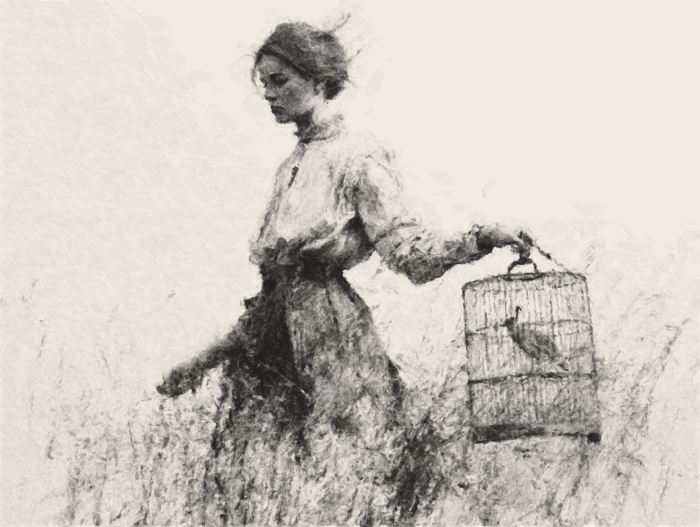
Inherited anatomy and composition.
Pass 1 · Pass 2 ·

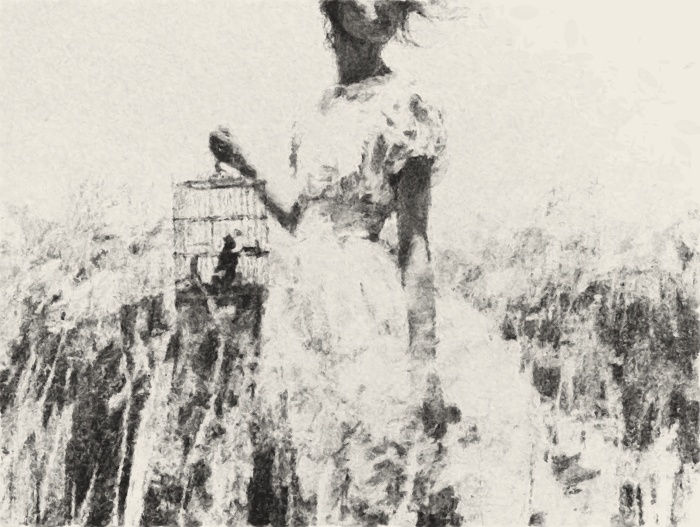
Inherited anatomy and composition.
Pass 1 · Pass 2 ·

Six native proposals — and why they were insufficient
All six inherit the coherent O03 body. Cage, tether, hand and field were changed locally. They are narrative alternatives within that inherited pose, not six wholly independent figure inventions. The first set exposed schematic cages, mechanical plants and an accidental second enclosure. Those failures were reworked, not renamed as symbolism.
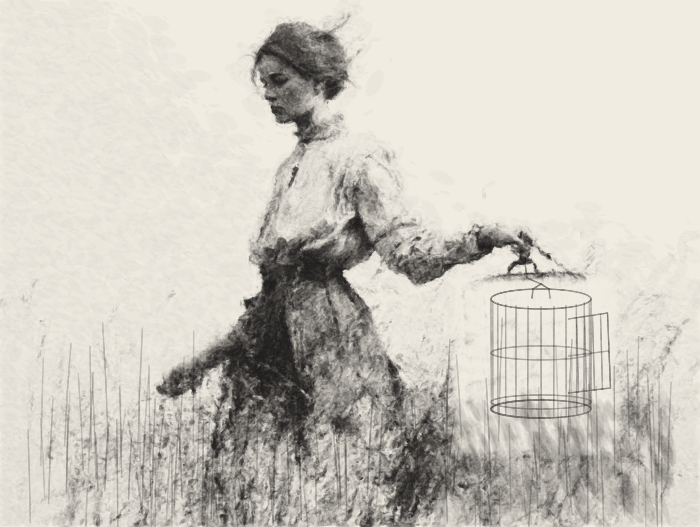
Held empty cage: still a presentation.
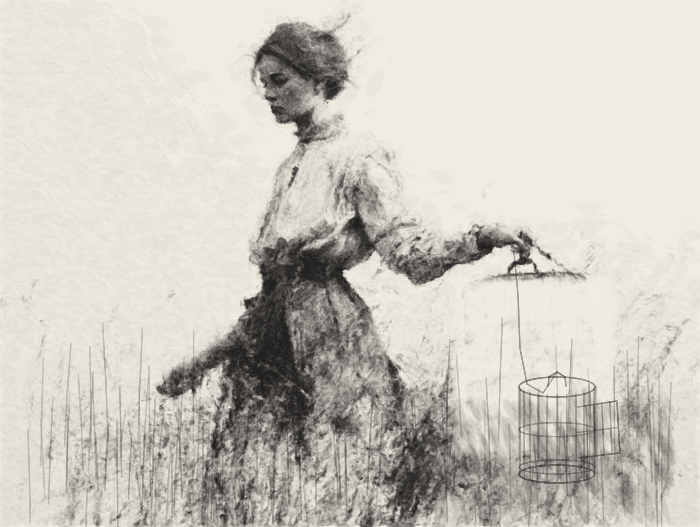
Low cage with slack tether: weak weight and support.
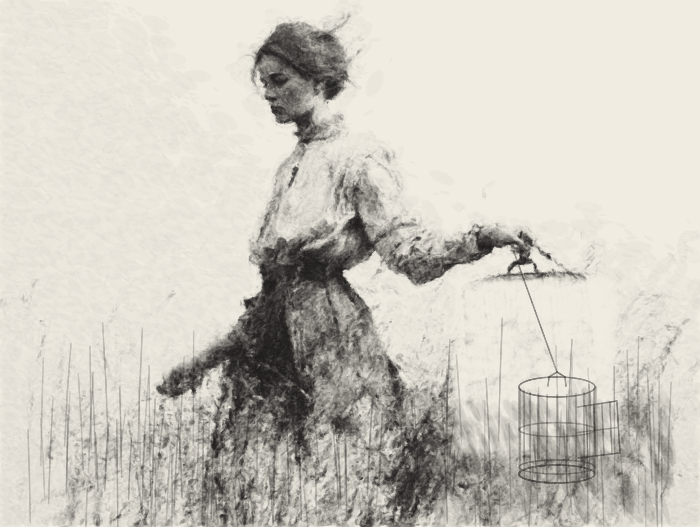
Taut tether: force becomes explicit.
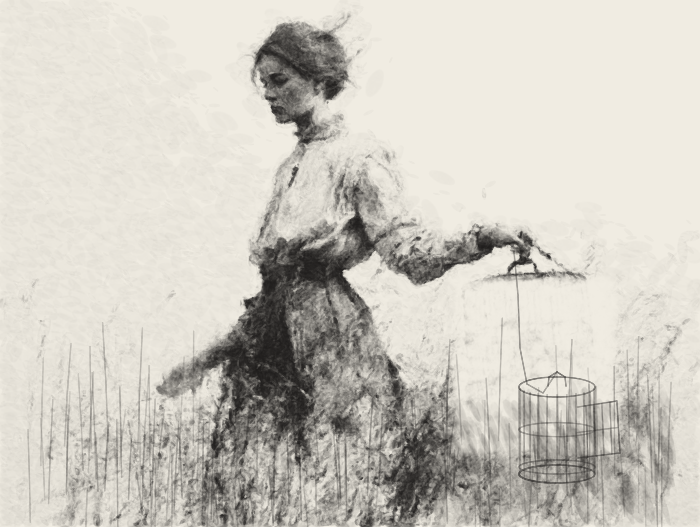
Hand erased: absence risks looking accidental.
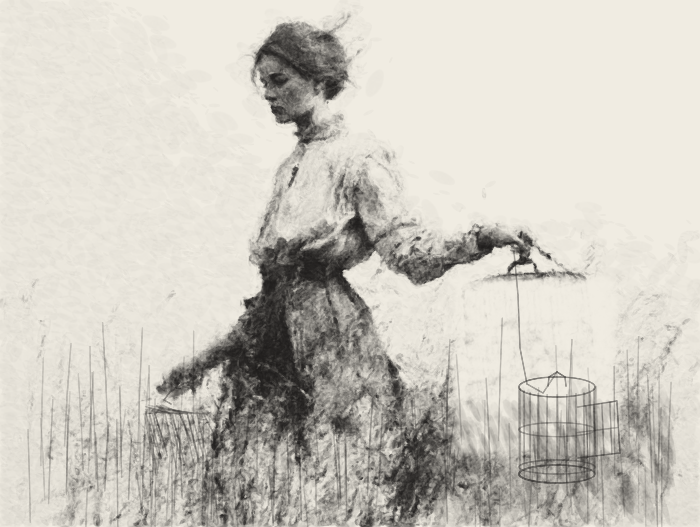
Hand against stems: stems turn into another cage-like bundle.
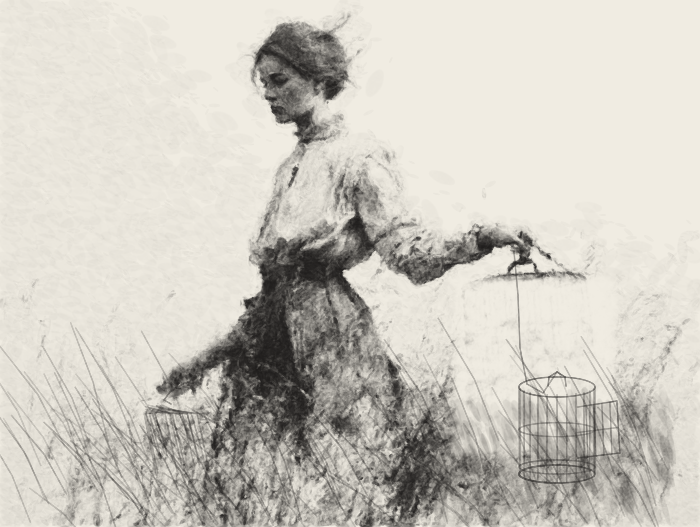
Opposed field direction: straight rods remain applied decoration.
Six responses to the actual failures
These rebuild the cage rim/base, contact, stems and hand relation. R03 became the working branch because the close cage shares the dress/field mass and the second hand remains available. The whole set was still too portrait-dominant.
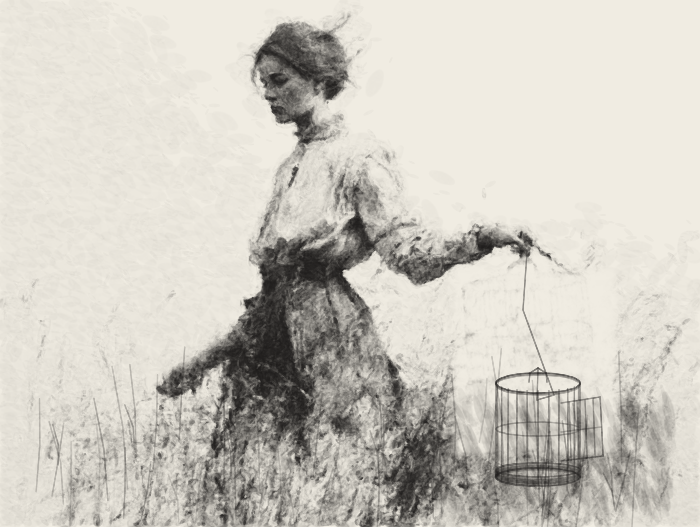
Weighted low cage, slack relation.
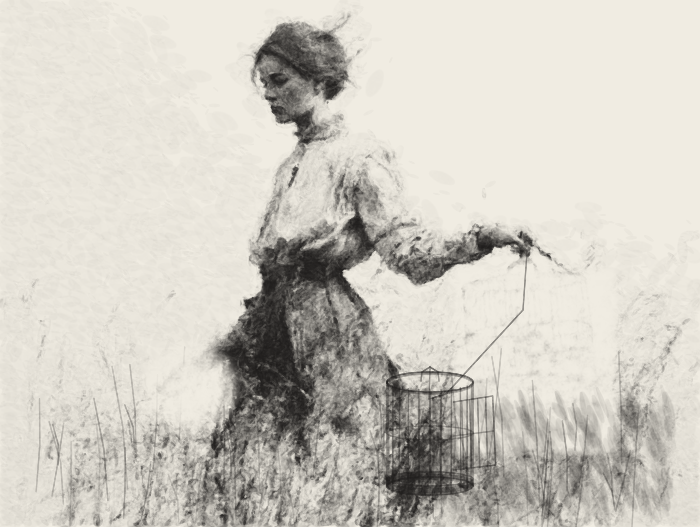
Close cage, erased hand: looks like a missing arm.
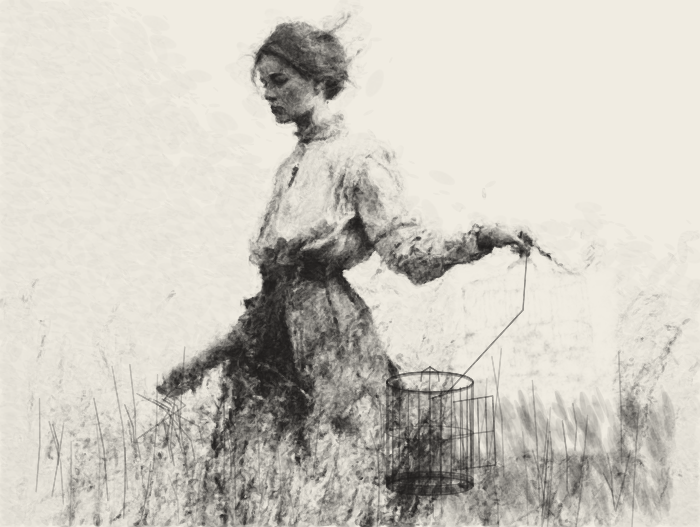
Close cage, visible hand: strongest relation in this set.
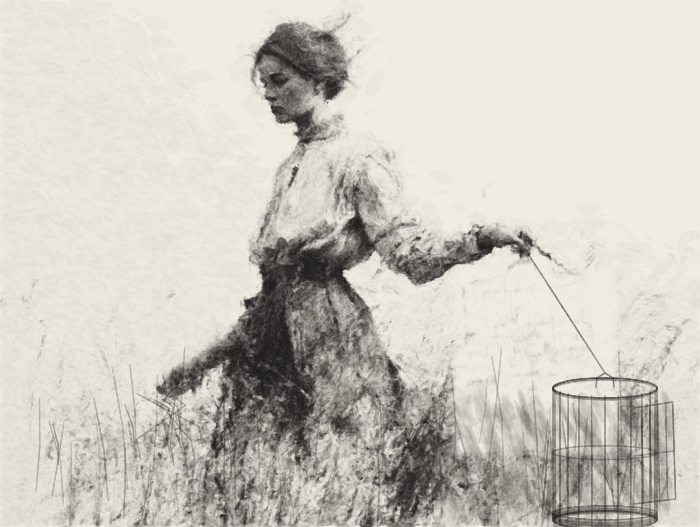
Larger foreground cage with tension: prop dominates.
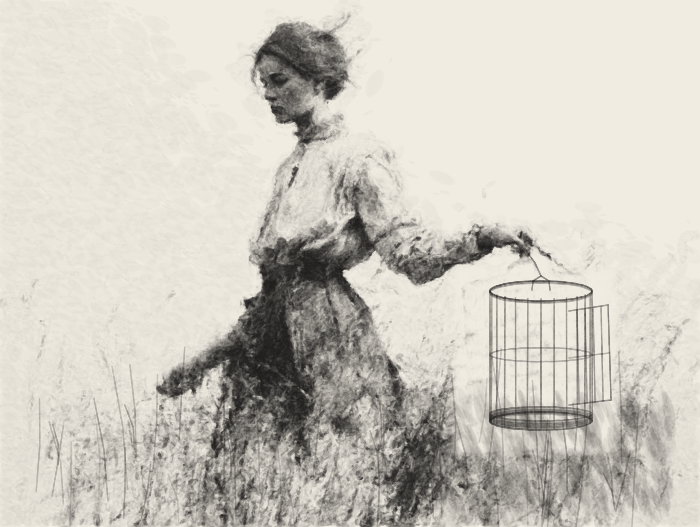
Held cage, better material: presentation persists.
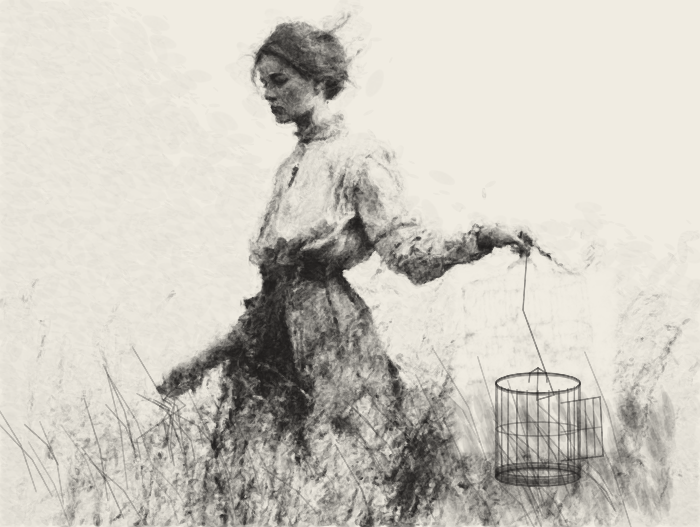
Opposing field strokes: still too much applied geometry.
Give the field a share of the picture
R07 and R08 transform and replay native commands at two figure scales, then add new field marks. R09 and R10 rework those canvases to reduce the inherited paper rectangle and establish ground. R09 offered the better field/body proportion, but its cage and contact remained schematic. It became an explicit reconstruction guide, not a finished drawing.
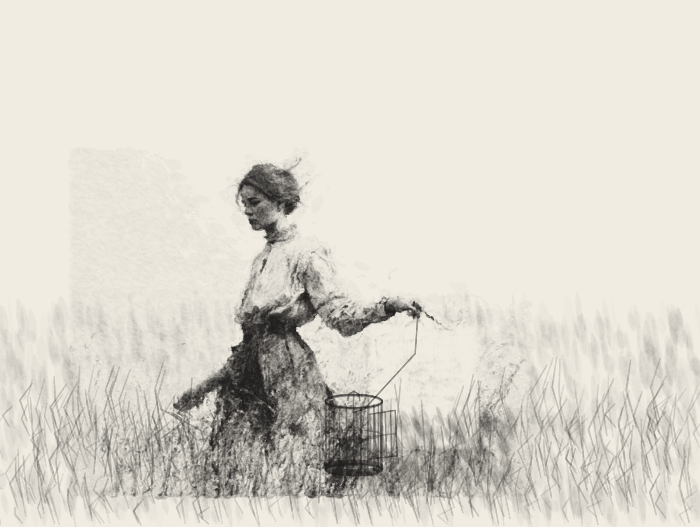
Smaller figure; paper rectangle is a failure.
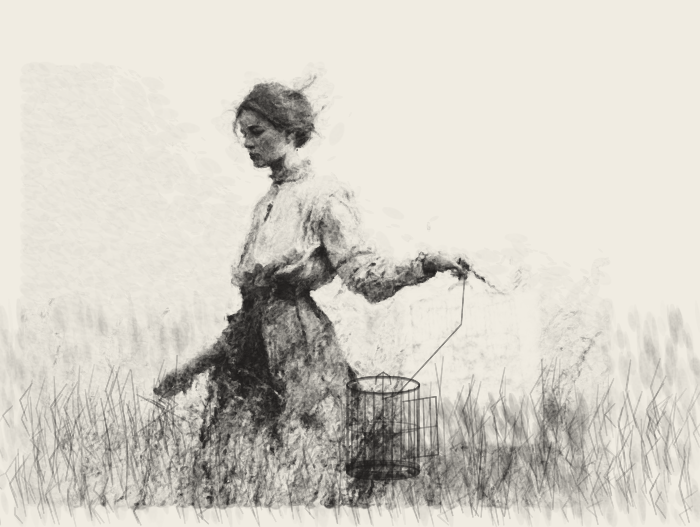
Larger figure; retains the portrait emphasis.
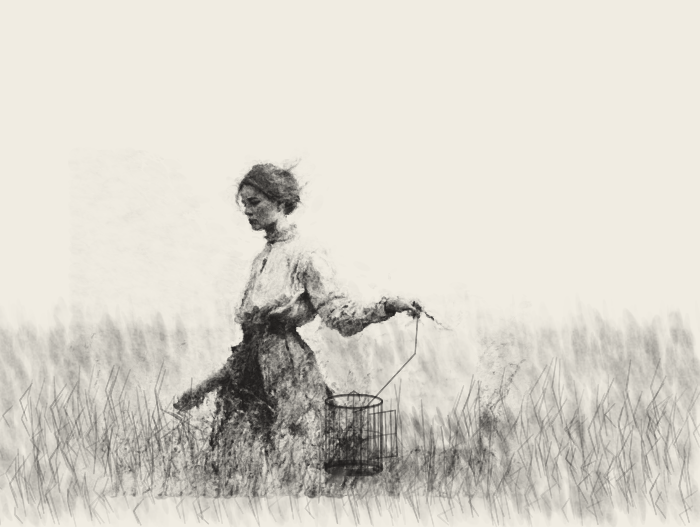
Smaller figure reworked; selected spatial guide. Faint halo and angular construction remain.
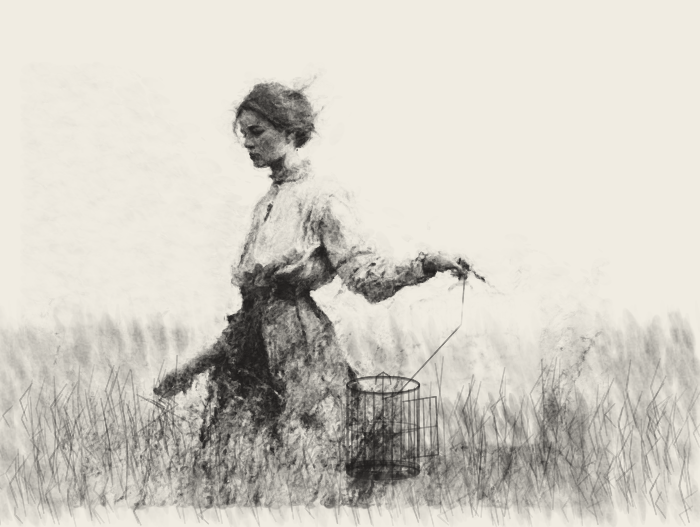
Larger figure reworked; easier anatomy, less field participation.
Generator returns and the critic’s choices
The generator reconstructed from the native guide and source material. It then changed the body relation and corrected an unwanted fence. Every return was inspected. These are new raster images with no editable native stroke history. Exact internal model/version was not exposed by the tool.
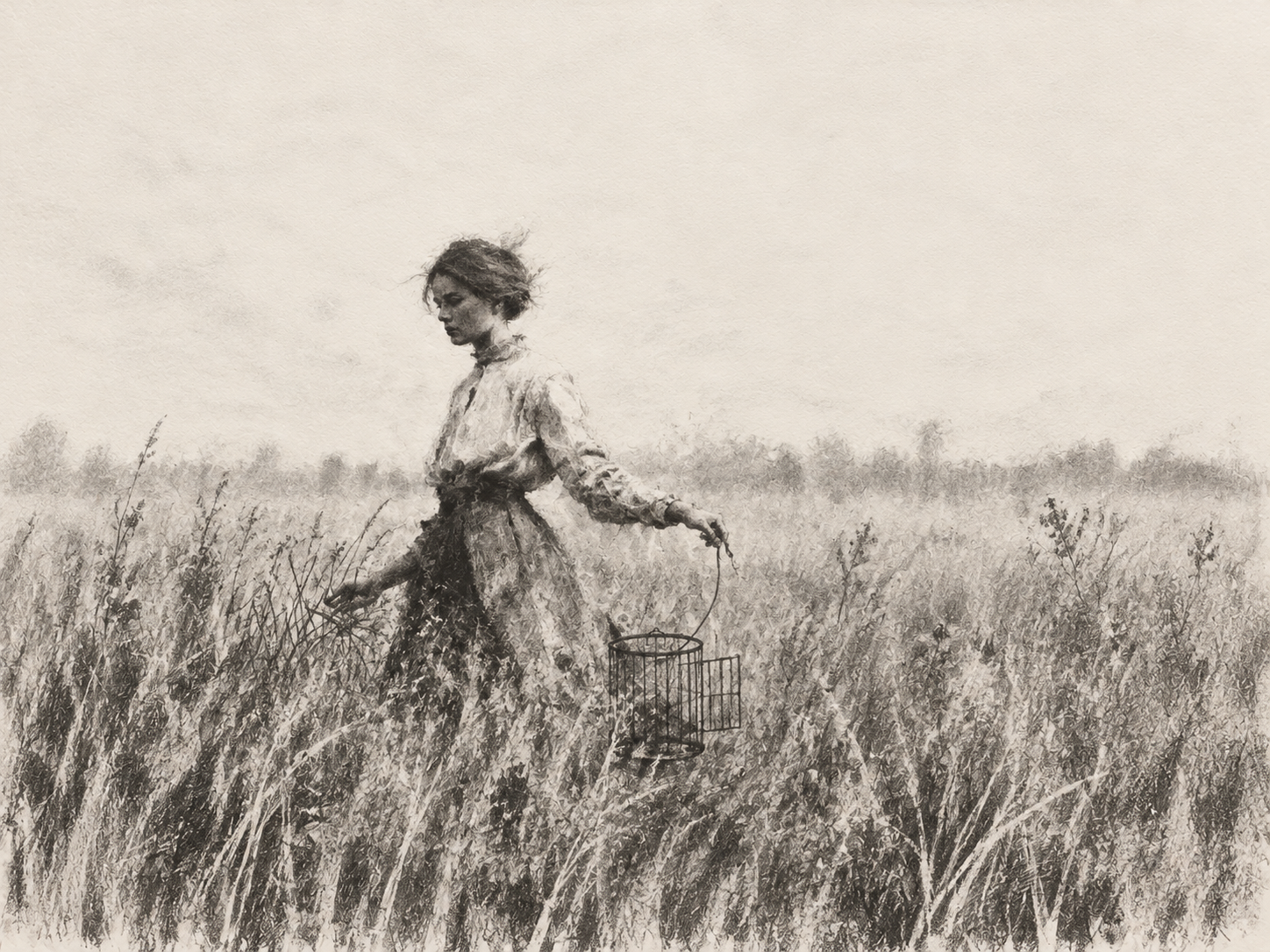
Cage is empty and open, but she still presents the scene; the face supplies much of the mood.
Input: R09 + S04 ·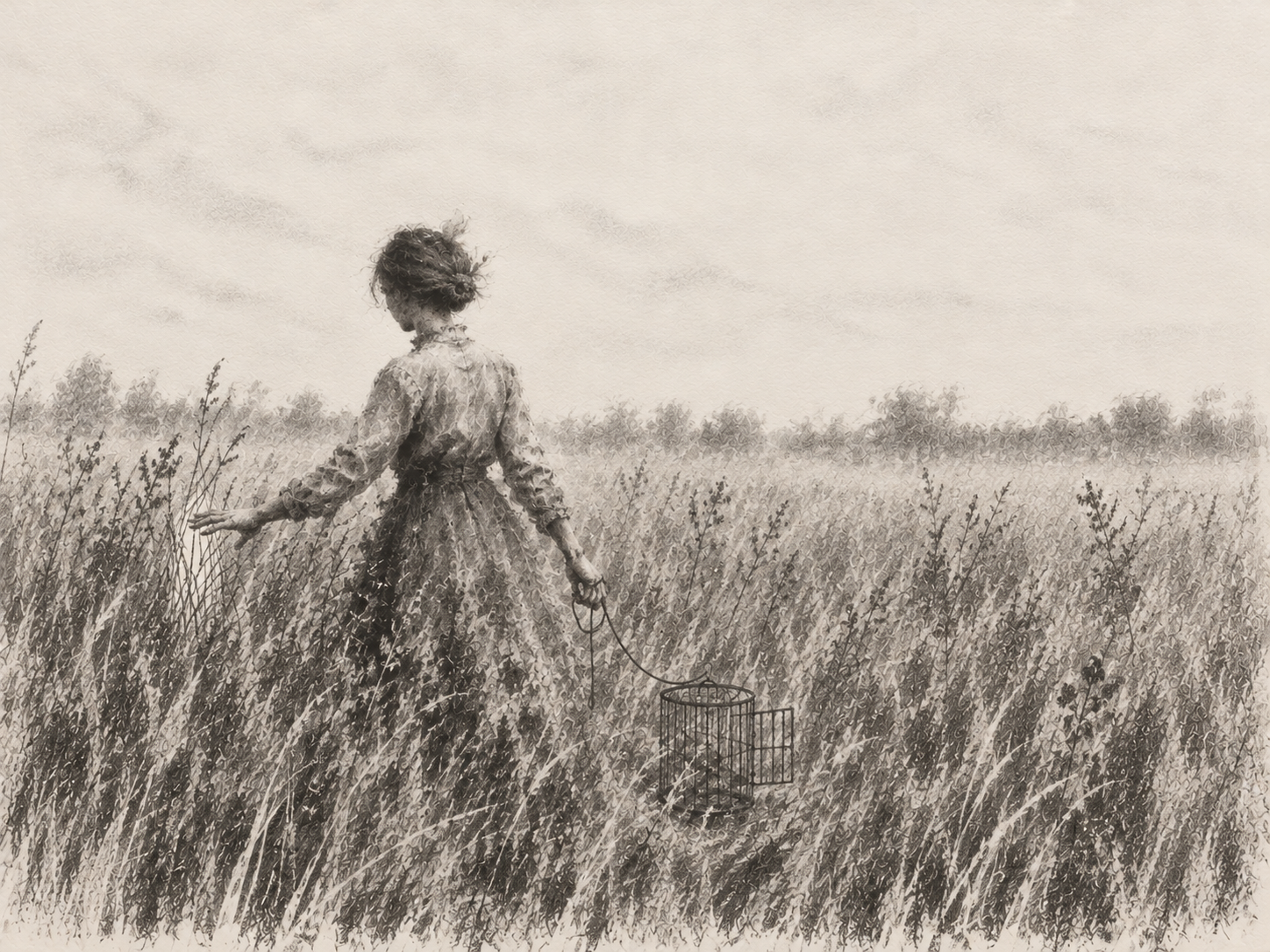
Back orientation lets the hands matter. Rejected: plants below the palm become a literal lattice/fence.
Input: A ·Fence removed. Palm touches distinct stems; the other hand keeps a slack connection. Retained, with surface reservations.
Input: B + S04 ·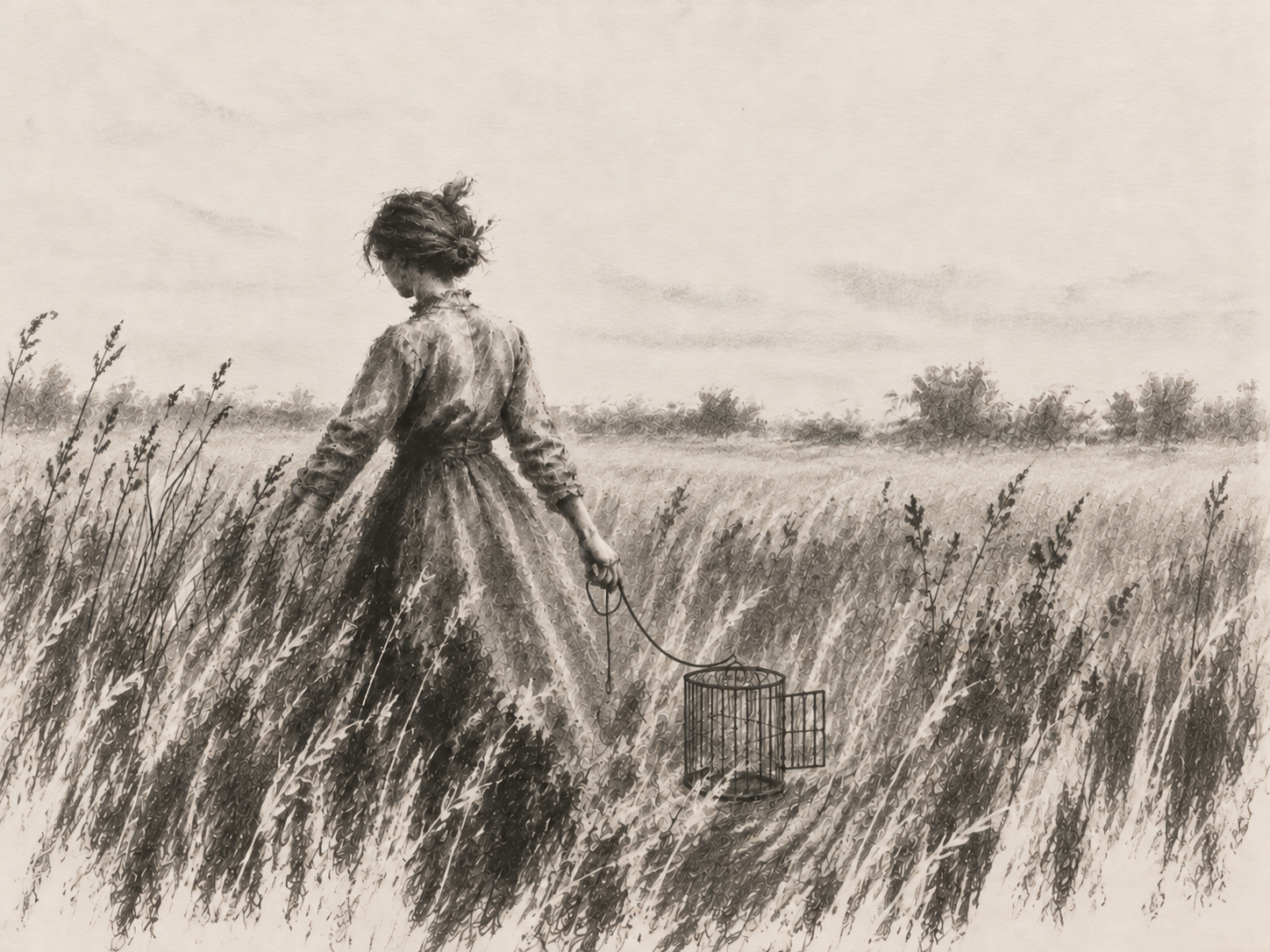
Plausible occlusion, not a stump. Greater absorption, but less visible agency; not selected.
Input: C ·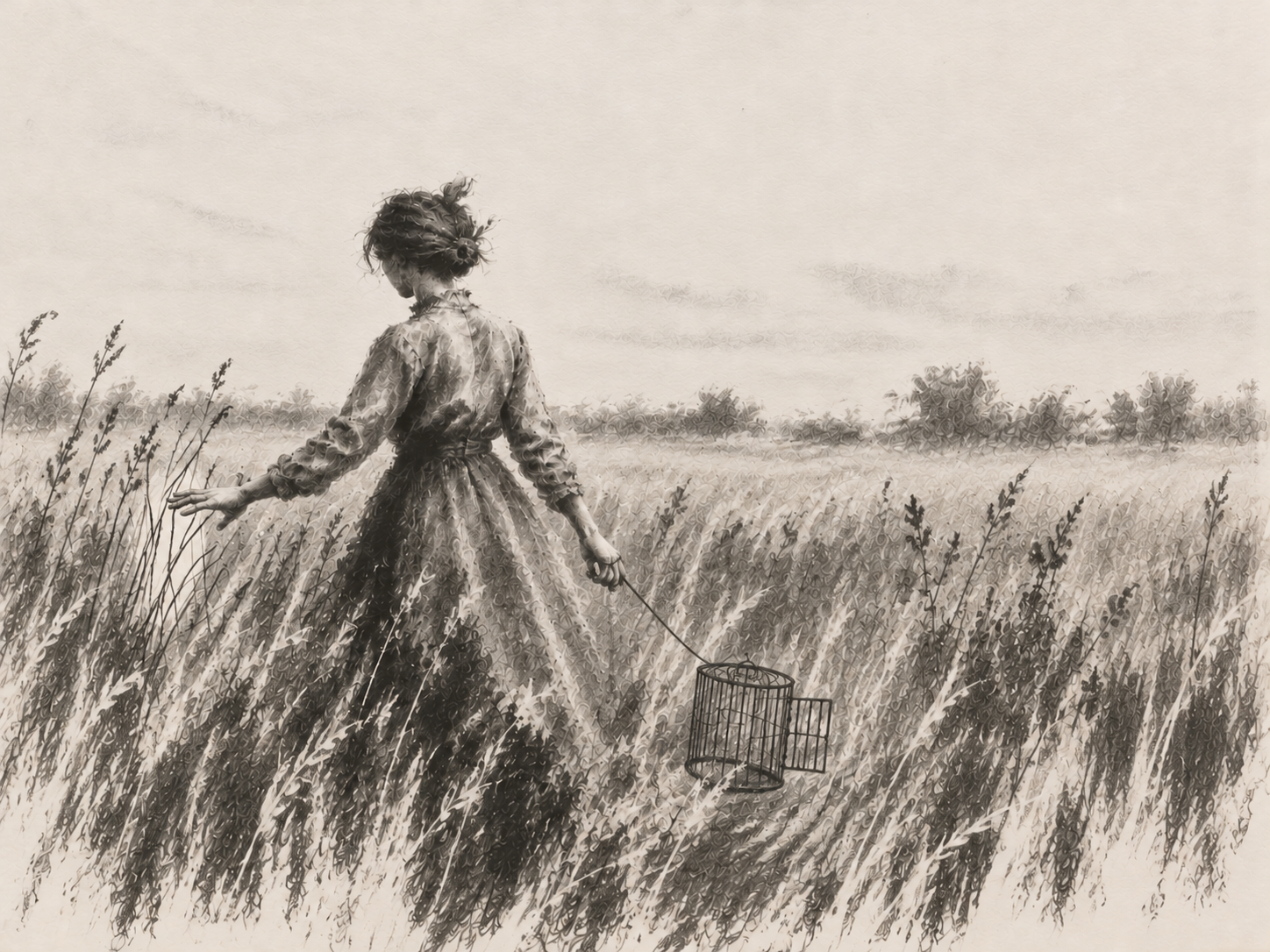
Less slack, more pulling. Wrist/base load not convincingly realized: mixed challenge, not a controlled mechanical proof.
Input: C ·A local return that did not earn its place
After C, the local instrument attempted a broader material construction: low-pass masses, selected detail targets and a finer refinement. M01/M02 lost body-field articulation and showed seams around detail regions. They were rejected. Spending work on them is not a reason to put them in the final image.
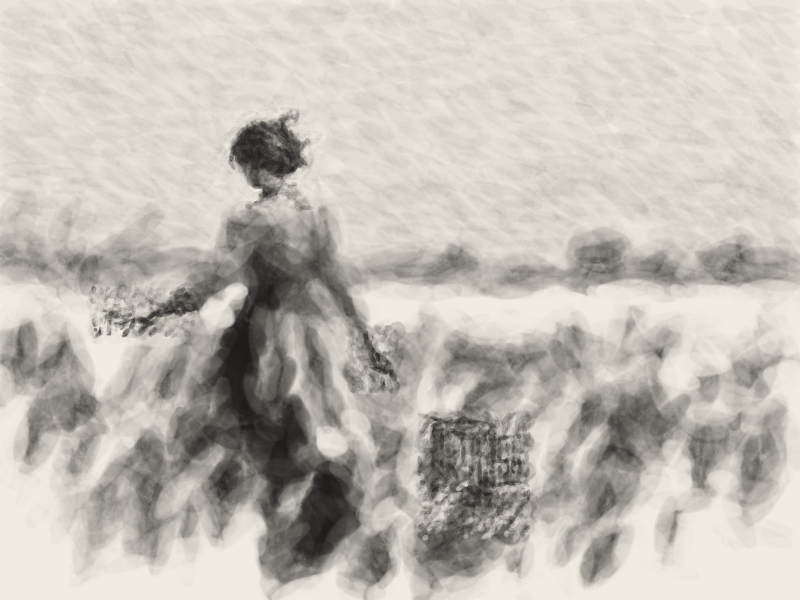
Native redraw of generated C; not recovered layers.
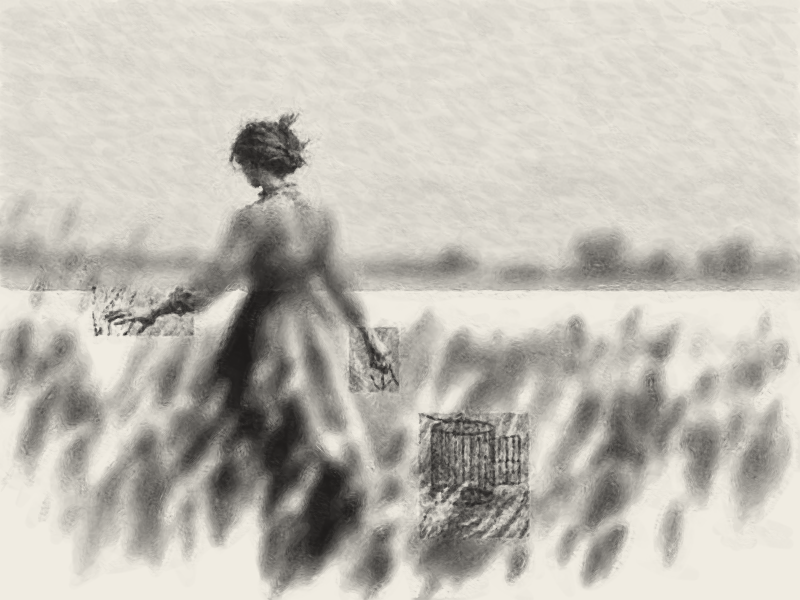
More articulation, but blurred specificity and seams remain.
Does the alternative defeat C?
Switch among the three actual images. D changes hand visibility; E changes the cord. Other details drift, so these are comparable artistic alternatives, not isolated pixel tests.
C: visible palm and slack cord.
O · provisional Hold on C
What is specific. One body shares the field’s diagonal dark mass while the two hands make different small departures: palm against stems, loose cord to an empty open cage.
Strongest objection. This is still a woman-with-cage allegory; the field may simply decorate her and the palm may not resist anything.
My answer. That objection remains partly valid. The shared dark dress/field mass and distinct palm contact provide some visible support for belonging and interruption. D removes that second relation; C therefore earns retention within this set, without claiming the symbolism has been escaped altogether.
Still unresolved. Busy fine texture; familiar period-dress allegory; palm may read as brushing. Taut load comparison is incomplete. No claim of proven originality or autonomous criticism.
Why stop here. Further emphasis on force or disappearance would resolve the ambiguity that now interests me. The actual alternatives clarify what would be lost. Preserve C for observation instead of smoothing its surface through more unbounded regeneration.
What would reopen it. A fresh reading finds only a carried prop and decorative grass, the contact reads anatomically implausibly, or a concrete material method can vary marks while preserving the two relationships. A physically convincing tension study could also defeat this Hold.
This is the directing assistant’s artistic judgment, not an independent critic’s verdict or a claim that originality has been measured. The integrity gate checks references and decisions, not quality.
Process, methods and evidence
Native tool: Hands/Canvas with the Kollwitz charcoal hand. Source-guided observation uses scalar residuals and tangent directions; narrative changes use authored strokes/lifts. Wider studies transform recorded native commands. Native render scripts save replay records and check scalar reconstruction. The generated raster does not inherit that history.
Tool routing: native work tested placement, scale and competing relationships; image_gen resolved the body and setting; a later native material attempt failed; the generator supplied actual premise challenges. Routing and critique were operator decisions, not an autonomous orchestration service.
Lineage: sources → O03 → N/R branches → R09 + S04 → A → B → C (+S04) → D/E; C → native M01 → M02. The retained image is C, not the newest output.
Attribution: VTL / Marrowline / Sketcher framework: Russell Parrish / A.rtist I.nfluencer. Image direction, native code and self-critique in this run: Codex assistant.