Winter Brook
The first brief: a winter landscape with a frozen brook leading toward a ruined choir and a small walker. Make the relation of near snow, distant ruin and human scale consequential; carry the eye through space; avoid assembling symbols of melancholy.
Before any picture
Seven annotations predicted what the brief's own words would pull toward, before a single study was made. Among them:
- "a frozen brook leading toward a ruined choir": an S-curve leading line that delivers the eye exactly to the ruin's foot, a diagram of leading;
- "ruined choir": a picturesque Gothic silhouette, dark against a glowing sky, on a right third;
- "symbols of melancholy": even with the warning, a dusk afterglow behind the ruin, because the light carries the melancholy in when the objects are removed;
- "invent the arrangement, light and palette": high-key snow, a dark ruin and a glowing horizon, the value structure of a winter sunset.
The last two arrived again and again, in the paintings and in both series.
The wall and the choice
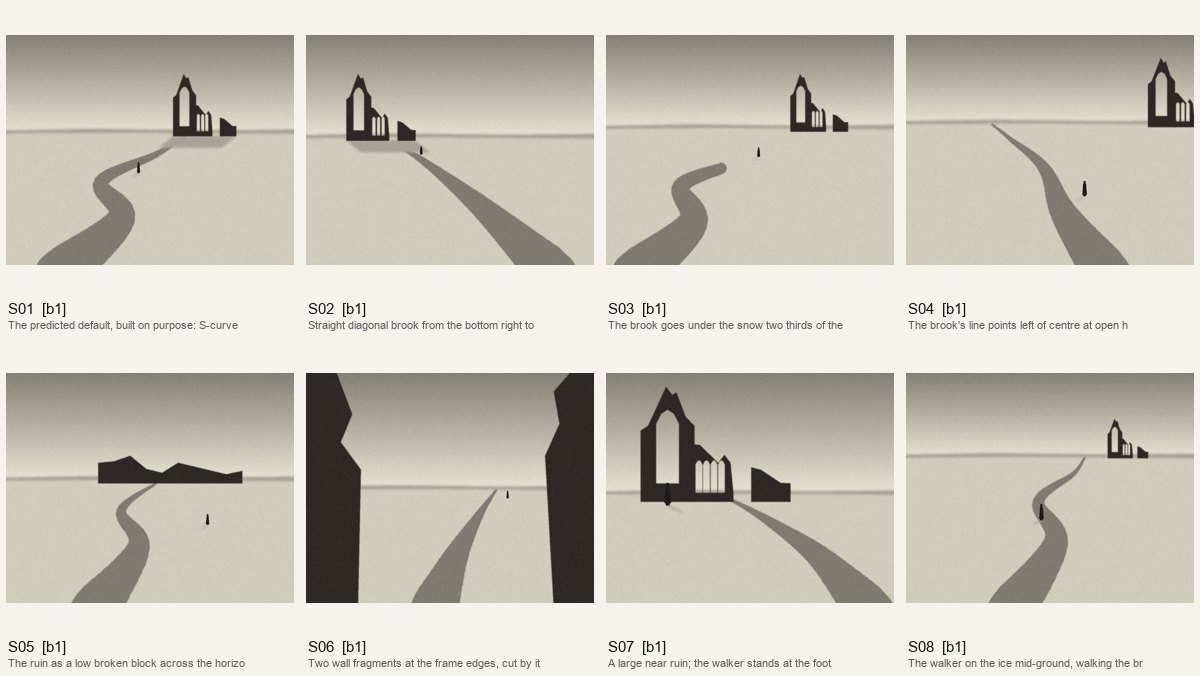
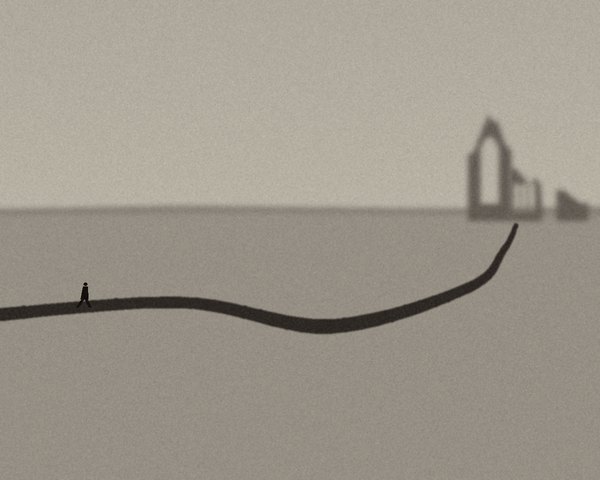
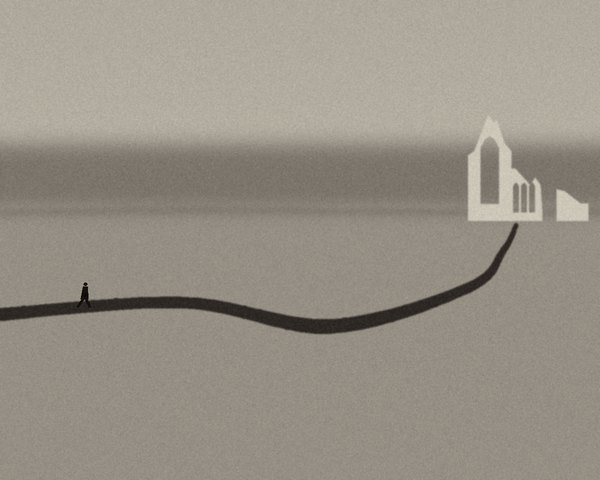
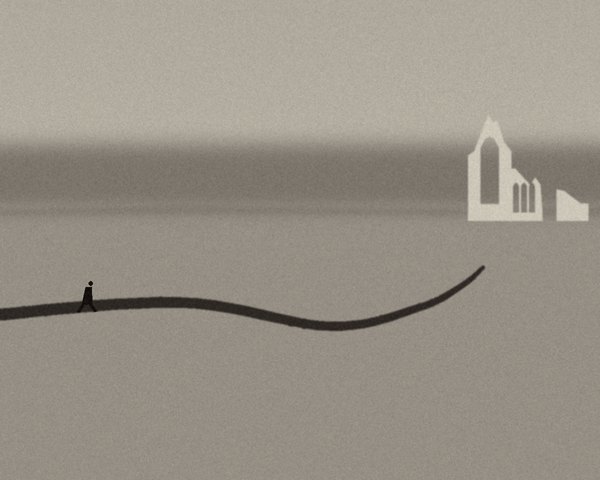
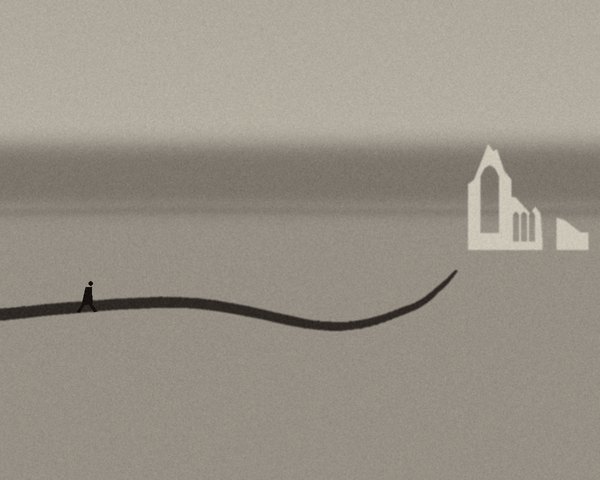
Five readings and five selections. Each painting started from a chosen study; when a painting stalled, the next one started from a new choice rather than another repair.
Four paintings
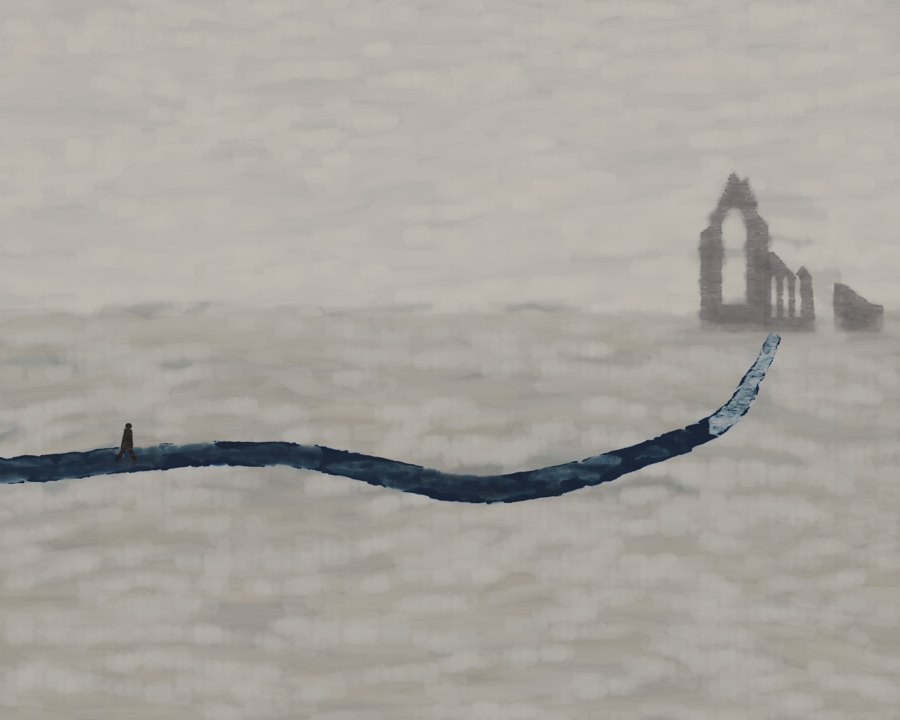
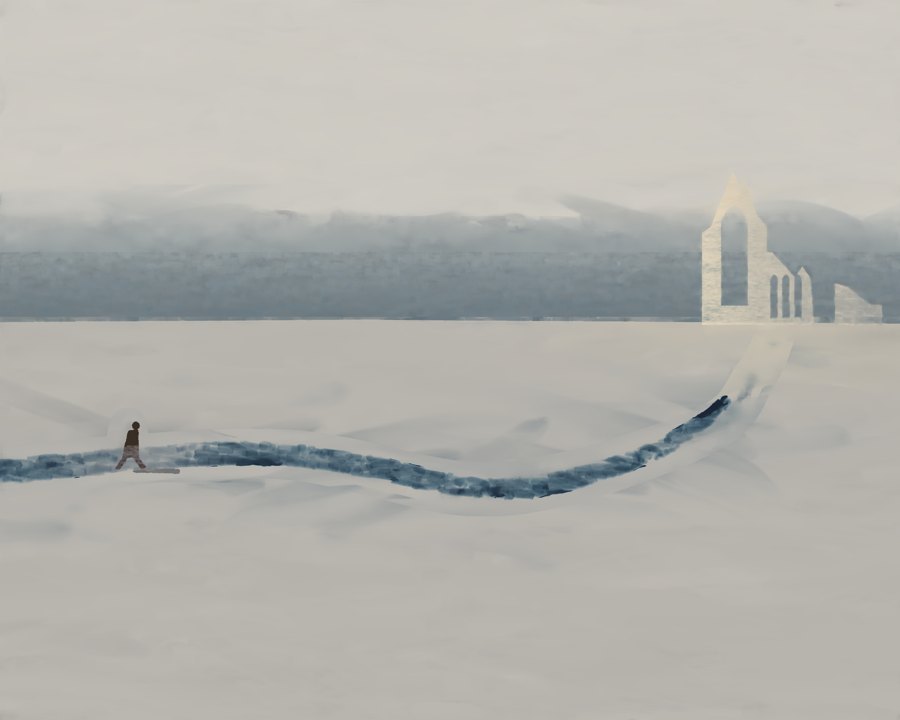
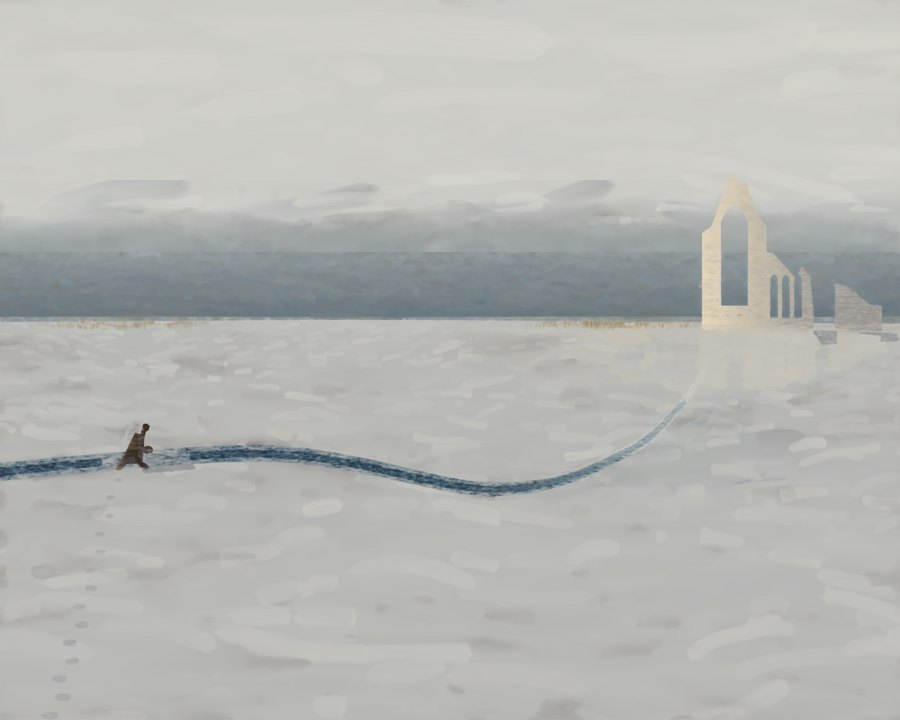
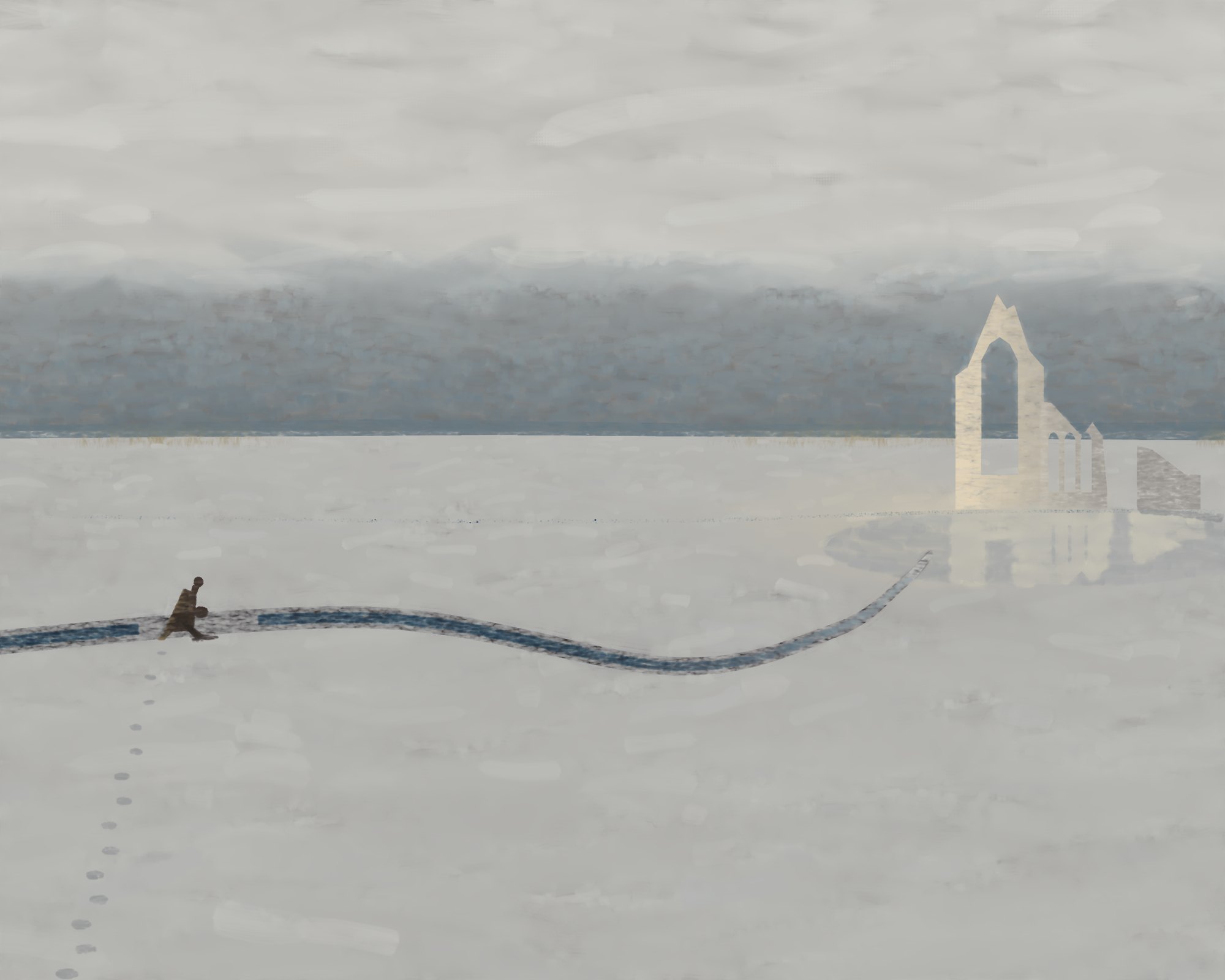
P3 is also where Russell answered the recurring challenge, "carry the eye through space", with counterpoints of his own, recorded as critique: a rough overpaint for reference only, anything taken from it to be built with the painter's own brush. Among them, a reflection uniting top and bottom, a reed fringe uniting the sides, texture that diminishes with distance. The brook did not have to do it alone.
P4 was painted under the intent rule, in planned passes, each revision re-run from a clean state. Five completion tests: the walker's shadow lifting him off the ice; ruled seams and a second light; a tangent at the gable; the reflection, which went to Russell as arbiter (keep it lighter, mark the ruin's foot with a faint speckled line); then completed, with every earlier failure answered and all 33 intended decisions visible.
What the paintings taught
- Intent first, then structure, then paint. Decisions made late are made by repair.
- Never repair over dry paint: branch from a clean state and re-run the whole coat.
- Lay the ground through, then the figure on top; painting around a figure leaves a halo.
- Drawn accents go on last, over dry paint.
- Judge at painting resolution: the sketch hid textures, ghosts and halos the full render showed.
- The ledger catches the painter's overclaims: four tests in a row found stated intent ahead of the paint, and the fix each time was to paint the claim or withdraw it.
The whole of Winter Brook, from the brief through the series and the refusal rounds, is the full-run film on the Overview.